.jpg)


.jpg)

 English daily published in Bengaluru & Doha

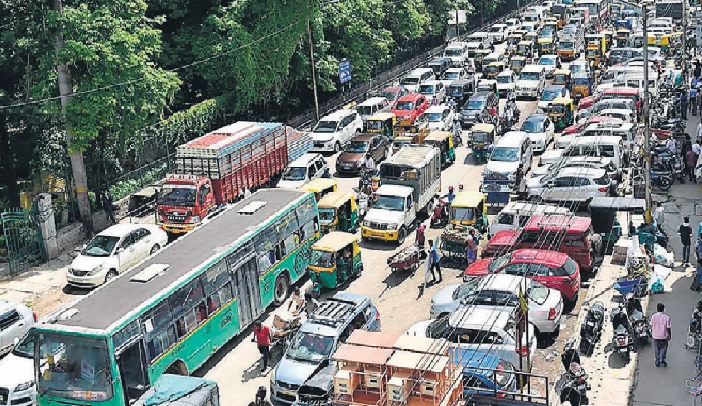
Easing traffic: Time for pvt vehicle curbs
Bengaluru has attained a rare notoriety for its nightmarish traffic congestion. The city is getting crushed under the weight of burgeoning number of vehicles and the traffic jams no longer cease to surprise. The traffic police have initiated several measures but it seems doubtful if these would prove effective, for the solution does not lie in traffic regulation. And police are trained to do only that much.
The answer lies elsewhere: in bringing down the number of private vehicles, encouraging people to shift to public transport, eliminating encroachments of roads, bringing back parking fee and revisiting and reviewing the norms for registering and licensing of new vehicles. Statistics bear it out that an average citizen spends more than 240 hours stuck in jams every year and the traffic delays cost the city Rs. 65 billion a year (2016 figures).
According to the World Resource Institute, in 2005, the traffic moved in the city at the speed of 35 kms an hour. In 2014, it had slowed down to 9.2 km. The Institute had put the average waiting time at traffic signals at five minutes when it ought not to be more than two minutes. The number of registered vehicles in the city has been rising exponentially over the years. There were 50.33 lakh automobiles in 2011-12. These had gone up to 1.04 crore till March 2022. Of these nearly 70 lakh are two-wheelers while nearly 22 lakh are cars.
Contrastingly, the number of buses do not show any proportionate rise. There were 6,064 buses in 2011-12 and in March this year the number had climbed up merely to 6,763, reflecting stagnation in matters of the public transport. It does not need any extraordinary wisdom to conclude that the vehicu lar load has been growing unbearably on the road infrastructure that refuses to get any better. The grotesque mismatch is all that causes the mess on the roads.
The situation seems way out of hand and calls for exception measures that may not be simple and even civil enough to be considered. It may be hard to digest, but it needs to be said that the unprecedented rise in number of private vehicles is not a happy sign for a city whose roads are narrow. Not merely this, the unbridled rise in numbers of private vehicles calls for curbs that may not suit democratic norms. A private vehicle is barely used beyond a 90-minute daily commute.
For the rest of the day, it mainly remains parked on the roads and public spaces for which it pays no charges. An average Japanese has to own a parking space for being eligible for a vehicular license. Introduction of any such rule here would certainly dissuade people from owning private vehicles. The city authorities removed the parking fee more than a decade ago. It is imperative to review the decision and reintroduce the same.
If indeed the people have to shift to public transport, they need to feel the fiscal pinch of having and moving in a car, three of which take the space of a bus which normally carries 40 passengers. Some of these norms may sound harsh, but a real amelioration in the situation calls for a push that may not be palatable for all.

.jpg)
.jpg)
.jpg)
.jpg)
.jpg)