.jpg)


.jpg)

 English daily published in Bengaluru & Doha

Solid waste in Himalayas: Challenges &solutions
Gaurav Schimar
The Indian Himalayan Region (IHR) is a geographical marvel, stretching from the Indus River in the west to the Brahmaputra River in the east, encompassing an extensive area of 533,604 square km.
This unique ecosystem represents approximately 16.2% of India’s total geographical expanse, boasting of 16,627 glaciers covering 40,563 sq km and a lush forest cover of about 205,563 sq km, constituting 38.52% of the IHR’s total geographical area.
Home to a rich diversity of plants, animals, and birds, many of which are critically endangered, the IHR supports the livelihoods of a staggering 50 million human beings.
Perhaps most notably, the snow-fed glaciers of this region are a vital source of water for the North Indian Rivers, fulfilling the water requirements of millions living across the Indo-Gangetic plains of India.
Often referred to as the “Third Pole” of the planet, the Himalayas hold a massive amount of snow and water, serving as a life-giving resource that faces increasing threats from human activities.
Negligible SWM facilities With a growing population and rapid urbanization, Solid Waste Management (SWM) has emerged as a pressing environmental challenge and a clear threat to the ecosensitive IHR.
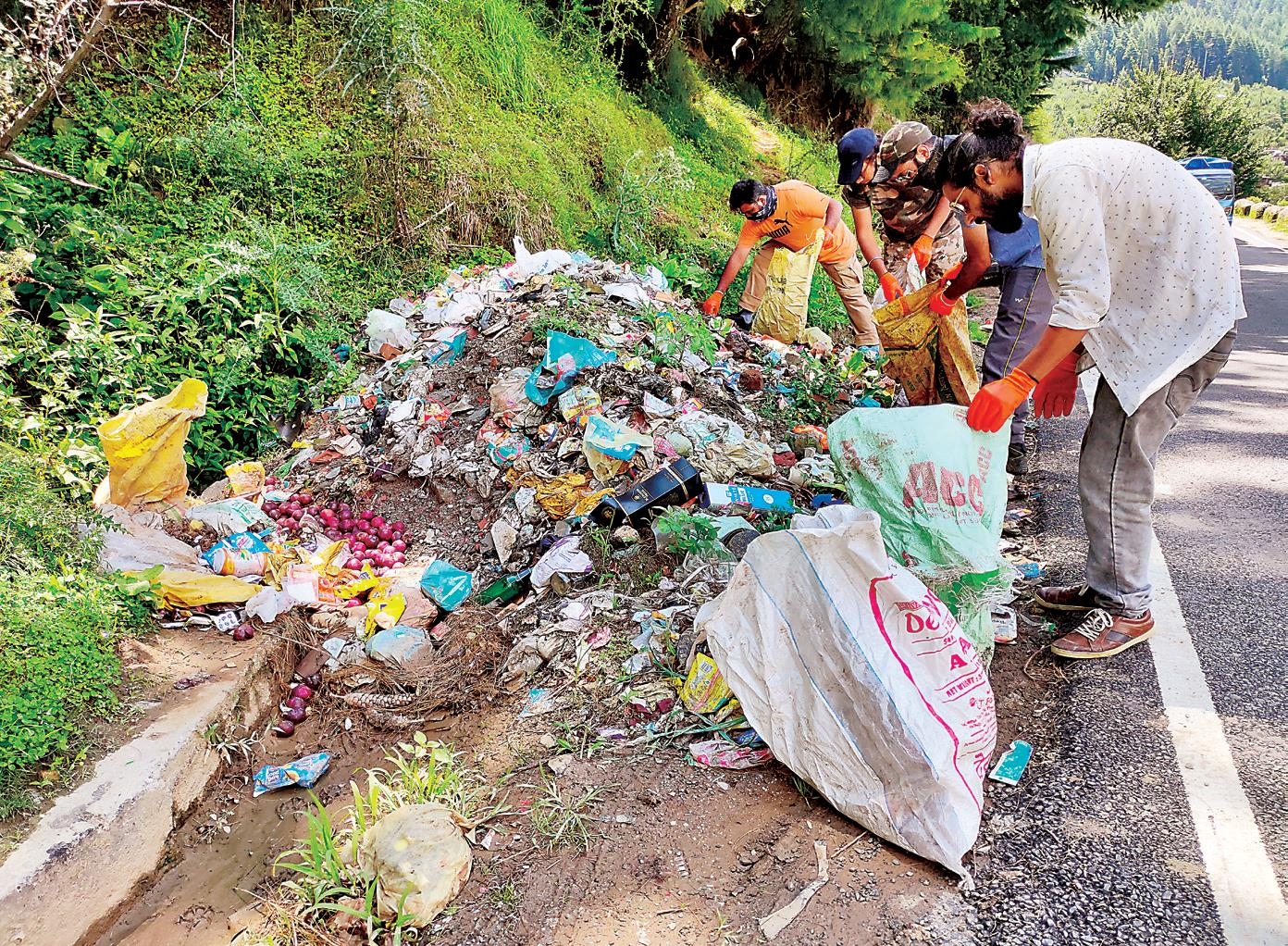
Unfortunately, there are negligible SWM facilities in this region, making it even more challenging due to its remoteness, unique topographical configuration, and harsh climate. As a result, the majority of waste is openly dumped or burnt, causing significant harm to the fragile IHR ecosystem. The consequences of unmanaged SWM are dire.
Unsegregated waste pollutes freshwater streams, and burning waste is a major source of pollution, directly linked to the melting of glaciers. The current state of SWM poses a severe threat not only to the IHR ecosystem but also to the humans residing within it and those who rely on the region’s resources.
Furthermore, the flora and fauna of the IHR are in jeopardy due to these unsustainable practices SWM in IHR presents several formidable challenges.
The region’s burgeoning tourism industry, drawn to its breath-taking natural beauty, has spurred a significant increase in waste generation. Unfortunately, the IHR lacks the necessary infrastructure for proper waste disposal, resulting in widespread open dumping and illegal waste disposal practices, further deteriorating the fragile environment.
Additionally, the common practice of burning waste not only contributes to air pollution but also has a detrimental impact on glacier melt, compounding environmental issues.
Rapid urbanization in the highlands has led to a surge in household waste generation, compounding the challenges of SWM. Furthermore, the harsh climate of the highlands hampers the composting process, making waste management even more daunting in this pristine and ecologically sensitive region.
A comprehensive waste management project in the Himalayas would have farreaching benefits for the environment, businesses, local communities, and tourists visiting the region.
The primary goal of such a project would be to establish a sustainable waste eco-system that protects the environment, wildlife, and biodiversity of the region. Additionally, it aims to restore the region’s appeal as a tourist destination by maintaining its pristine beauty.
This, in turn, would generate livelihood opportunities for local communities, fostering economic growth in the region. A well-planned SWM Project in the Himalayas would focus on implementing waste minimization practices within the community, ensuring that the Himalayas remain garbage and plasticfree.
Activities such as cleanup initiatives would address the accumulated waste in the region.
What to do
The systematic and regular collection and disposal of garbage in the IHR, along with recycling efforts, can help restore the region’s natural beauty. This, in turn, would attract more tourists and benefit local businesses.
Setting up Collection and Segregation Units (CSUs) and Material Recovery Facilities (MRFs) would not only benefit the environment but also promote the flourishing of local flora and fauna and provide livelihood opportunities to the local population.
Such a project would have a significant impact on local communities by promoting waste recycling and reducing waste generation. Increased use of recycled products would decrease the extraction of new resources, benefiting the environment and ecosystem.
Moreover, it would lead to lower emissions of harmful gases, improving the overall health of the local community.
—The author is a Himalayan Conservationist
.jpg)


