.jpg)


.jpg)

 English daily published in Bengaluru & Doha

1992 Vachathi horror: Madras HC upholds convictions of over 200 govt officials
NT Correspondent
Chennai: On September 29, the Madras High Court upheld the convictions of more than 200 government officials hailing from the forest, police, and revenue departments of Tamil Nadu.
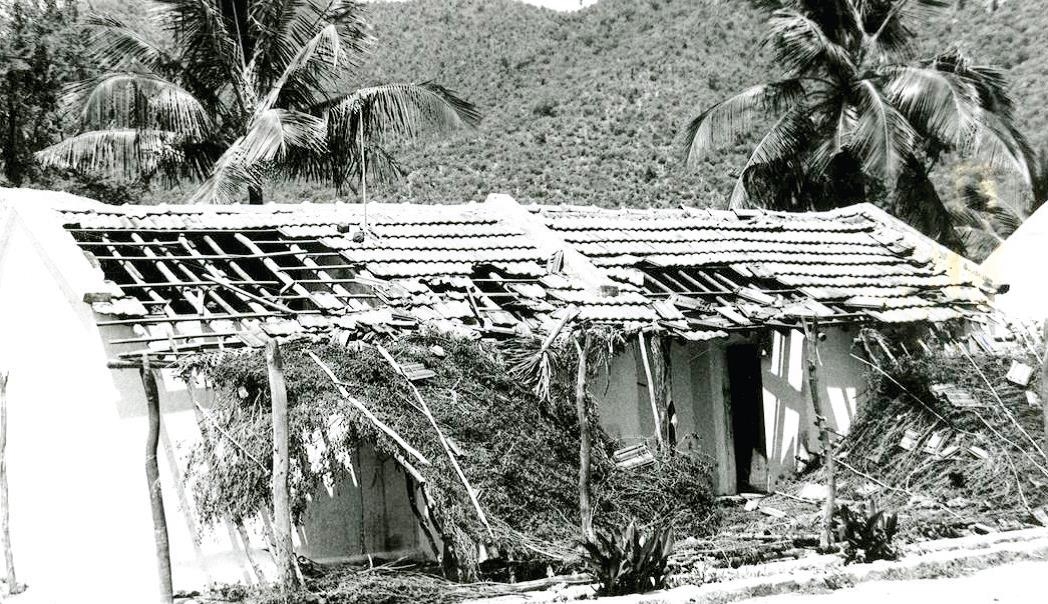
These officials were found guilty of committing a range of atrocities against the residents of Vachathi tribal village in Dharmapuri district in 1992, including acts of cruelty, rape, and the ransacking of village properties.
Justice Velmurugan, presiding over the case, ordered the Tamil Nadu state government to provide compensation of Rs 10 lakh to each victim and secure suitable employment opportunities for them.
Additionally, he called for stringent action to be taken against the then-district collector, district forest official, and superintendent of police for their failure to take action in response to the complaints regarding the atrocities.
“To save actual smugglers and big shots, the officials played a big stage drama in which innocent tribal women got affected…the pain and difficulties faced by them have to be compensated in terms of money and jobs,” the judge said, according to a media report.
During the course of the trial, 54 out of 269 accused died, and the others (215) were sentenced to a jail term of one to 10 years.
So, what transpired in Vachathi in 1992?
In June of that year, officials from the forest and revenue departments entered Vachathi, a village located in Tamil Nadu's Dharmapuri district.
They conducted what they termed a 'search operation' to locate sandalwood allegedly smuggled and concealed by Dalits and Adivasis in the village, with suspicions that it was linked to the notorious dacoit Veerappan, Live Law reported.
This operation also aimed to gather information about the dacoit's whereabouts. During these raids on the village, officials assaulted women, damaged village properties, and killed livestock.
Shockingly, eighteen women were subjected to rape and torture, and many men were physically assaulted. In most instances, women were left behind in their homes during the raids, while the men sought refuge in nearby hills where they remained in hiding for several months, the BBC reported.
More than 100 women and children were unjustly taken into custody and imprisoned for extended periods under fabricated charges.
How did the investigation into these horrific events progress?
When the victims of rape filed a complaint at the Harur police station on August 22, 1992, officials initially denied any wrongdoing. A report on the incident was submitted by the Revenue Divisional Officer, who was tasked with visiting Vachathi and conducting an inquiry.
This report astonishingly claimed that the "alleged rape incident cannot be believed" and that the "villagers themselves damaged their houses to falsely implicate forest and police officials."
It took multiple campaigns by civil society activists and members of the Communist Party of India (Marxists) for the Madras High Court to order a CBI inquiry, nearly three years after the incident occurred.
Initially, the court had rejected a PIL filed by the CPI (M), arguing that government officials would not have engaged in such acts, and thus the case wasn't suitable for a PIL.
The subsequent CBI report confirmed that the policemen and officials had indeed gone on a rampage, brutally assaulting men, women, and children, and demolishing huts.
However, it wasn't until June 2011, almost two decades after the incident, that the designated trial court handed down sentences to all 215 surviving individuals among the 269 accused in the case.
This group included 126 forest personnel, 84 police personnel, five revenue personnel, and four Indian Forest Service (IFS) officers.

.jpg)
.jpg)
.jpg)