.jpg)


.jpg)

 English daily published in Bengaluru & Doha

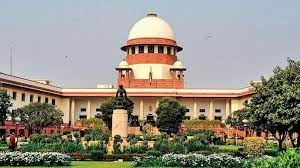
SC’s order on GIB has charted new territories
The Supreme Court’s latest ruling on the protection and conservation of the Great Indian Bustard (GIB) extends beyond the specifics of the case.
On March 21, 2024, a case related to saving the GIB, a critically endangered bird numbering less than 150, led the Supreme Court of India to expand citizens’ constitutional right to life and equality to include the right to be free from the adverse impact of climate change, as reported by The Wire.
Renowned conservationist M.K. Ranjitsingh filed a PIL in the SC in 2021, asking to protect the GIB from extinction.
The Supreme Court had passed directions restricting and regulating power lines and renewable energy projects in an area of 99,000 sq km in Rajasthan and Gujarat.
Chief Justice D.Y. Chandrachud, heading the 3-judge bench, expanded the contours of environmental jurisprudence to include climate justice, environmental inequity, and gender justice.
However, in the process, the protection afforded by earlier orders was withdrawn.
Climate change impacts the constitutional guarantee of the right to equality, the Supreme Court said, as reported by The Wire, while constituting a committee to balance GIB conservation and renewable energy infrastructure in Rajasthan and Gujarat.
The top court recalled its earlier order of April 2021 that required the undergrounding of overhead transmission lines across an area of over 80,000 sq km in the two states, saying it needed recalibration.
A joint application was filed by the environment ministry, power ministry, and the renewable energy ministry to modify the earlier direction contained in the Supreme Court’s judgment of April 19, 2021, on significant restrictions on renewable energy projects in GIB habitats in Rajasthan and Gujarat.
Justice Chandrachud identified the crucial role that litigation can play in securing climate justice, stating, “Climate change litigation serves as a pivotal tool in advancing rights-based energy transitions and promoting energy justice, intertwined with human rights principles,” as reported by The Wire.
The court’s recognition of the role of litigation in addressing climate change is crucial, given the government’s recent approach viewing environmental litigation as a hindrance to economic development and energy security.
For the first time, the Supreme Court moved away from the usual environment versus development debate to the environment versus conservation issue.
Therefore, an expert committee was appointed to ensure that conservation efforts are evidencebased and inclusive of diverse perspectives.
The expert committee must determine the scope, feasibility, and extent of overhead and underground electric lines in priority areas.
Additionally, it has been granted liberty to recommend further measures required to enhance GIB protection, including identifying and adding suitable areas beyond the designated priority zones if crucial for species conservation.
One can hope that the latest judgment will shape law, policy, and action to ensure that citizens are free from the adverse impact of climate change, and the last remaining GIB can fly free without facing the danger of being entangled in power lines and losing their lives.

.jpg)
.jpg)
.jpg)
.jpg)
.jpg)