.jpg)


.jpg)

 English daily published in Bengaluru & Doha

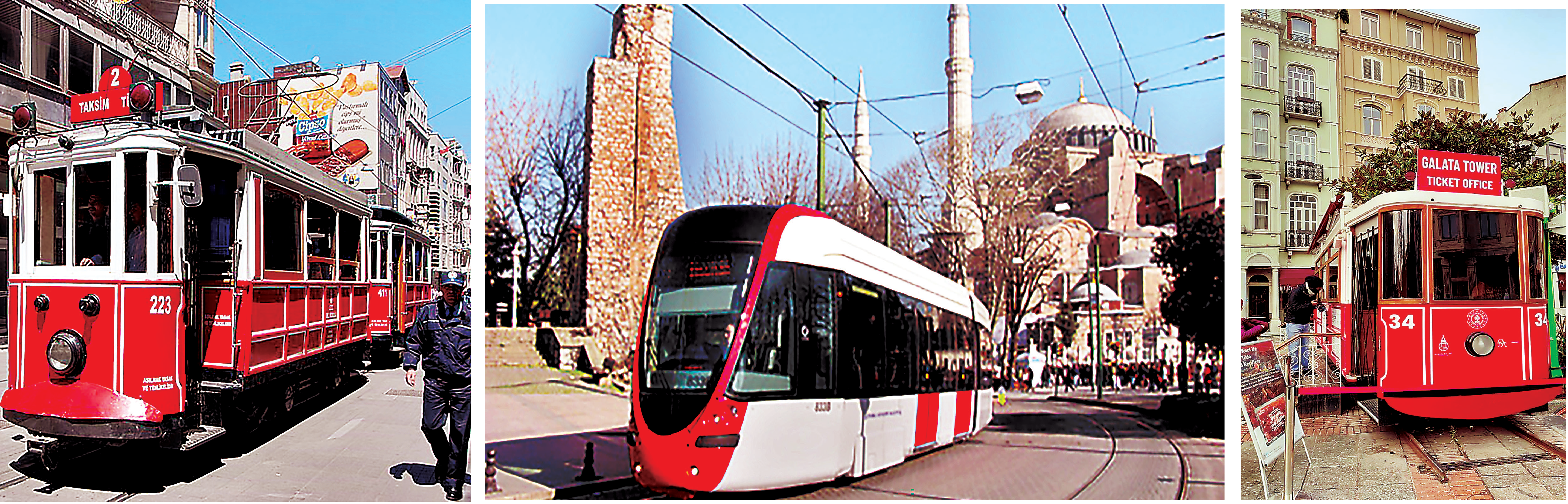
Old cities like Kolkata can sustain their rich tram traditions –Istanbul is an example
Istanbul has understood the nostalgic and urban importance of trams. Around three million people use the tram service in the city everyday
Afroz Alam Sahil
I am currently standing on Istanbul’s most famous stiklal Caddesi (Istiklal Street). This iconic street in the historic Beyolu district connects Taksim Square with Galatasaray and Tünel Square. The street is busy 24 hours a day. There is a great crowd around me. There is a distinct sound amidst the chaos and suddenly, I envision myself wandering the streets of Kolkata. In my view, this sound is definitely the hallmark of Kolkata – the sound of the tram, which has run in Kolkata since 1873. Now, as has been reported widely, the tram is being discontinued by the Mamata Banerjee government. Right in front of my eyes is Istanbul’s famous Nostalgic Tram, which is a centre of attraction for everyone.
While it sounds the same as a Kolkata tram, it is aesthetically more beautiful than the ones in Kolkata and goes slowly enough for tourists to take photos in front of it. Its importance can be felt from quite a distance in the crowd of this road. Vitally, this tram is different from other trams operating in Istanbul. The tram service in Istanbul started in 1869; then it was horse-drawn. It ran like this until 1966, when it was closed. But after 24 years, at the end of 1990, the Istiklal Street was closed for large vehicle traffic, and the nostalgic tram was started, so that the tram remains in the minds of all the people who come to this city. Istanbul understood the importance of trams.
This is why a completely separate tram line was inaugurated in 1992, extending the tram system on the European side of Istanbul to include a modern tram line. This line, now called the T1 line, runs on the same alignment where the tram last ran in 1956. In 2003, the tram also returned to the Asian side of Istanbul as a heritage tramway on the old closed route. This line is now known as the T3 Tram Line. In 2007, another modern tram line on the European side, called T4, was opened, using high-floor light rail vehicles (LRVs). In 2021, the first catenary-free tram line in the city opened between Alibeyköy and Cibali on the European side using modern low-floor trams. The line is now being extended to meet T1. On August 30, 2023, Istanbul inaugurated an important stop on one of its newest tram lines, Eminönü-Cibali Station.
Istanbul is currently advancing several tram projects, including the significant “AnadoluTRAM.” This new tram line is designed to connect the several. According to a joint report from the Traffic and Transportation Commission and the Public Works and Reconstruction Committee, the project aims to remove wheeled vehicles from traffic along its 21.3-km route, focusing heavily on pedestrian-friendly road arrangements. Additionally, construction has begun on a 3.2-km section of tramway in central Istanbul, linking Feshane to Bayrampaa Meydan on tram line T5.
Earlier this year, the T6 Sirkeci-Kazl?çeme tramway line was launched, spanning approximately 8.3 km. The craze for trams can also be gauged from the fact that in Istanbul’s Bahçelievler district, irinevler Meydan?, where there are no tramway tracks, a ‘nostalgic tram’ was installed in 2023 on the occasion of the 100th anniversary of the republic of Turkey. The service was started to keep the memories of the tram alive in people’s hearts, because the government here believes that ‘trams are one of the best examples of maintaining tradition.’ And according to Istanbul Metropolitan Municipality’s 2022 Annual Report, around three million people are using this tram service in Istanbul every day. If only Kolkata could sustain this rich tradition, drawing on the lessons of cities like Istanbul, where trams are celebrated as integral parts of urban life.
It could have also served an economic purpose through tourism. Istanbul’s tram system can serve as a lesson for the Bengal government and the Kolkata municipality on how to rehabilitate a defunct tram system using modern technology. This approach can not only improve the city’s traffic but also generate significant revenue. Reviving Kolkata’s trams could not only enrich the city’s cultural landscape but also serve as a reminder of its historical roots, connecting past and present in a meaningful way.
(Afroz Alam Sahil is a freelance journalist and author, currently living in Turkey. Source: The Wire)
.jpg)


