.jpg)


.jpg)

 English daily published in Bengaluru & Doha

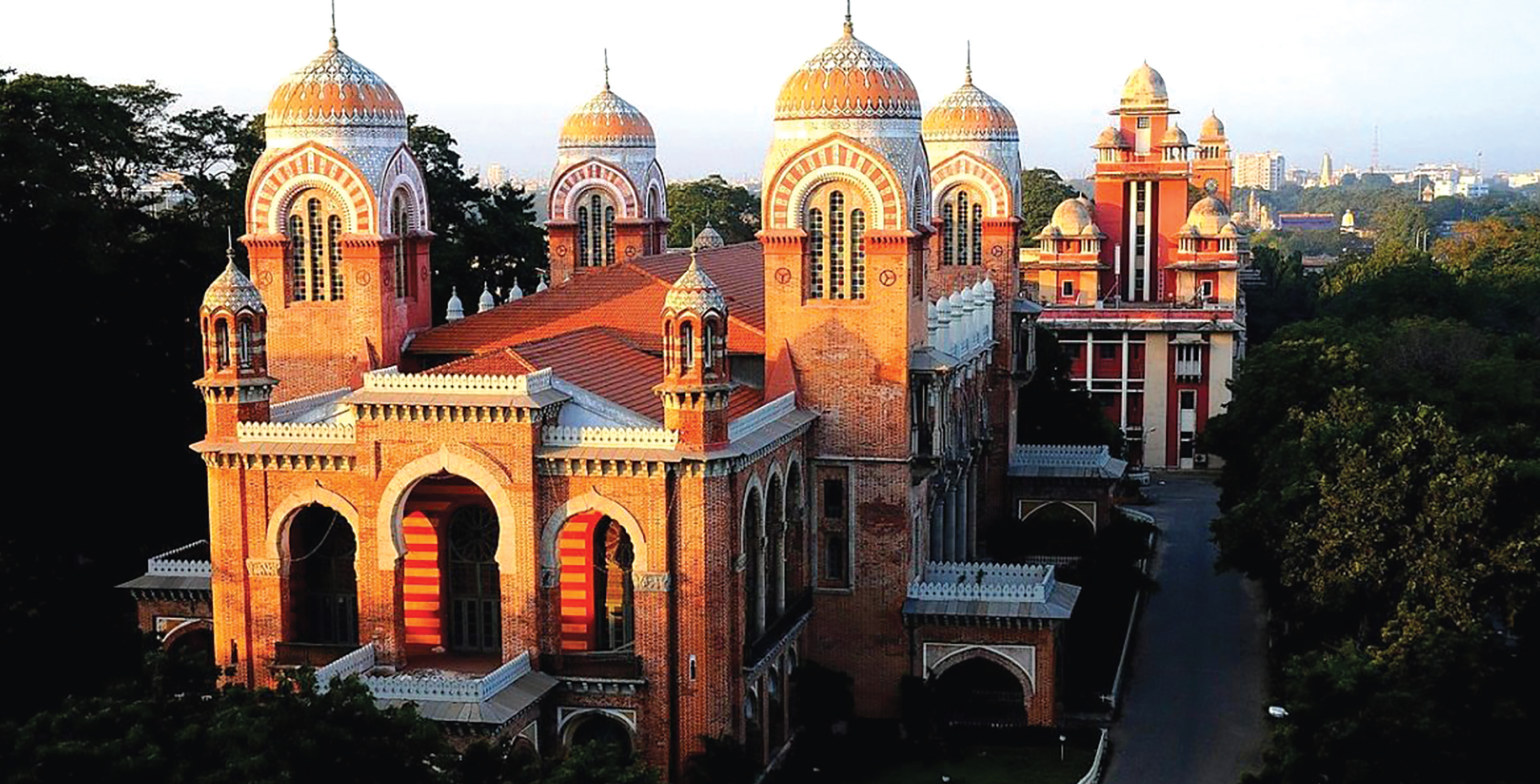
Autonomy, A++ Rating Fail to Mask the Crisis Facing Madras University
The institution’s legacy has been overshadowed by a funding crises, outdated academics and rising student discontent.
R. Amanda Miriam Fernandez
The University Grants Commission (UGC) has granted the University of Madras, a public state university, full autonomy. The move comes after the university achieved A++ accreditation from the National Assessment and Accreditation Council (NAAC) last year, obtaining a category-1 status. To an outsider, the high rankings would indicate that the university has performed well on all assessment parameters. But the ground reality could not be more different. Despite achieving these benchmarks, the university has taken a hit on all fronts – inadequate funding, lack of proper infrastructure, academic discrepancies and an unconducive learning environment.
Financial crisis Caught: in the discord between the state and Union governments, the university has suffered tremendously due to insufficient funds. The IT department froze its bank accounts over non-payment of Rs. 424 crore tax dues, resulting in nonteaching staff going without salaries for several months. The university managed to scramble funds to pay the staff only after they organised a strike. The university has also not received funds from the Tamil Nadu government for the past seven years, citing audit objections. Even after a year of obtaining category-1 status, which made the university eligible to receive additional funds from the Union government, the university remains fund-starved. The standoff between the state and the Union government has also left the university without a Vice Chancellor for over a year now, exacerbating the issues faced by the institution. The University of Madras is dubbed as the ‘mother of all South Indian universities’ as several colleges in Tamil Nadu come under its ambit. The institution is highly sought after by many students, particularly from nearby districts, with a significant number being first-generation learners. One of the main reasons students from smaller districts flock to this institution is its low fees for postgraduate courses and PhDs, along with the hope that the university will live up to its reputation. The institution also offers scholarships and other fee waivers. While an autonomous status offers financial independence, it also raises concerns about potential fee hikes. Last year, the varsity hiked the PhD fees from Rs. 8,000 to Rs. 18,000 which received significant backlash from students.
Stifling student voices: The University of Madras boasts of illustrious alumni from various disciplines, including Dr. Sarvepalli Radhakrishnan, V.V. Giri, Neelam Sanjeeva Reddy, R. Venkataraman and Dr. A.P.J. Abdul Kalam. Ironically, the varsity has left no room for student leaders to emerge on campus and the administration has curbed any attempts at forming a student body for years. Union activity is curbed with an iron hand.
‘Lack of digitalisation has led to exploitation’: Lack of transparency in maintaining students’ attendance records is another problem plaguing the university. At a time when several universities have adopted online portals, allowing students to keep a track of their attendance and their academic profiles, the University of Madras has no such provision. The alleged non-compliance with attendance rules under the Choice Based Credit System (CBCS) poses a significant challenge for students, who claim professors manipulate the rules to their liking.
Allegations of faculty high-handedness and improper communication endure with a post graduate student, Tamil Kumaran, claiming, “The faculty barred me from appearing for a core subject exam for three semesters, citing shortage of attendance. They did not specify the required percentages for redoing courses, condonation or reappearing for exams.
Outdated syllabus: In addition to battling a broken attendance system, students are also putting up with outdated syllabus being taught in a few departments. While most colleges offer online portals for elective applications, students here must go from department to department in search of available options. Some even travel to other campuses to find suitable electives. A few departments do consider these challenges and make extra efforts by admitting more students into their electives.
Lack of proper infrastructure: The ill-maintained infrastructure and scarce restrooms have also added to the students’ problems. What is surprising then is the fact that the university managed to secure A++ accreditation. This too came at the cost of students cleaning their own classrooms, as the administration left no stone unturned to impress the visiting officials. Students were allegedly strictly instructed not to provide any negative feedback to the NAAC committee. The university made sure that the campus was thoroughly cleaned to mask their failure in maintaining it all year-round. This, when the university was criticised last year for resorting to manual scavenging to make sure that the campus was in shape before a presidential visit. An asbestos sheet and minimal seating is what constitutes a canteen at the university, serving unhygienic food to students.
The impressive, British-built university now hosts dilapidated classrooms and an apathetic administration. The only solace for students is the view of the Marina beach from the university, the Indo-Saracenic architecture and the library that provides a quiet place to study. The heritage of the 166-year-old university has been its primary asset, keeping the institution afloat.
While autonomy would help relieve its financial burdens, the institution is in dire need of reformative measures to create a conducive learning environment for students. It must prioritise digitalisation, infrastructural growth, revamping of academics, transparency in administration, student wellbeing and careful introspection. R. Amanda Miriam Fernandez is a journalist and has recently completed her post-graduation from the University of Madras.
.jpg)


