.jpg)


.jpg)

 English daily published in Bengaluru & Doha

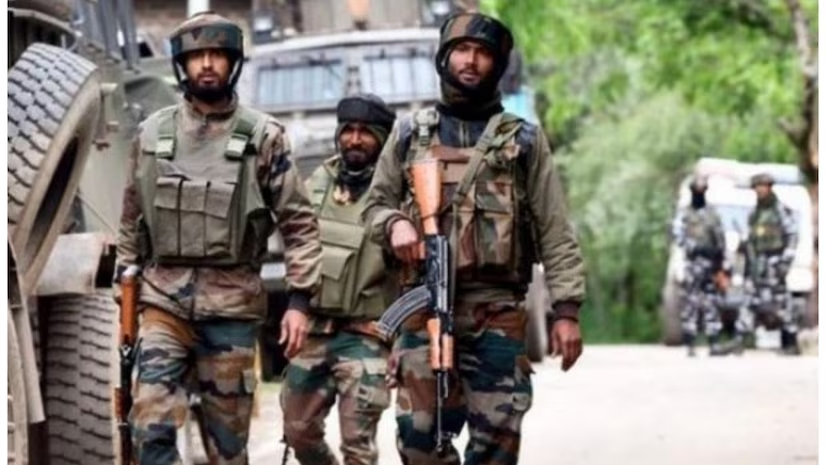
Extremist attacks in J-K back to haunt forces
In a worrisome development, there has been an uptick in attacks by suspected ultras in Kashmir in recent months and interestingly, the theatre of violence has shifted southwards to Jammu, a Hindu-majority (66% as per Census data) area that has experienced relative peace in the three decades of unrest. In 2022 and 2023, there were just three suspected ultra attacks on Indian security forces in the Jammu area. This year, at least seven have already been recorded so far. At least 16 Indian soldiers and policemen were killed in different attacks in Jammu and Kashmir this year and at least 10 of the fatalities were in Jammu.
It all started on June 9, the day Narendra Modi was sworn in as prime minister for a third term. Nine civilians were killed and dozens wounded whend ultras attacked a bus carrying Hindu pilgrims, forcing it down a gorge in the Reasi district of Jammu. In a bid to end the unrest in the troubled state, the Bharatiya Janata Party government had detained Kashmiri political leaders and revoked article 370 of the Constitution which made Kashmir and Ladakh Union Territories(UTs). The government defended the move, claiming it would eliminate the unrest of the past several decades and bring economic prosperity. However, five years down the line, security in the region continues to be a headache for the Modi government. According to experts, the violence in the region now shifting to Jammu marks a new wave of militancy, showing patterns not witnessed in the 35-year-long unrest. Guerrilla-trained militants are striking with a high element of surprise in the region’s forested mountains at short intervals. Their targets are mainly the members of security forces. Resurgence of violence following the withdrawal of Kashmir’s special status in 2019 appears to be a well thought-out strategy of the ultra groups, mostly sponsored by Pakistan to convey an impression that the conflict has not ended by the constitutional changes, as claimed by Modi-Shah.
Incidentally, India’s strategy forced the armed groups to seek refuge in the high mountains and dense forests in the Jammu area, where carrying out attacks was relatively easy. Moreover, the terrorists were also aided by a loosened security grid in Jammu because it had been violence-free for decades. According to South Asia Terrorism Portal, there had been a thinning of security forces in the Jammu area after a large number of soldiers were moved to the frontiers along India’s border with China in Ladakh. The deployment along the Line of Actual Control (LAC) has made it easier for the Kashmiri ultras to operate. These attacks bring into focus the old gameplan of Pakistan to keeping violence going in the Valley,and now in Jammu as it serves the biggest of its objectives that elections are not an end in itself. The harsh reality is that since Rawalpindi has nothing to lose, it will not end this proxy war.
It wants to consistently bleed India by inflicting multiple cuts. While there’s no reason for alarm as Indian security forces have the capability to deal with Pakistan army sponsored terrorism, there’s no room for complacency either. The Modi-Shah combine would do well to re-strategise and ensure a water-tight grid duly supported by the army intel, to stop infiltration through Jammu, like it has successfully done in the valley.

.jpg)
.jpg)
.jpg)
.jpg)
.jpg)