.jpg)


.jpg)

 English daily published in Bengaluru & Doha

Increase in forest cover: Is it statistical jugglery?
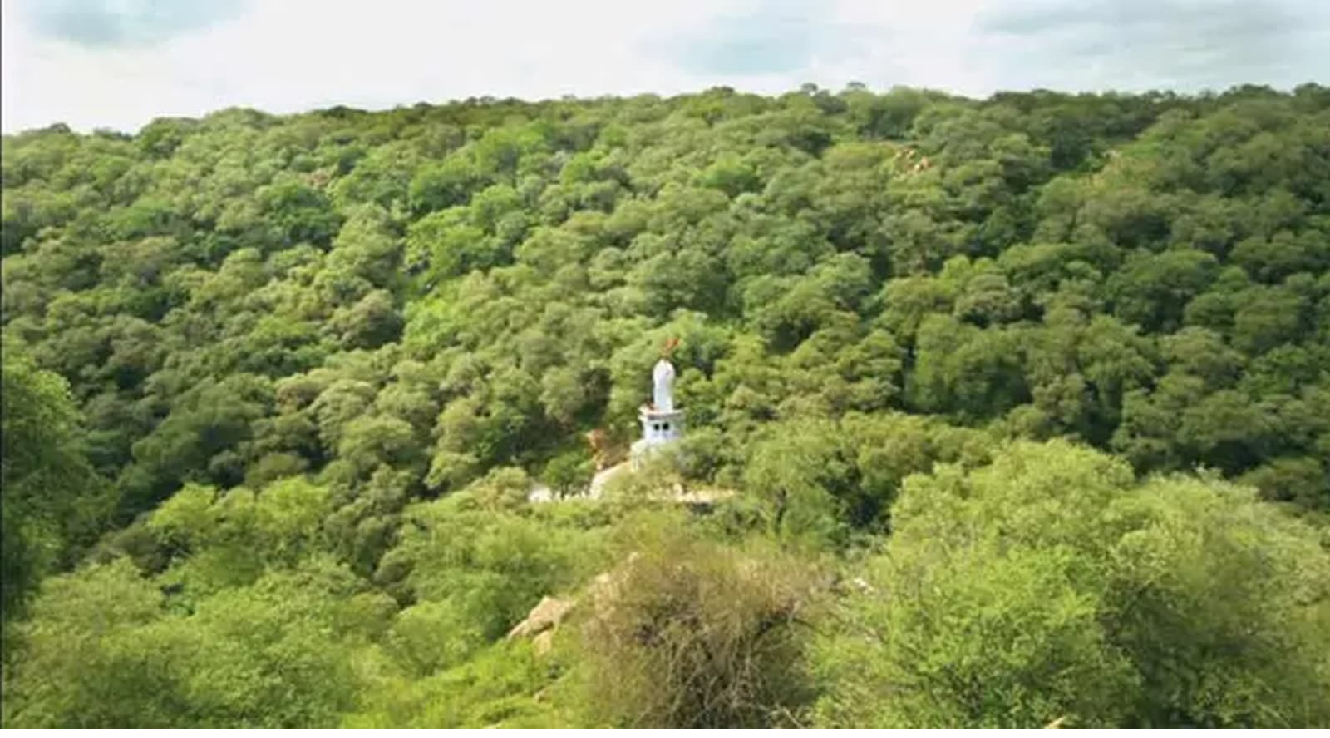
The reported increase in India’s forest cover by 156.41 sq. km., though minuscule, augurs well for a nation that has been steadily losing green cover under the twin assault of industrialisation and urbanisation. As per the India State of Forest Report (ISFR) 2023 released on Saturday by Union Environment Minister Bhupendra Yadav, 25 per cent of the nation’s territory—8,27,357 square kilometres—comes under green cover.
The biennial assessment is based upon satellite imagery from Resourcesat deployed by the Forest Survey of India (FSI). The green cover of 25.17% breaks down to 21.76% of forest cover (7.15 lakh sq. km) and 3.41% of tree cover (1,289 sq. km). The news should come as a pleasant surprise amid frequent reports of mass denudation of forests and vast stretches of forests in states like Madhya Pradesh, Jharkhand and Odisha being leased out for mining purposes. Constant landslides in the lower reaches of Himalayas in Himachal Pradesh and Uttarakhand too have been taking a heavy toll of forests. The increase in green cover area has become a regular feature of ISFR reports for the last six years entailing three biennial reports. Even the 2021 report had claimed a marginal increase of 2,261 sq. km. area.
But the figures have also aroused skepticism of environment experts as well as ecologists. A general observation is that figures show a rise due to inclusion of areas that do not qualify to be included under forest as defined by the Forest Conservation Act 1980. For instance, coffee plantations, roadside trees and areas shaded by trees in urban agglomerations too are being added to the territory under 'green cover'. Environmental lawyer Ritwick Dutta had demanded –sarcastically though – that coffee planters and urban residents be declared forest dwellers. Ironically, the areas with tree patches such as community lands, roads, rail and canal side plantations, bamboo, rubber, tea and coffee plantations are being assessed under forest cover.
It is anybody’s guess if forest cover is indeed rising, given the dilution in the definition or is it mere statistical jugglery to ‘greenwash’ the ecological degradation? Given the report’s findings, the decline in tree cover in the north-eastern states should be a reason for of worry. The latest figures report a decline of 327 sq. km. in the forest cover of the seven states which account for 7.98 per cent of the country’s geographical area harbouring 25 per cent of India’s forest cover. Even the 2021 figures had reported a loss of about 3,199 sq. km. of forest between 2009- 2019. With 17 biodiversity hotspots of the world, the North-eastern states are also home to a wide diversity of tribal people. A similar trend is witnessed with regard to Western Ghats' Eco-sensitive areas that span across six districts over 44,044 sq. km. embracing 45 districts.
In comparison to 2013 figures, the area has registered a decrease of 58.22 sq.km. of forest cover. With the entire peninsular river system dependant upon precipitation on Western Ghats, the decline in forest cover should set off alarm bells. Karnataka is one of the five states where forest cover has receded. While Madhya Pradesh (state with the largest green cover) registered a decrease of 612 sq. km. of green cover, Karnataka occupies the second slot with forest cover coming down by 459 sq. km. The State would do well to heed the warning and step up efforts to expand the area of existing forests besides preserving the existing green cover.

.jpg)
.jpg)
.jpg)
.jpg)
.jpg)