.jpg)


.jpg)

 English daily published in Bengaluru & Doha

Indians yet to embrace Republican attitudes, say experts
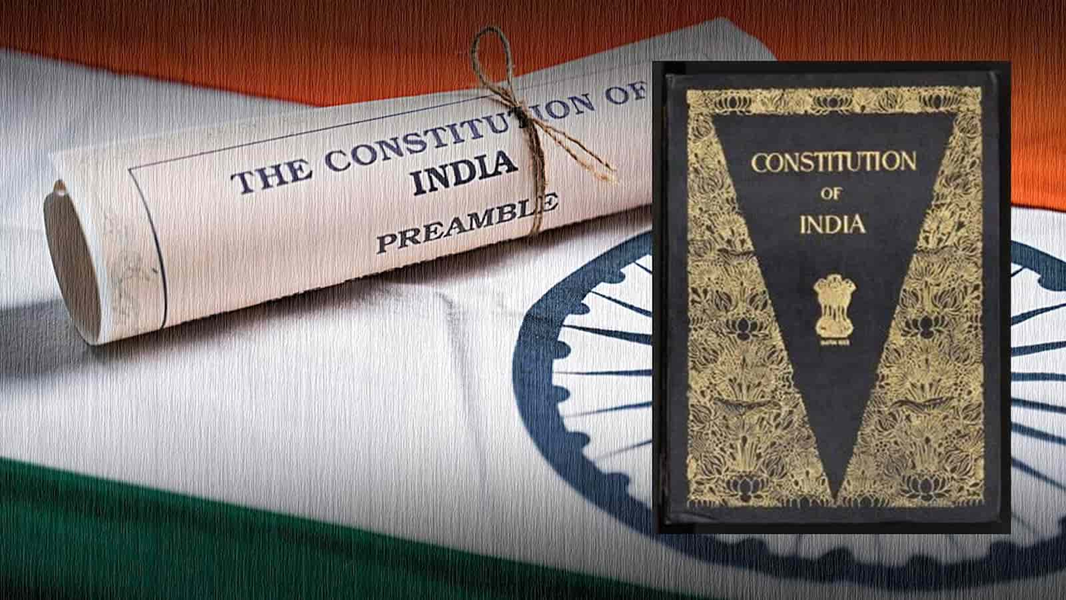
Bengaluru: Political scientists argued that India was far away from becoming a true Republic, still treating democratically-elected representatives and even bureaucrats like an aristocratic ruling class. They reasoned that the attitude is a hang-over from a feudal past. The Republic is a state in which people hold power through elected representatives rather than a monarch. The remarks come in the backdrop of the Republic Day which was marked on Sunday. January 26 is the day on which the Indian constitution came into being.
Professor Narayana A from the school of policy and governance at the Azim Premji University said that under usual circumstances the state would modernize itself through industrialisation and education and democratization would follow. However, India was a peculiar case wherein the state took it upon itself to democratise the masses, which hasn’t proved entirely successful.“We elect our representatives democratically and treat them like lords and kings. We want to be treated by them like that. This is the biggest paradox of the Indian system. This is the reason why when some institute rightly points out that India is no longer a democracy but an elected autocracy, it does not make us feel sad.
It doesn’t make us feel like we’ve lost something significant in the last 75 years because we think we’re still fine under someone else’s lordship,” he said. “Through our constitution, the idea of democracy is in some way imposed from above by a group of enlightened people who thought that this country should be under an evolved system like democracy. They simply adopted it for the people. It’s not in response to the felt need of the people,” he added.
Higher ideals far off: Swaraj Abhiyan founder Yogendra Yadav, who had been an assistant professor of political science, lent credence to the idea of a Republican Democracy. “Our constitution calls us not just a democracy. It says we’re a democratic Republic. The word Republic has intrigued me. Because when I was in school in class nine, my civics teacher told me well, the Republic is a form of government in which there is no king or the person who rules the country is not hereditary,” he said.
“Republic reminds us of the existence of a public. We don’t sufficiently pay attention to two things in our intellectual history. One is European intellectual history and the other is Indian. Republicanism is a much deeper, stronger current of thought than liberal democracy, which is much more recent,” he added. Yadav said that Republicanism was superior to liberal democracy. “The idea of civic republicanism goes back 500 years to Italy.
Republicanism instead of anchoring itself in the liberal ideal of non-interference, grounds itself in the ideals of non-dominance. That’s a more radical way of interpreting democracy. Republicanism enables us to connect with the ancient Indian Republics, the ideal of ‘ganatantra’. It is not me who is trying to establish that connection. Babasahbeb Ambedkar spoke about it,” he said.
.jpg)




.jpg)