.jpg)


.jpg)

 English daily published in Bengaluru & Doha

Rejigging kindergarten edu for holistic tomorrow
NT Correspondent
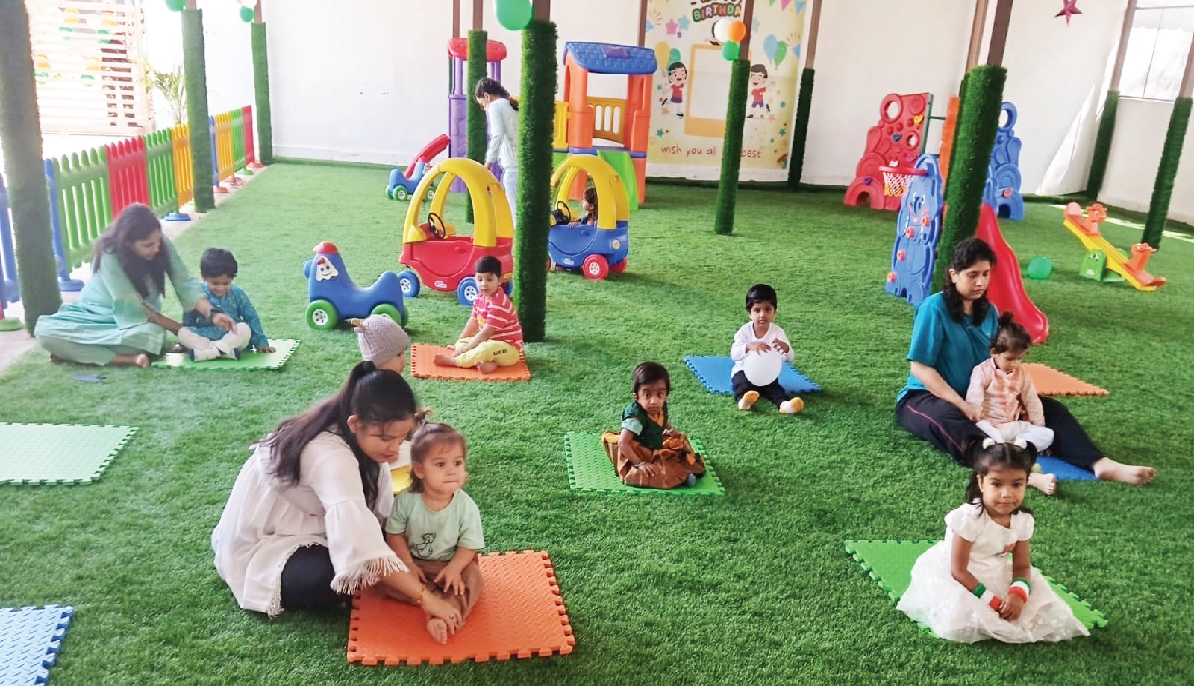
Bengaluru: Education in Bengaluru is undergoing a significant transformation, moving beyond rote learning toward a holistic, skill-based approach. This shift aims to address the dynamic demands of a changing world while fostering inclusivity and experiential learning. Innovative approaches to early education are emerging, with experiential learning gaining traction. Hi Kalpa, a Bengaluru-based preschool founded in 2021, exemplifies this paradigm shift. Shalini Sharma, its CEO and Founder, explains, "Our approach is rooted in experiential learning. Children engage in activities like gardening, storytelling and creative play, fostering hand-mind coordination and a deep connection to the world around them." Hi Kalpa’s Kalpa Greenhouse serves as a hub for hands-on learning, where children plant seeds, observe growth, and use tools like magnifying glasses. "This tactile experience strengthens their connection to nature and builds curiosity and problem-solving skills," Sharma notes.
Inspired by Finland’s education model, Hi Kalpa adapts practical learning to Indian needs, balancing experiential activities with foundational academic skills. A common concern among parents is whether children transition smoothly from hands-on learning environments to more traditional academic settings. Hi Kalpa addresses this by balancing experiential activities with foundational skills in reading and writing. Sharma emphasises, "Our curriculum is designed to ensure that children are well-prepared for primary school without losing the joy of learning through exploration." Parents initially hesitated to embrace such an unconventional approach, but the results have been promising. Children bring their enthusiasm for school activities home, inspiring families to participate. This ripple effect fosters a broader understanding of holistic education. Holistic education aims to nurture well-rounded individuals by addressing their social, physical, mental, and academic growth. "Schools must support children in exploring diverse interests, from creative arts to unconventional careers," Sharma adds. Kathyayini Chamaraj, Executive Trustee at CIVIC, underscores the need to support early childhood education through day-care facilities in Anganwadis. "Providing day-care in Anganwadis is crucial for working mothers and to curb malnutrition. All Anganwadis must be upgraded to meet this need," she says. Shashi Kumar, General Secretary of the Associated Managements of Primary and Secondary Schools (KAMS), stresses the importance of holistic development. "Strict laws are needed to combat child labour protecting the rights of vulnerable children. Moreover, the curriculum should incorporate extracurricular activities to alleviate growing academic pressure," he says.
The Right to Education (RTE) Act mandates that 25% of seats in private schools be reserved for children from economically weaker sections. Despite this, resistance from schools remains a hurdle. "Charging exorbitant fees or denying admissions on frivolous grounds defeats the purpose of inclusive education," Kathyayini asserts. Karnataka also grapples with high dropout rates, particularly among girls, due to poverty, child labour, and early marriage. According to ASER, Karnataka has witnessed a decline in enrollment figures for children aged 6-14 in government schools, dropping from 76 per cent in 2022 to 71 per cent in 2024. However, this figure is still higher compared to 2018, when the enrollment rate was 69 per cent. Additionally, 83 per cent of government primary schools in Karnataka have fewer than 60 students, and 22 per cent of upper primary or higher schools also have fewer than 60 students.
This, however, represents an increase of 17 per cent from 2022. Scholarships and mid-day meal schemes have made some impact, but as Kathyayini emphasises, "We need holistic measures to ensure children from marginalised communities complete their education."




.jpg)
