.jpg)


.jpg)

 English daily published in Bengaluru & Doha

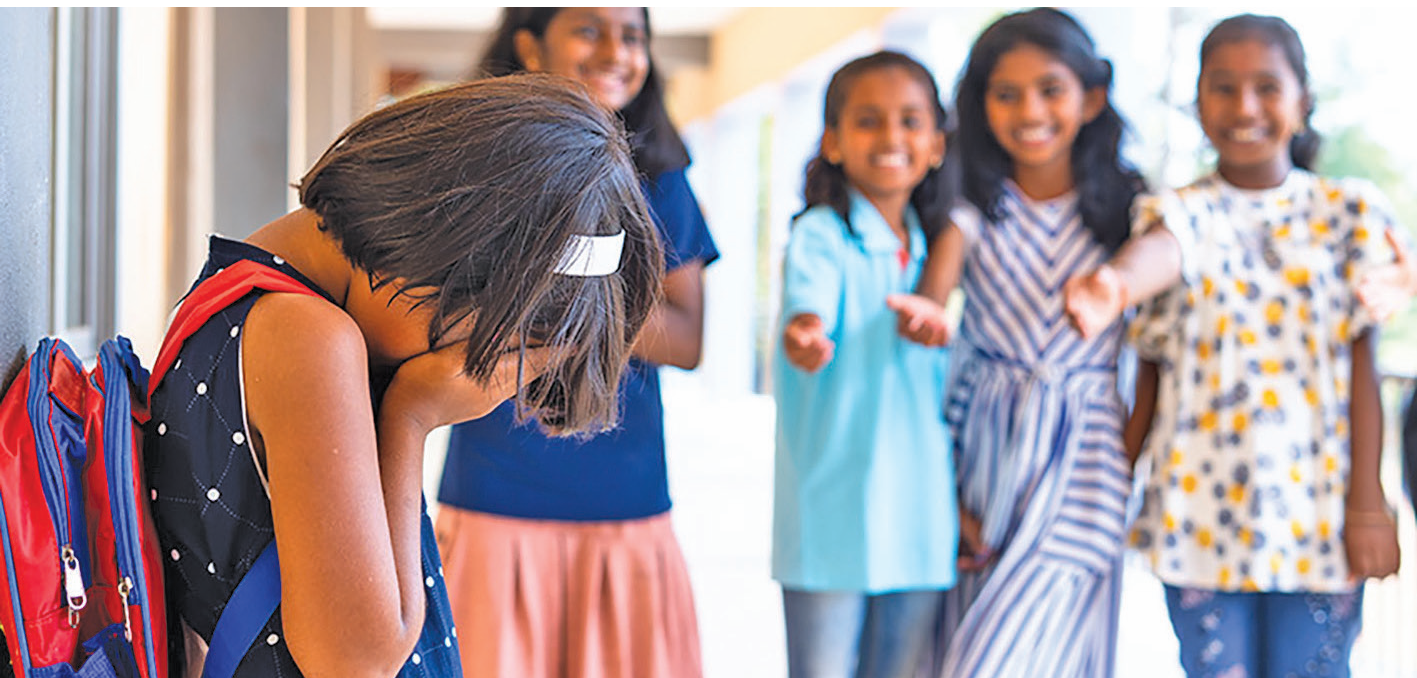
Bullying: Understanding, addressing & preventing its long-term impact
Bengaluru: Bullying remains a significant issue in schools across Karnataka, particularly in Bengaluru, where a study published in the Indian Journal of Psychological Medicine found that 44.7% of schoolchildren had experienced bullying. In 2023, a report in EducationWorld revealed that private schools in the state have turned to the Karnataka State Commission for Protection of Child Rights (KSCPCR) for guidelines, as bullying and ragging have escalated, leading to harm among students.
Dr John Vijay Sagar, the Head of the Department of Child and Adolescent Psychiatry at the National Institute Of Mental Health & Neuro Sciences (Nimhans), explained the widespread nature of bullying and its varied impacts. "Bullying is very common among schoolchildren and can start as early as primary school. It manifests in different forms—direct bullying, such as physical or verbal aggression and indirect bullying, like spreading rumours. Both boys and girls experience bullying, which can be either mild and occasional or persistent and repeated. The impact varies depending on the type and duration of bullying," explains Dr. Sagar.
Understanding the psyche of a bully: It's crucial to understand that bullying isn't just about the victim; the bully's behaviour often stems from deeper issues. "Bullying is often a way for children to exert power and display strength. Many bullies have underlying behavioural and emotional issues, often stemming from adverse childhood experiences or exposure to aggression in their family environment," Dr. Sagar explains. Adarsh Benkappa Basavaraj, a student coach, shares his personal experience from over two decades ago, illustrating how bullying can scar individuals for life.
"When I was in school, nearly 20–25 years ago, I faced a lot of challenges. I was obese which led to relentless bullying. I was constantly teased, mocked and humiliated.” "The key difference now is the presence of social media and digital platforms. A single cruel message, photo, or video can be forwarded endlessly. The ability to publicly shame or humiliate someone has increased exponentially, making bullying even more damaging," he observes.
How to handle bullying?: Dr. Sagar stresses the importance of support systems for children who face bullying. "Children should seek support and talk to their parents or friends. Tolerating bullying is not an option. However, many children hesitate to report it, fearing that the situation might worsen. Parents must proactively engage with their children, communicate with teachers and, in cases of hostel accommodation, connect with wardens. Schools and colleges should implement strong anti-bullying and anti-ragging guidelines," he advises.
Adarsh offers advice for young people facing bullying today. "My first and most important advice is this: No matter how ashamed or scared you feel, please talk to someone. If you can’t talk to your parents, reach out to a trusted relative—a young uncle, aunt, sibling, or cousin who genuinely cares about you. If the family doesn’t feel like an option, talk to a teacher. Ask them to keep it confidential and explain that it's taking a toll on your mental health," he continues.
Safer environment for children: The rise in bullying cases highlights the urgent need for schools, parents and society to address this issue proactively. Mental health struggles among young people are increasingly common, with suicide rates among students alarming.
It is critical to create spaces for open conversations about bullying and mental health, ensuring that children are not left to suffer in silence. "Today, we are seeing alarming rates of suicides and mental health struggles among young people. Whether that’s right or wrong isn’t the point—the point is that we need to acknowledge it and create safer spaces for open conversations about bullying and mental health," Adarsh concludes.




.jpg)
