.jpg)


.jpg)

 English daily published in Bengaluru & Doha

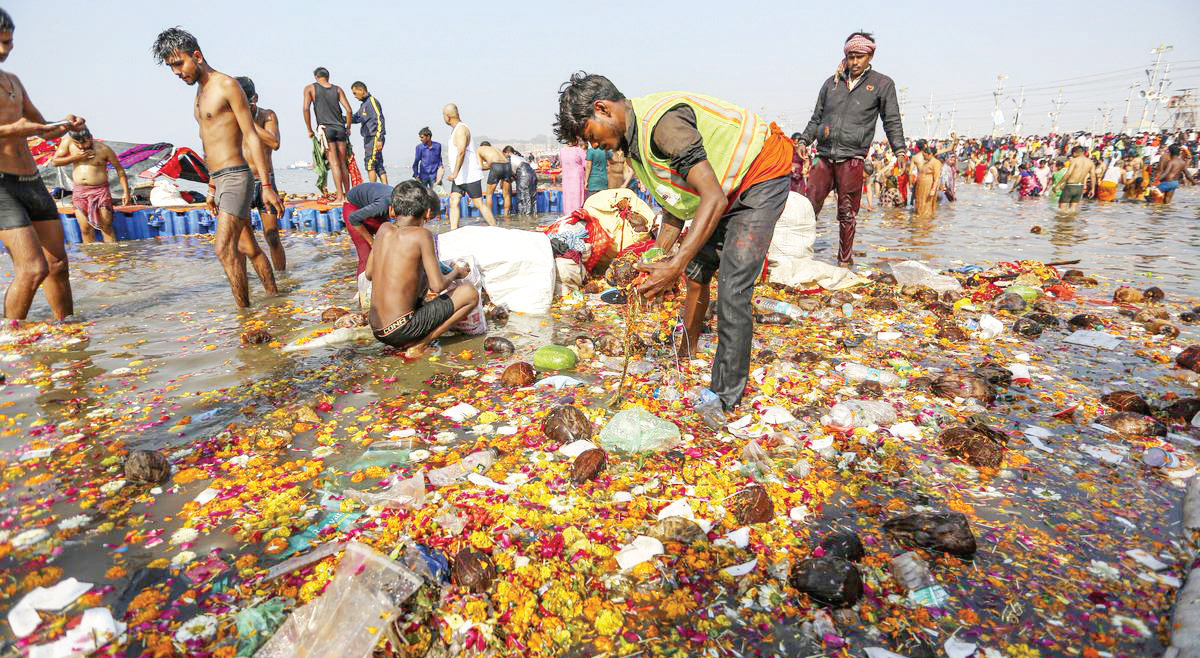
Yogi calls Maha Kumbh waters pure, docs call it 'health hazard'
NT Correspondent
Lucknow/Bengaluru: A damning report from the Central Pollution Control Board (CPCB) has exposed alarming levels of faecal contamination in the Sangam waters at the Maha Kumbh, raising serious health concerns for millions of pilgrims. Experts warn of a potential surge in waterborne diseases, yet the Uttar Pradesh government has dismissed the findings as an attack on the religious gathering.
The CPCB report, submitted to the National Green Tribunal (NGT) on 3 February, found that coliform bacteria—indicating untreated sewage and human waste consistently exceeded safe bathing limits across multiple test locations. Samples taken between 12 and 19 January revealed contamination far above the permissible 2,500 units per 100 ml, making the water unsafe even for a dip, let alone ritual consumption. Despite the grim findings, Chief Minister Yogi Adityanath rejected the report on Wednesday, claiming it was an attempt to malign the Maha Kumbh. He insisted the Sangam’s water was safe for both bathing and ritual sipping, brushing aside scientific warnings of a looming public health crisis.
According to Dr Suranjit Chatterjee, senior consultant of internal medicine at Indraprastha Apollo Hospital, New Delhi, exposure to contaminated water during a dip can pose serious health risks, reports The Print. “When you take a dip, your skin comes in contact with the water, and you might accidentally ingest some of it or even inhale small amounts through your nose,” he said. While the body can fight off minor exposure, he warned that larger amounts could overwhelm the immune system, leading to gastrointestinal infections that affect your digestive system. “You can end up with gastroenteritis or even cholera, but mainly gastroenteritis,” he said, adding that symptoms include loose motion, vomiting, fever, and abdominal cramps. Dr Chatterjee added that while he has seen some cases of infections among those returning from the Kumbh, the numbers were not as high as he had expected. “I don’t work in a hospital where people walk in easily, but I would have anticipated far more cases than what I’m seeing,” he said. The mela administration reported that since 13 January, over 54 crore devotees have taken a dip during the Maha Kumbh.
Dr Edmond Fernandes, director of the Edward & Cynthia Institute of Public Health in Mangaluru, emphasised that those immersing in the Sangam waters remain vulnerable, especially children and immunocompromised individuals. He warned that exposure to faecal bacteria could lead to illnesses such as diarrheal diseases, typhoid, skin infections, hepatitis and even lung infections in those with weaker immunity.
“Much depends on a person’s immunity level,” he said, adding that children who accidentally ingest the contaminated water are particularly at risk. Beyond human health, he said mass immersion also disrupts aquatic ecosystems, posing a significant threat to life below water.




.jpg)
