.jpg)


.jpg)

 English daily published in Bengaluru & Doha

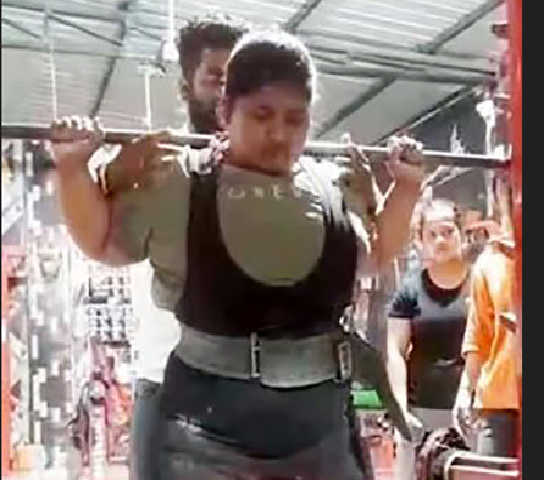
B'luru docs warn of gym risks after teen dies lifting weights
Bengaluru: Every powerlifter's journey exemplifies strength, devotion, and sacrifice. However, the pursuit of excellence can have unfathomable consequences. On February 18, 17-year-old powerlifting champion Yashtika Acharya died in a horrific training accident. Her unexpected demise stunned the nation, particularly the sports community and her family. She attempted but failed to complete a 270 kg squat while practising for an upcoming competition at a gym in Bikaner, Rajasthan.
The massive weight crashed onto her neck, leading to a promising powerlifting champion’s tragic untimely death. The incident has reignited discussions on safety measures in extreme sports. Experts stress that such tragedies can often be prevented with proper technique, supervision, and equipment checks. “The injury suggests cervical spine damage, particularly in the C1 and C2 regions, leading to respiratory arrest and death. Yashtika was a professional powerlifter; lifting heavy weights alone wouldn’t have caused this. Proper guidance from a trained fitness coach is crucial. Coaches must also be knowledgeable about risks as doctors are in their field,” says Dr Manoj Kumar H V, dean of Shri Atal Bihari Vajpayee Medical College, Bengaluru.
The death of a young athlete with an impressive record, including a gold medal in the junior national games, is not just a personal loss, but a stark reminder of the need for better safety protocols in weight training. Though injuries are common in sports, experts emphasise that proper training, equipment use, and gradual conditioning are essential to prevent fatal accidents. “Weightlifting accidents are often fatal if caused by incorrect techniques. The cervical spine is especially vulnerable to sudden stress. Even experienced athletes are at risk.
These injuries can be minimised by ensuring proper training, using standardised equipment, and gradually building strength rather than attempting extreme weights suddenly,” explains Dr Hemanth Kalyan, senior consultant, orthopaedic surgery and sports medicine at Manipal Hospital, Bengaluru. High-velocity sports like motorsports and adventure activities also pose similar risks, while traditional sports like football, cricket, and martial arts have recorded fatalities due to head trauma. According to powerlifters, lifting beyond 120 kg requires strict safety measures.
“I train men and women aged 18 to 60 with a focus on technique, posture, and confidence. Anything above 200 kg is risky. In Yashtika’s case, lifting 270 kg caused spinal compression and death. Many weightlifters use steroids to boost their performance, leading to serious long-term health risks,” said Rajkumar Pinto, fitness coach and trainer specialising in bodybuilding, powerlifting, and weight training. Experts stress that injury prevention requires a balance between preparation, technique, and recovery.
They advocate educating fitness coaches, enforcing injury prevention programmes, designing sport-specific exercises, and ensuring proper recovery protocols. Implementing these strategies can help athletes train and compete safely. As the world mourns Yashtika, her tragic death serves as a sobering reminder of the dangers in extreme sports and the importance of prioritising safety in every athlete’s journey.
.jpg)




.jpg)