.jpg)


.jpg)

 English daily published in Bengaluru & Doha

'Lynched in broad daylight’: Fact-finding report claims police complicity in M'luru mob killing
Bengaluru
The lynching of Mohammed Ashraf, warn civil society groups, is not an isolated case but part of a growing pattern
A damning new fact- finding report on the mob lynching of Mohammed Ashraf near Mangaluru has raised serious concerns over police complicity, delayed justice and the normalisation of hate crimes in Karnataka.
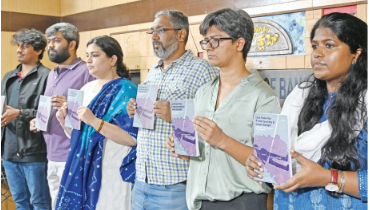
Titled ‘Lost Fraternity: A Mob Lynching in Broad Daylight, a Betrayal of the Promise of the Constitution’, the report is a collaborative effort by the People’s Union for Civil Liberties (PUCL), the All India Lawyers Association for Justice (AILAJ), and the Association for Protection of Civil Rights (APCR). Released on Saturday, it alleges glaring dereliction of duty by the police, who failed to file a First Information Report (FIR) despite being present at the scene of the lynching.
Advocate Manavi Atri, one of the contributors, said: “The police arrived at the cricket ground, saw the body, the vehicles, and people still standing around, but did not file an FIR. Instead, an ‘unnatural death’ report was registered. This is indefensible.” The incident occurred on 27 April in a village near Mangaluru. Despite eye- witness accounts and visible injuries on the victim’s body, police officials at the scene including DCP (Law and Order) Siddharth Goyal and then Police Commissioner Anupam Agarwal – allegedly took no immediate action.
The report also names Ravendra Naik, the husband of a former corporator, as one of those present at the crime scene. He is now absconding. An FIR was finally registered the next day, but only after a civilian witness came forward. According to the report, the witness acted because an earlier statement submitted by another individual suspected to be part of the mob contained false claims, including that Mohammed Ashraf had shouted “Pakistan, Pakistan”.
The fact-finding team found no evidence to support this allegation. The report meticulously documents that Ashraf was lynched between 3 pm and 5 pm near a cricket ground where a tournament was underway. It states that one of the young men playing cricket, identified as Sachin, picked a fight with Ashraf and falsely accused him of chanting pro-Pakistan slogans.
He then allegedly incited others to join him in the assault. The attackers used tree branches, cricket bats and bare hands to beat Ashraf. The mob is estimated to have numbered between 30 and 60 people. His injuries were extensive, and he succumbed to them at the scene. Activist Mavalli Shankar from DSS Ambed karvaada stressed that the incident and the official response reflect a deeper crisis of trust in law enforcement.
“When police delay or deny justice, it reinforces the message that some lives don’t matter,” he said. Maitreyi Krishnan, president of AILAJ, pointed to the broader implications: “The Supreme Court has been clear that lynching is not just murder. It is a hate crime that undermines the democratic fabric of our country. The failure of authorities to act swiftly not only emboldens perpetrators but tears apart public confidence in justice.”
The report concludes that there was a clear institutional failure – not only in preventing the incident but also in its immediate aftermath. Authorities did not secure the crime scene, file an FIR in time or take prompt action against those present at the scene. Civil society groups have now called for immediate arrests, a fair and transparent investigation and disciplinary action against officers who failed to perform their duties.
They have also demanded that the government take meaningful steps to curb the rising tide of mob violence and hate- fuelled crimes, especially those targeting minorities. The lynching of Mohammed Ashraf, they warn, is not an isolated case but part of a growing pattern – one in which hate is not only unleashed, but shielded by the silence of those sworn to uphold the law.




.jpg)
