.jpg)


.jpg)

 English daily published in Bengaluru & Doha

Rise of the Pasmanda Muslims
Islam does not recognize caste. But it exists within Indian Muslim society. The realisation is
finding an echo in political corridors.
By Shireen Azam
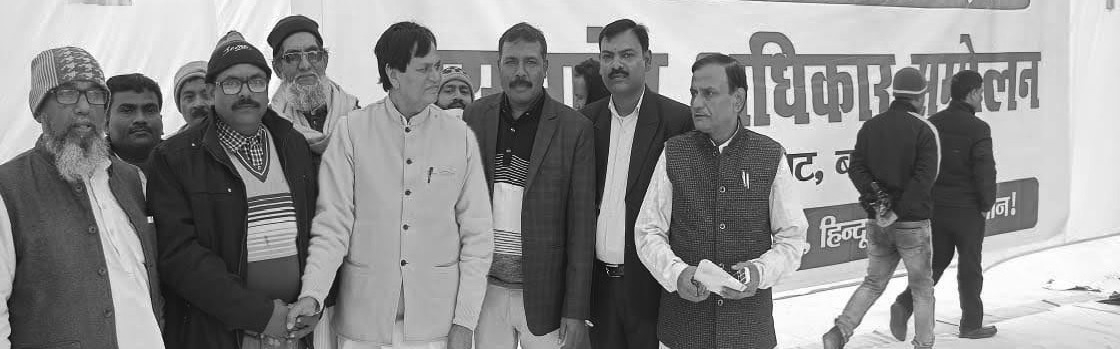
Humne Akbar ka Taj Mahal kab maanga, hum pyaase hai hame Ganga ka paani de do (When did we ask for Akbar’s Taj Mahal. We are thirsty, give us water from the Ganga,” sang Dr Liyaqat Ali, general secretary of the Dalit Muslim Halalkhore Kalyan Parishad. Ali was standing on a stage at Shastri Ghat, Varanasi under the banner of the ‘Pasmanda Adhikar Sammelan (Pasmanda Rights Convention)’. Pictures of M.K. Gandhi, B.R. Ambedkar and Abdul Qayyum Ansari formed the backdrop.
The event on January 2 was a coming together of over 15 ‘lower’-caste Muslim associations to demand rights for this group. On January 9, representatives of several of these groups travelled across three districts of eastern UP, to create awareness about their issues and to form new solidarities. Pasmanda – which means “left behind” in Persian – is increasingly a term used by Muslim associations in UP and Bihar. The term distinguishes themselves as Muslim communities historically and socially oppressed by factors of caste, which is often thought to affect Hindus alone.
The convention banded together concerns of a variety of communities – from the Dalit caste of Halalkhores (sweepers), Nats (dancers) and Dhobis (washermen) to the backward castes of weavers (Bunkars/Ansaris), Qureishis (butchers), Nanpuzs (bakers), Mansooris (cotton-cardres), Idrisis (tailors), Manihars, Shahs (Fakirs), Salmani (barbers) and Rayeens (vegetable grocers), to name a few.
The underlying theme was the need for “ittehad (unity)” among these oppressed groups. A univocal demand was the inclusion of Dalit Muslims in the Scheduled Caste category, both to bring them under reservations, and offer protection under the atrocity act. “Just like there are Bhangis in Hindus, there are Halalkhores in Muslims, we do the same work,” Ali reiterated. The difference is that while Hindu Dalits are recognised under the SC category, Muslim Dalits (as well as Christian Dalits) are not. A presidential order in 1950 had added a paragraph to Article 341, restricting SC status to only Hindus (Buddhists and Sikhs were added to it later).
Multiple national commission reports, including the Sachar Committee (2006) and the Ranganathan Commission (2005), have recommended the inclusion of Dalit Muslims into the SC category. A study by Satish Deshpande and Geetika Bapna, commissioned by the National Commission of Minorities in April 2007, observed that “in most social contexts, Dalit Muslims and Dalit Christians are Dalits first and Muslims and Christians only second”. It had found Dalit Muslims to be “unquestionably the worst off among all Dalits” in both rural and urban areas. A 7,000-household study in Uttar, Pradesh published in 2017 in the Economic and Political Weekly, showed that untouchability is widely experienced by Dalit Muslims, including at the hands of Muslim backward castes and ‘upper’ castes.
Currently Muslim Dalit castes like the Halalkhores, Nats and Dhobis are recognised only under the Other Backward Classes category, which includes castes like Yadavs, Kurmis and Ansaris – with very different socio-economic and educational indicators – making it very difficult to compete. “Twenty-seven percent reservation for (Muslim) Dalits and (all) OBCs together is too little. There is no such livelihood for Dalit Muslim castes that they can get ahead and learn. There is no political representation, no means.” Ali, who is a co-editor at Gyanshakti Times, said that the Halalkhore Parishad has been going on since the 1990s, but the fact that so many OBCs came together under the platform to raise the demand for SC status for them was significant.
Apart from Dalit Muslims, the convention raised issues of castes who fall in the occupational caste category, and are struggling because of government apathy or suppression. “Lower castes of Muslims are overlooked by the government and upper castes both,” said Idris Ansari, president of the Bunkar Manch (weavers’ association). The last three years have been volatile for weavers in Uttar Pradesh, especially Varanasi. In December 2019, the Adityanath-led BJP government passed an order ending the flat electricity rates that weavers were entitled to, and enforcing unit-based consumption instead. This was unsustainable for power-loom weavers. A protest by several associations of weavers ensued in September 2020, and the government had to put a stay on the rates.
Solidarities and issues
What brings together interests of these castes? “Our fight is not about Hindu vs Muslim. It’s a fight of social justice. Constitution gives equal

.jpg)
.jpg)
.jpg)
.jpg)
.jpg)