.jpg)


.jpg)

 English daily published in Bengaluru & Doha

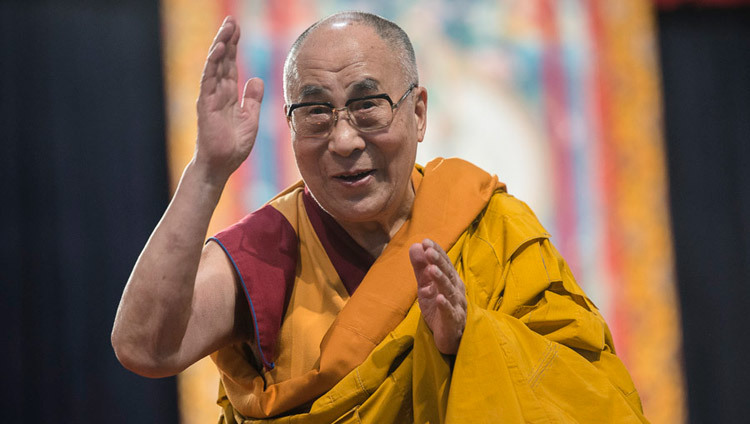
Dalai Lama’s successor bid reignites India-China tensions
Bengaluru: The Dalai Lamas have functioned as both the political and spiritual leaders of Tibet since 1642. Revered by Tibetan Buddhists as the living embodiment of Chenrezig, the bodhisattva of compassion, the Dalai Lama is central to Tibet- an identity and resistance.
"China says they are waiting for my death and will recognize a Fifteenth Dalai Lama of their choice. I have a responsibility to protect the Dharma and counter such detrimental schemes,” the 14th Dalai Lama, Tenzin Gyatso, said recently.
He made it clear that his successor would be selected from the free world, explicitly excluding Chinese-ruled Tibet and chosen by the Gaden Phodrang Trust under his office. This sets the stage for an unprecedented situation: two rival Dalai Lamas, one endorsed by the Chinese state, and an- other recognized by the Tibetan exile movement.
The Chinese government insists on reviving the historical tradition of drawing lots from a “Golden Urn” to determine reincarnations, a practice allegedly sanctioned by the Qing dynasty during the 18th century.
Beijing claims this gives them the right to approve high-ranking Tibetan lamas, including the Dalai Lama. However, the Dalai Lama’s office disputes the claim, pointing out that even the current Dalai Lama was not chosen using this method. This dual succession threatens to plunge the Tibet-China issue deeper into the political realm, with India finding itself caught in the crossfire.
As the longstanding host of the Tibetan government- in-exile and home to over 100,000 Tibetan refugees, India cannot easily remain neutral.
Moreover, the country is the birth-place of Buddhism and seen by many Tibetan Buddhists as a spiritual homeland. Significantly, the Dalai Lama has broken from tradition by declaring that his successor would be named during his lifetime, an assertion of agency meant to preempt Beijing’s interference.
Some analysts argue that New Delhi’s continued support of the Dalai Lama gives it a strategic counterweight against Chinese aggression. The Dalai Lama formally renounced political power in 2011, handing over authority to a democratically elected Tibetan government-in-exile.
The U.S. lawmakers have vowed not to accept any Chinese role in selecting the next Dalai Lama. In 2024, then-President Joe Biden signed legislation pressing Beijing to resolve the Tibetan autonomy dispute and affirming the right of Tibetans to determine their own religious leaders. As the world braces for the eventual transition, India may find its spiritual guest turning once again into a geopolitical flashpoint.




.jpg)
