.jpg)


.jpg)

 English daily published in Bengaluru & Doha

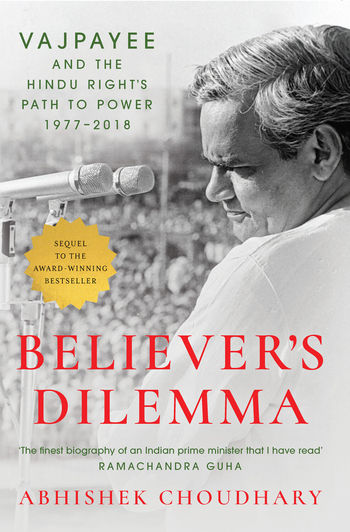
Book: Israeli minister held covert talks with Morarji, Atal
New Delhi: Then Israeli foreign minister Moshe Dayan came to India in 1977 on a clandestine visit, in disguise and under a false name, to meet prime minister Morarji Desai and his counterpart Atal Bihari Vajpayee in a failed attempt to establish diplomaticties between the two countries, says a new book. The Israeli minister failed in his mission and left empty-handed.
Visibly annoyed by the outcome, Dayan declined the parting gift of antique Indian silverware offered by his hosts, Abhishek Choudhary writes in "Believer's Dilemma: Vajpayee and the Hindu Right's Path to Power". He flew out "mocking India's poverty, cursing its rulers' moral cowardice", says the book that uncov ers a little-known episode in India-Israelties.
The "awkward meeting", the author notes, was a sign that for all its ambitions, the Janata government did not have the mandate or confidence to revamp India's foreign policy. Dayan's covert visit to India was "top secret" as Desai feared it would lead to the collapse of the Janata government if made public.
The meeting, held at a “poorly furnished government house” in New Delhi, was so discreet that Vajpayee got to know of it only after Dayan landed. Even foreign secretary Jagat Mehta wasn't told anything.
"On the afternoon of 14 August, Israeli foreign minister, Moshe Dayan, alighted in New Delhi. He was travelling under a fake name and had dis guised himself with dark glasses and a large straw hat. He was put up at a private residence in south Delhi's Safdarjung Enclave," reads the book, a sequel to Chaudhary's award-winning bestseller "Vajpayee: The Ascent of the Hindu Right".
The purpose of his visit: "to advance talks on establishing diplomatic relations between India and Israel". Vajpayee, despite his long standing support for formal ties with Israel, appeared visibly uneasy during the meeting with Dayan.
According to Desai -- who shared the episode months later with diplomat I.K. Gujral, then India's ambassador to the USSR -- Vajpayee was “terrified” about the implications and was told "not to worry".
Desai, however, remained steadfast in rejecting Dayan's overtures. While acknowledging that India had recognised Israel in 1950, Desai made it clear that full diplomatic relations could only be considered "only after peace came to the region". He reiterated India's longstanding support for a Palestinian state and resisted even minimal gestures, such as opening an Israeli consulate in Delhi. (PTI)

.jpg)
.jpg)
.jpg)