.jpg)


.jpg)

 English daily published in Bengaluru & Doha

The crown, the canal, and the code
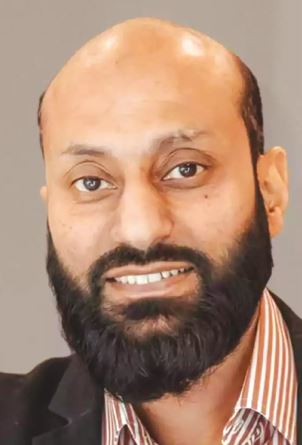
At a sunlit table in a mall in Karnataka over a modest breakfast of noodles, Dr. Shaheer Ahmed Aasim shared his insights with the blogger Dr. Syed Nabeel on the evolving landscape of dentistry, from the shifting prospects of emigrant dentists in the UK to the growing appeal of the UAE, and the extraordinary rise of artificial intelligence in endodontics.
Dr. Aasim, a UK-based endodontist with over two decades of experience, graduated from the University of Mysore in 2000. He earned his MSc in Endodontics from the University of Manchester in 2005 and, by 2007, secured membership (MFDS) from the Royal College of Surgeons of Edinburgh. With a growing reputation for excellence, he later completed his MClinDent in Endodontics from London and, in 2021, was inducted into the Royal College of Physicians and Surgeons of Glasgow in recognition of his contributions to dentistry.
Having worked extensively across NHS and private sectors, he has served in the Restorative Departments of Aberdeen, Dundee, and Glasgow Dental Hospitals, refining his surgical and rehabilitative expertise in complex endodontic cases. A frequent collaborator in multidisciplinary teams, he is known for managing structurally compromised teeth with precision, routinely employing the operating microscope and microsurgical tools.
UK: Still a land of opportunity, but not without hurdles
Despite broader economic fluctuations and post-Brexit policy recalibrations, the United Kingdom continues to attract dental professionals from across the globe. Dr. Aasim affirmed that the demand within the National Health Service (NHS) remains robust, while British dental qualifications still carry international prestige.
However, the journey is not without its challenges. The Overseas Registration Examination (ORE), a mandatory licensing requirement for foreign-trained dentists, remains a formidable obstacle. “It’s a test of intellect, resilience, and patience,” Dr. Aasim noted.
Yet, successful candidates find themselves with access to a dual-practice model that balances NHS assignments with opportunities in private clinics—offering both stability and growth. The UK, he added, rewards adaptability and precision—qualities that many subcontinent-trained dentists inherently possess.
UAE: The fast track for British-trained clinicians
The conversation then turned to the Middle East, where the United Arab Emirates is fast emerging as a preferred destination for British-trained dentists. Dr. Aasim described the UAE as a compelling career destination, combining financial appeal with professional agility. With tax-free salaries, simplified licensing processes for UK graduates, and government-supported private healthcare expansion, the region offers a dynamic, future-forward practice environment. “The UAE is more than a job market—it’s a lifestyle proposition,” he remarked, referencing colleagues who moved to Abu Dhabi and Dubai for five years and never looked back. Unlike Western systems, where clinical leadership often comes after years of seniority, the Gulf offers accelerated paths to entrepreneurship and specialisation.
AI in endodontics: Reinventing the root canal
Perhaps the most transformative part of Dr. Aasim’s work lies in his integration of artificial intelligence within endodontics—traditionally one of dentistry’s most intricate and labour-intensive specialties.
At the core of this innovation is a reverse workflow that challenges convention: crown preparation before root canal therapy. It begins with an intraoral scan immediately after diagnosis. AI-driven software then creates a digital crown design, refined by technicians and 3D printed with near-perfect fit. By the time obturation is complete, the crown is ready for placement, delivering a seamless, single-visit solution.
This approach, according to Dr. Aasim, isn’t just about efficiency, it’s about reimagining patient experience. AI has also found application in diagnostics. CBCT imaging, when enhanced with AI, now assists in detecting calcified or complex canals with greater accuracy, thereby reducing procedural risks.
“In some of my most challenging cases, AI made all the difference especially in locating difficult canals and pre-empting complications,” he said.
As a Dentsply Sirona Certified Trainer based in Bellaguis, Switzerland, Dr. Aasim has lectured extensively on contemporary endodontics and teaches globally through hands-on workshops, integrating CAD/CAM workflows and AI-assisted diagnostics into clinical training. He is widely published in international journals and is an active member of the British Dental Association, British Endodontic Society, European Society of Endodontology, and both Royal Colleges in Edinburgh and Glasgow.
Robotics and remote dentistry
Dr. Aasim also touched upon the confluence of robotics and AI, pointing to a near future where remote-controlled endodontic treatment could be a reality. In a recent discussion with a neurosurgeon, the potential of performing robotic-assisted root canals from across continents was explored.
“Imagine being in London and remotely guiding a robotic arm to perform a root canal in Mysore,” he said. While such ideas once belonged to science fiction, advancements in robotic microsurgery, 3D printing, and AI-guided navigation are fast pushing these possibilities into clinical
reality.
Robotic tools are now assisting in canal preparation, root-end surgeries, and even intracanal drug delivery, all while reducing clinician fatigue and enhancing procedural accuracy. Haptic feedback systems are allowing operators to retain tactile control, marrying machine efficiency with human
intuition.
From the apex locator to AI-driven dentistry
Dr. Aasim also reflected on how artificial intelligence, in its earliest forms, has quietly shaped dentistry for decades. He recalled early apex locators, devices used to determine the length of root canals, one of which he first used in the early 2000s. Though primitive by today’s standards, it relied on impedance calculations to guide canal therapy, laying the groundwork for future smart devices.
Today's systems from J. Morita, Micromega, and Dentsply now integrate AI overlays that not only map canal lengths but also predict complications like file breakages and anatomical anomalies using population-wide data.
“These are not just tools, they’re co-pilots in decision-making,” he remarked.
Looking east
As the conversation drew to a close, Dr. Aasim highlighted another emerging trend, the growing influence of Chinese dental manufacturing and software innovation. With advanced 3D printing, AI-backed planning tools, and mass-scale production capacities, China is positioning itself as a quiet disruptor in global dental technology.
A study tour to the East, he suggested, might soon become essential, not just for inspiration, but to understand where the next chapter of endodontic evolution is being written.
Profession in motion
From rigorous licensing systems in the UK to entrepreneurial growth in the UAE, and from the earliest apex locators to AI-guided robotics, the world of dentistry is undergoing a silent revolution. As Dr. Aasim put it, “Dentistry today is not just evolving, it’s leaping.”
And at the heart of this transformation are clinicians like Dr. Aasim, whose blend of clinical excellence, technological fluency, and global perspective is redefining what it means to care, innovate, and lead. The tools may be digital. The vision, unmistakably human.
.jpg)


