.jpg)


.jpg)

 English daily published in Bengaluru & Doha

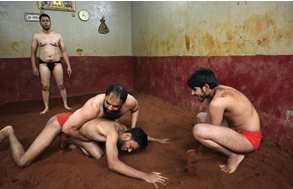
In Bengaluru’s heart, 130-year-old Akhada still wrestles on
In the heart of Shivajinagar, amid the narrow lanes and clang of daily bustle, stands a piece of Bengaluru’s forgotten sporting heritage, Blackpalli Dilcheer Taleem, a garadi mane or traditional akhada, where the age-old sport of kushti (wrestling) is kept alive by the tireless passion of Ustad Kale Khadir Ahmed Qureshi. For over 130 years, the akhada has been a space of sweat, strength and discipline and now also, biryani.
Run by Ustad Qureshi, the fourth-generation torch bearer of this legacy, the gym still rings with the thud of bare feet on the red earth as young trainees push through rigorous cardio workouts in the early hours and evenings. “We work out every day, mostly stamina-building. A modern gym builds bulk, not stamina.
In wrestling, stamina is everything,” says Ustad, as his students perform traditional sit-ups and dand-baithaks (Indian-style push-ups).
According to hakim (Unani medicine practitio ner) Akram Tariqh, such routines aren’t just about sport, they align with traditional health systems. “This kind of stamina-focused training improves overall health. It’s deeply rooted in our understanding of medicine too.” Ustad Qureshi sees wres tling not just as a sport, but as a way of life.
“This style can be traced to the Mughals and earlier Sultanates, where it was popular in Central Asia. Fighters were bought, trained, and displayed like gladiators for entertainment and honour,” he explains. The tale of this akhada begins during the British Raj. “My great-grandfather was a guard at Vellore Fort. He was known to be aggressive, even hot-headed.
Due to some conflict, he was exiled and moved to Bengaluru,” recounts Ustad. One of the more colour ful family legends involves his grandfather, who trained wrestlers and once accepted a stick-fighting challenge from a British officer at the Parade Grounds. “He struck the officer on a pressure point, he bled from his nose. Stories like these were passed down in our family.”
Despite the tradition, wrestling has struggled to retain the same status today. “People used to wrestle bears. I’ve heard of pehelwans doing it. Even fighters like Khabib have trained with bears. Of course, the bear is just playing but the strength and technique needed are real,” Ustad says, laughing. In recent years, rising rents forced the family to adapt.
The gym now moonlights as a biryani mess in the after noons — Pehelwan B.C. — to help sustain the premises, which are owned by a trust. “My uncle came up with the idea when we couldn’t man age the rent. It helps us keep the doors open,” says Ustad. Yet, despite the odds, the gym lives on, not just in bricks and mortar, but in the aspirations of the youth it mentors.
Sixteen-year-old Ismael, still sweating from sparring, says the akhada changed his life. “This keeps us away from bad habits. I’ve seen kids my age smoking. Here, we’re told to stay clean for our fitness. It’s better than a gym, we build stamina and learn real wrestling.” In an age of protein shakes and commercial fitness cen tres, Blackpalli Dilcheer Tal eem remains a rare space where tradition and resil ience still grapple, shoulder to shoulder.




.jpg)
