.jpg)


.jpg)

 English daily published in Bengaluru & Doha

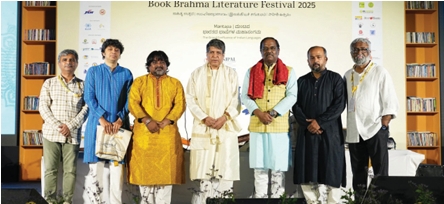
Literary legends and new voices converge at Book Brahma Lit Fest
The 3-day Bengaluru event explores everything from Dalit literature and queer voices to the rise of Pan-India cinema, proving that literature is more vibrant than ever
Bengaluru: It’s an excellently organised festival, especially because it celebrates the richness of all four South Indian languages.
A truly commendable initiative! I was deeply impressed by the enthusiastic participation, not just from the literary communities of each language, but also from publishers, without whom books simply wouldn’t exist," said Paul Zachariah, a renowned Malayalam writer.
His words perfectly encapsulate the spirit of the three-day Book Brahma Literature Festival 2025, which wrapped up in Bengaluru on Sunday.
Despite gloomy skies and overcast weather, the three-day festival drew large crowds of literature enthusiasts. The event was a vibrant celebration of literature, featuring a diverse array of panel discussions, performances, and literary explorations that highlighted the richness of South Indian languages and beyond.
A festival of ideas and voices
The festival’s final day was brimming with insightful and captivating sessions featuring literary luminaries such as Banu Mushtaq, Deepa Bhasthi, Devesan Perur, Ash Ashitha, and many others.
It kicked off with a compelling conversation between author Perumal Murugan and musician scholar TM Krishna, who reimagined the roots of contemporary South Indian literature through the poetic legacy of Sangam traditions.
Other key highlights included a panel on the rise of pan-Indian cinema and a moving session titled 'Mothers in the Battlefield’. Here, women from the armed forces, including Lt. Col. Vijaya Lakshmi, shared personal stories of courage and conflict. She emphasised the need for better support for women in the military, stating, “We still have a long way to go in terms of supporting them adequately."
The festival's themes were incredibly varied, touching upon everything from Dalit literature and urban narratives to queer voices and digital publishing. The Mukhamukhi segment offered intimate one-on-one conversations with celebrated authors like KR Meera and Damodar Mauzo, providing deep insights into their creative journeys.
Meanwhile, Marathi writer Makarand Sathe reflected on the current state of Marathi literature, describing it as a "time of both crisis and opportunity" as it navigates challenges from digital media and political shifts. Honouring literary excellence One of the festival's most unique sessions was 'Manada Maathu: Tande Magana Jugalbandi,' a rare literary conversation between veteran Kannada writer Kum.
Veerabhadrappa and his poet son, Pravara Kottur. Veerabhadrappa reflected on how literature often arises from hardship, not privilege, and stressed the importance of reading senior writers to build confidence.
The festival culminated with the presentation of the Book Brahma Literary Award to Malayalam writer K. R. Meera by Jnanpith laureate Chandrashekhar Kambara.
In his remarks, Nadoja Hampa Nagarajayya praised the festival for its significant contribution to multilingual literature, hailing it as a meaningful and credible platform for emerging writers.
The event also featured book launches at Anavarana, focused meetings between writers and publishers at the Pustaka Rights Table, and a dedicated children's track, Chinnara Loka, which offered interactive storytelling and workshops for young audiences.
.jpg)




.jpg)