.jpg)


.jpg)

 English daily published in Bengaluru & Doha

‘Endless possibilities’: British officials encourage businesses to utilise India-UK trade deal
Bengaluru
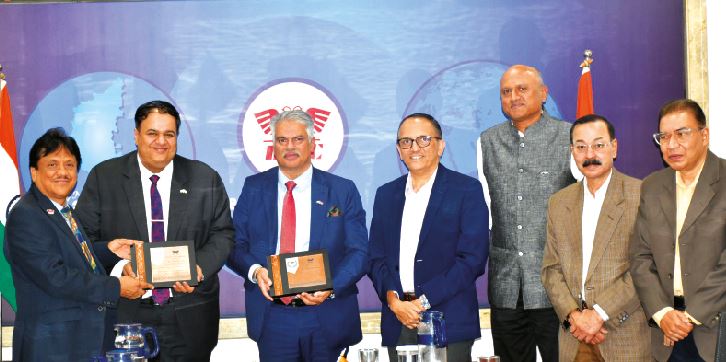
The British Trade Commissioner for South Asia, Harjineder Kang and Deputy High Commissioner, Western India, Chandru Iyer, in a session at the Bengaluru Chamber of Industry and Commerce in the city on Tuesday, enumerated the potential benefits of the recently signed Free Trade Agreement (FTA) between the UK and India. Speaking about the FTA as well as the strategic partnership named the UK-India Vision 2035, Harjinder Kang said, “The vision aligns with the UK's modern industrial strategy, which will help businesses overcome barriers to investment across sectors including Advanced Manufacturing, Creative Industries, Clean Energy, Financial Services, Digital & Technology, Defence, Life Sciences, Creative Industries and Professional & Business Services."
The trade deal, also called the UK-India Comprehensive Economic and Trade Agreement (CETA), was signed on July 24. It aims to increase trade between India and the United Kingdom by a reduction of tariffs by India, duty-free access to the UK market for many Indian goods, technology transfer and increased participation in each other’s economies.
“What they (the British High Commissioner and Deputy High Commissioner) presented is a new UK that is still unknown to us. New India is still not known to the UK, so it is our job to tell them what it is, and it’s not only Bengaluru but all of Karnataka, and it’s not only about London; they talked about Manchester and Birmingham as well, which we are not yet fully aware of.” President of BCIC Prashant Gokhale said that Bengaluru also has a significant role to play in the UK economy, as per Chandru Iyer.
He said, “Bengaluru represents the new modern India, and the UK wants to be a part of that story. That’s why we see a lot of British companies investing in the state, such as Global Capability Centres, Tesco, London Stock Exchange… the list is endless.” He also pointed to Indian companies such as Hatti Kaapi and MTR Restaurants, which have a presence in the UK, and shared that discussions are underway to bring Mysore Sandal Soap, Mysore Silk, and coffee from Chikmagalur to the UK, as well as fruits. “The first consignment of Jamun from this state has gone to the UK. And, from a horticulture perspective, there are many opportunities,” he added.
While the CETA has been aimed at reducing trade barriers and will reduce costs for UK products like automobiles and scotch whisky for Indians, there are certain aspects that will need to be ironed out, such as the climate tariffs of the UK and other regulatory differences between the two countries. The deal has been passed in the Indian parliament, but is said to take about nine months to a year to pass in the UK and come into effect.




.jpg)
