.jpg)


.jpg)

 English daily published in Bengaluru & Doha

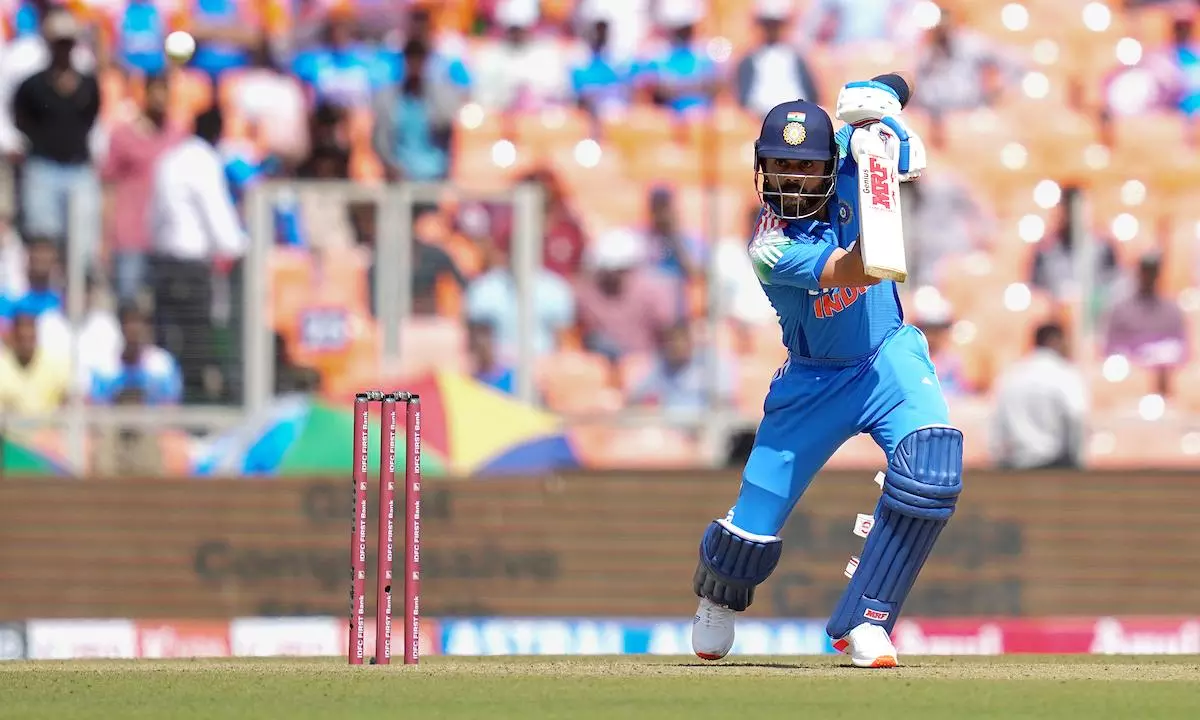
Kohli’s ODI return could fortify India’s ambitions
In the ever-shifting currents of Indian cricket, moments arrive when past glory and future promise converge in delicate tension. Virat Kohli’s recent social media activity – practice sessions documented with almost cinematic precision and his engagement with the public’s reactions – has ignited speculation about a return to the ODI fold ahead of the Australia series in October.
Having stepped away from T20 internationals and Tests, the possibility of Kohli’s selective re-entry raises profound questions: Is this the right moment to welcome him back, and at what cost or benefit to the long-term balance of the team?
Kohli’s pedigree in ODIs is indisputable. His mastery of run chases, consistency under pressure, and technical adaptability have, for over a decade, been cornerstones of India’s success. Yet, cricket is not a static sport; it evolves not only in formats and strategies, but also in the imperatives of succession planning.
The ODI side is currently in a phase of recalibration, with younger players such as Shubman Gill, Ruturaj Gaikwad and Sanju Samson seeking permanence in the XI. Each innings they play is not merely a contribution to the scoreboard but a building block for a future generation’s leadership and skill maturity.
A Kohli return, therefore, must be weighed against its ripple effects. For Gill in particular – widely seen as the heir apparent in the top order – the opportunity to shape his own game in high-pressure, match-defining roles is vital. While sharing a dressing room with a legend can inspire and refine younger players’ mental toughness, it may also, if not managed well, defer their assumption of greater responsibility.
The psychological space for a rising star to make mistakes, recover, and evolve can be diminished when overshadowed by the gravitational pull of an established giant. From a strategic standpoint, the BCCI faces a dual challenge. First, it must honour the service and stature of a player who has been an ambassador of modern Indian cricket, without allowing nostalgia to dictate selections.
Second, it must ensure that the transition towards a youthful core is neither abrupt nor delayed to the point of competitive stagnation. This calls for a transparent, metrics-driven approach, where selection is tied not to reputation but to form, fitness, and role-specific requirements.
Kohli’s return is indeed in the offing, and its timing could serve a pragmatic purpose. The Australia series, just months before the 2025 Champions Trophy, offers a platform to assess whether he can still be the difference in high-stakes contests. His presence could also act as a stabilising anchor while the batting order absorbs new configurations.
However, the plan must be finite. A phased role – perhaps as a specialist in tournaments of strategic importance – would allow the team to harness his experience while creating deliberate space for the next generation to take root.
Ultimately, the question is not whether Virat Kohli can return – few doubt his ability – but whether his return aligns with a vision that safeguards both India’s immediate competitive edge and its long-term succession architecture. Legacy and future need not be adversaries; with foresight, they can be co-authors of the next chapter in Indian cricket’s story.

.jpg)
.jpg)
.jpg)
.jpg)
.jpg)