.jpg)


.jpg)

 English daily published in Bengaluru & Doha

Where do our votes go?
"Weaponisation" of India's Election System: Evidence of large-scale electoral manipulation presented by civil society leaders and experts
We call ourselves a democracy, but we are not,” said MG Devasahayam, convenor of the Forum for Electoral Integrity and Coordinator of the Citizens Commission on Elections.
A manufactured mandate
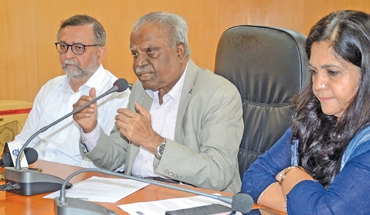
Speaking at a roundtable discussion on ‘Weaponisation of Election Commission’ at Shasakara Bhavana here on Saturday, Devasahayam accused the Election Commission of India (ECI) of presiding over a “manufactured mandate”.
“The votes not cast by the people were being counted as legitimate, stealing the electorate’s voice. Even when the public catches these ma nipulations, the Election Commission refuses to provide accurate numbers. The people have been stolen of their mandate,” he said.
Discrepancies in poll data
Teesta Setalvad, Co-convenor of Vote for Democracy (VFD), raised one of the most pressing questions: “Why are the polling day figures different from the counting day figures?” She described the mismatch as evidence of systemic misconduct in the Maharashtra elections.
The VFD report, “Dysfunctional ECI and Weaponisation of India’s Election System” prepared by elec tion experts, including Devasahay am, Dr Pyara Lal Garg, Deshpande, and Prof Harish Karnick, analyses all 288 Assembly constituencies in Ma harashtra. Using ECI and CEO data along with voter testimonies, the report documents suspicious turnout surges, erratic voter roll expansions, and inexplicable jumps in votes for specific parties.
Among the findings: a midnight turnout surge of nearly 48 lakh votes; 69 seats decided by margins of less than 10,000; voter rolls swelling by 46 lakh in six months; and BJP register ing an average gain of 28,000 votes per seat compared to the Lok Sabha polls held just six months earlier.
EVMs can be hijacked
Madhav Deshpande, computer science and EVM expert, highlighted the technical vulnerabilities of Electronic Voting Machines (EVMs).
“Even when physically locked, the EVM is still running internally. There is no digital lock to secure it,” he explained. Using an animated demonstration, he showed how the Control Unit and VVPAT are not directly connected, creating loopholes that could allow vote swapping. “The votes from one Control Unit can be replaced with another containing hijacked votes,” he warned. He categorised the risks into two layers.
The first, called enabling data, involves manipulation of electoral rolls through duplicate entries, fake or invalid addresses, bulk registrations at the same address, in valid photos, and misuse of Form 6. Such flaws create fertile ground for fraud. The second, termed impacting data, concerns the voting process itself.
Manipulation can occur during polling through data hijack, in transit by swapping Control Units, and during counting through use of a second copy of results. These vulnerabilities, he warned, strike at the core of electoral integrity. On voter identity, Deshpande added: “Our unique identity is lost when anyone can misuse it to cast a vote.”
Teesta cited the case of one citizen, Sushma Gupta, whose vote was recorded in six different districts, a sign of manipulation at the official level, she said.
Threat to democracy
Speakers emphasised that these irregularities were not confined to Maharashtra. “This is happen ing across the country and must be investigated. It violates every thing democracy stands for,” they agreed.
The VFD has demanded decentralisation of election management, forensic audits of EVMs and voter rolls, restoration of transparency safeguards, and legal guarantees for end-to-end vote verifiability. “Maharashtra is a warning. Unless cor rected, weaponisation of elections will erode the foundations of India’s democracy,” Teesta added
.jpg)




.jpg)