.jpg)


.jpg)

 English daily published in Bengaluru & Doha

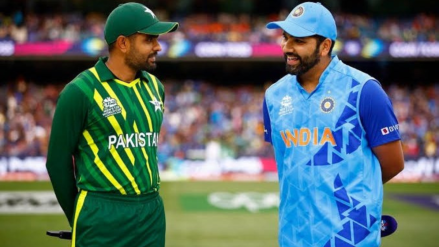
Cricket raises hope where politics builds walls
In the intricate waltz of South Asian geopolitics, the rules of engagement are often written in the blood of civilians and the ink of diplomatic communiqués. Yet, when cricket enters the field, it somehow manages to elbow its way past high walls of hostility.
Thus it was that New Delhi, with much solemnity, declared that India would play no bilateral sporting contests with Pakistan – only to clarify, with a conveniently timed smile, that the cricket team would dutifully appear at the Asia Cup next month, including the September 14 clash against their arch-rivals.
It is the sort of double standard that makes cynics chuckle, scholars frown, and cricket fans cheer. Context, ofcourse, is everything. Since the April 22 Pahalgam terror attack that claimed 26 innocent lives – an atrocity India swiftly blamed on Pakistan-based militants – relations have plummeted.
Islamabad, true to form, dismissed the charges and even floated the “false-flag” theory, an explanation that convinces no one but offers just enough smoke to muddle the mirror.
India’s retaliation has been muscular. The suspension of the Indus Waters Treaty, a cornerstone of regional stability, was both a legal gambit and a symbolic weapon. The subsequent ‘Operation Sindoor” in May saw India launch missile strikes across the border, which met with Pakistani drones and air sorties, until the ceasefire on May 10.
As if this were not enough, Islamabad unveiled a shiny new Army Rocket Force, while simultaneously raising its defence budget by a staggering 20 per cent, even as its economy gasped for breath. India, too, lest it be outdone, announced a 9.5 per cent hike in its defence spending.
Add to this Pakistan’s five-month-long airspace ban on Indian flights and Prime Minister Narendra Modi’s Independence Day warning that Islamabad’s “nuclear black mail” would never dictate Indian policy, and one could be forgiven for assuming the two neighbours were on the brink of open war.
The flagpole contest at Attari-Wagah – India’s 200-foot mast towering over Pakistan’s modest 165 – only added a theatrical flourish to the theatre of hostility. Sport, inevitably, became collateral damage.
The IPL was suspended for a week in May; the Neeraj Chopra Classic, the Central Asian Volleyball Championship in Islamabad, and the SAAF athletics meet in Ranchi were all postponed. Broadcasters in India pulled coverage of the Pakistan Super League, while a drone incident near a Rawalpindi match forced organisers into hasty rescheduling.
The World Championship of Legends was stripped of its nostalgic India–Pakistan duels, as veteran players withdrew. Pakistan’s hockey side skipped the Asia Cup; India refused to travel for the Champions Trophy in Pakistan; and Islamabad vowed to shun ICC events in India for three years.
In this tit-for-tat, even volleyballs and javelins became unwilling hostages. And yet, when the Asia Cup beckons, India finds it self back on the crease. Principles of boycott vanish in the soft glow of television ratings and the hard logic of tournament rules. Critics may see hypocrisy; optimists might see opportunity.
For if cricket, that most colonial of legacies, can still coax adversaries into the same arena, perhaps it remains the subcontinent’s last fragile bridge. It is an awkward bridge, to be sure – built on selective morality and strategic convenience – but bridges, however rickety, are preferable to walls.

.jpg)
.jpg)
.jpg)
.jpg)
.jpg)