.jpg)


.jpg)

 English daily published in Bengaluru & Doha

Tech for good: Leaders stress community ties, AI for social impact
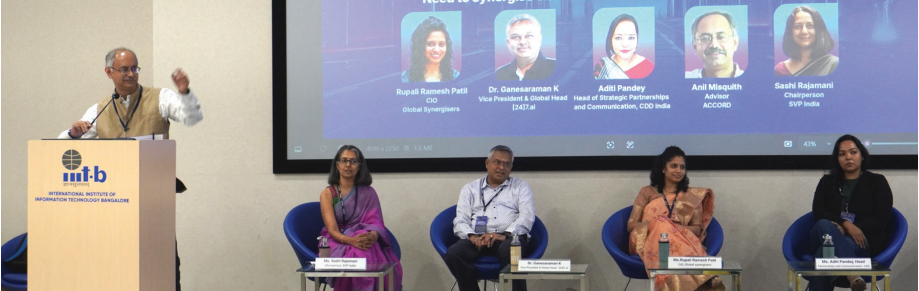
Bengaluru: At an event in the city titled ‘Technology for a Better Tomorrow’, speakers emphasized the need to leverage technology to drive social change and improve community wellbeing. The conclave, organised by the Indian Institute of Technology, Bengaluru’s Innovation Centre, brought together corporate leaders, technology experts, and representatives from non-governmental organizations to share insights on how techled initiatives are making an impact across India.
The day-long event featured keynote addresses and panel discussions on real-world applications of technology for social good. From cleaning up city markets to providing water to drought-prone regions, panelists highlighted projects that have transformed lives by combining innovation with community engagement.
Dr. Lakshmi Jagannathan, CEO of IIT Bengaluru’s Innovation Centre, said the conclave was designed to bridge gaps between innovators and social sector organizations.
“Tech for Impact Conclave brings together key stakeholders to share ideas and explore how we can work together to build and scale technology solutions for a better future. This includes healthcare, environment, equality, empowerment, and other Sustainable Development Goals,” she said.
A major point of discussion was the rise of generative AI and its potential applications in sectors like education and healthcare.
“A tutor for your kids will cost you a few thousand rupees a month. An AI child tutor will cost you $20 a year. And it is showing significant improvement because it’s data-driven,” said Abhishek Ranjan of Brillio, underscoring the accessibility and affordability of AI-based learning tools.
Other panelists, including representatives from Juniper and CGI India, shared their experiences of using AI and digital platforms to improve rural education outcomes and assist government departments. According to them, AI-enabled learning is bridging gaps for underprivileged children who lack access to quality teaching resources.
However, technology alone is not enough. Another recurring theme was the need for trust-building and deep engagement with communities. Speakers from the nonprofit sector stressed that solutions must be designed with communities rather than for them.
“Shared need and the passion to bring in actions that solve the problems the community faces are essential,” said Sashi Rajamani of SVP India. “Building and bringing stakeholders together and carrying them along is more important. Once you build trust, you are no longer seen as a threat to the community or other stakeholders.”
Anil Misquith of Accord echoed this sentiment, warning against imposing solutions: “You cannot develop something and hand it over to them. It has to be with them, or else the minute you walk away, it’s going to fall apart.”




.jpg)
