.jpg)


.jpg)

 English daily published in Bengaluru & Doha

Bengaluru’s missing third spaces: Citizens call for accessible public areas to foster connection
Bengaluru
The paradox of a big city like Bengaluru is that you are surrounded by people yet often feel incredibly distant from them. In a country that claims to uphold democratic values, one of a city’s fundamental roles is to bring people together in physical spaces where they can meet and discuss matters that affect their lives. This purpose is undermined when there is a lack of accessible third spaces.
“Bengaluru has plenty of third spaces. But the problem is accessibility,” said Beruj Kumar Swastik, urban designer and founder of Urban and Landscape Design Studio. He added, “Only in India do we have compounded public buildings. In European cities, public buildings like libraries have an open interface, where people can not only visit the library but also sit outside, relax, have lunch, or do whatever they wish.” Urban designers emphasise that third spaces play a vital and irreplaceable role in improving the quality of urban life.
Krithi Aiyappa, an architect and urban planner at Urban Frame, said these spaces are essential for nurturing democratic values in a deeply hierarchical society. “Accessible third spaces make cities more equitable for citizens, fostering civic engagement, social connection, and a sense of belonging. At a micro level, they help weave the social fabric that links people beyond their personal lives and workplaces,” she explained.
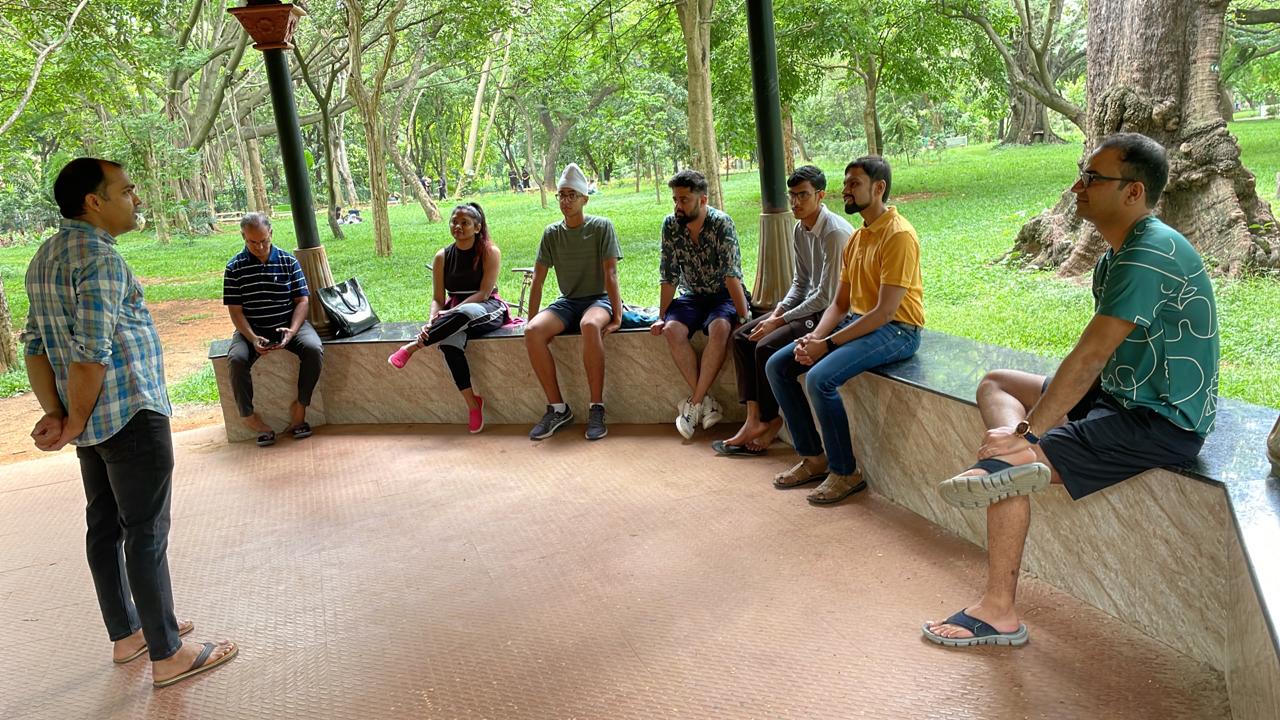
Swastik echoed this, saying, “If you have inclusive public spaces and good public transport, social hierarchy is reduced. There will be greater interaction between people from different economic backgrounds. When you create spaces exclusively for an elite class, what message are you sending to everyone else?” This sentiment is deeply felt by residents. Anjitha, a city resident, highlighted the scarcity of such spaces. “If you ask me if there are enough places, I’d say no. Bars have a cover charge and parks have an entry fee. The only free place I can think of right now is Cubbon Park,” she said.
Henna Akbar, an architect and concerned citizen, expressed frustration at the lack of vision in urban planning. “Bengaluru is one of the most beautiful places in India, with great weather. If planned well, it could have many spots where people can pause, sit, and enjoy the surroundings. We don’t have those spaces anymore. The planning needs to be upgraded. I really wonder what these city planners are doing because this city has the potential to be a paradise,” she said. Bengaluru once earned the title of Garden City for its abundant green spaces.
Today, however, many parks are accessible only during restricted hours. Anand Yadwad, who works to preserve lakes and foster community ownership of parks, said, “I feel the law is very strange. It limits park use to a couple of hours in the morning and evening. These spaces should be open throughout the day. What’s the point of having them if we can’t use them when we truly need them?” As Bengaluru continues to evolve, urban planners face the challenge of revitalising public spaces. Creating more accessible third spaces will be essential to making the city truly belong to its people.




.jpg)
