.jpg)


.jpg)

 English daily published in Bengaluru & Doha

Caste survey: Tread with extreme care
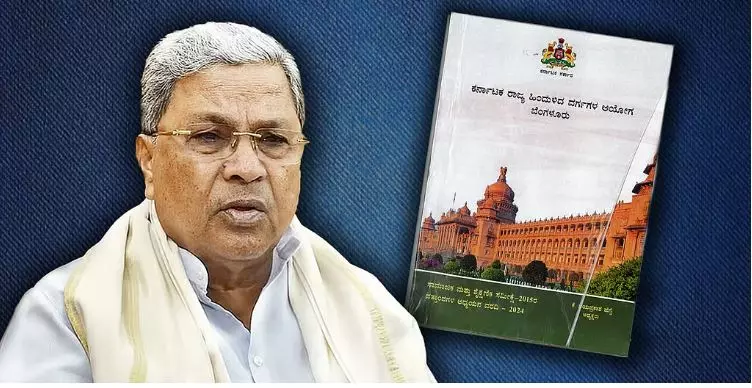
Karnataka has opted for a fresh socio-economic survey, more popularly known as caste survey, launched from Monday (September 22). The massive exercise will determine the socio-economic status of nearly 65 million people in order to reset the caste matrix of reservation in the State which was a pioneer in this regard by bringing in reservation for the backward communities. It was as early as 1919 that the previous Mysore State brought in reservation for communities that were numerically more but didn’t figure in bureaucracy and the power elite in commensurate measure. The survey exercise is being taken up afresh after the 2015 survey report was rejected following objections raised by leaders of certain dominant communities. They were apprehensive that if implemented, their clout would suffer a dent as an upwardly mobile profile of those communities had resulted in bringing down their numbers over the decade. This imparts a contentious backdrop to the new survey amid jockeying by politicians who have appeared in the new avatar of caste leaders cutting across party affiliations. This certainly does not bode well as the objective of the survey is to determine the backwardness in socio-economic terms as of today rather than judging the numerical dominance of the caste groups. Caste has remained an undeniable reality of Indian society since eternity. It was in the fitness of things that it was recognised as the basic determinant of social and economic status of an individual in society. Its basic features include its hereditary nature; purity and impurity by birth; permission or prohibition for marriage between two individuals; hierarchy in terms of ascending order of holiness and descending order of lowliness; untouchability; unseeability; exclusion from priestly duties and so on. Despite passage of seven decades since independence, caste has only gained strength rather than fostering social homogeneity as intended. Not this alone, it has even made ingress into communities professing Islam and Christianity that claim social equality among their adherents. Individuals crossing over the religious boundaries in pursuit of salvation have carried over their jati antecedents to the fold of the new religions and are subjected to same social disabilities in no small measure. There are also demands from certain denominations within traditional communities to categorise them as religious minorities although they betray no characteristics other than what they have been known for. Then there are demands for Kurubas to be categorised as scheduled tribes (ST) even though they betray no primitive character, shyness from contact with other communities and mainstream population and remoteness from civilisation, the features that ought to be present to justify such a categorisation. These factors set a complex task for the Backward Classes Commission to define and determine the social and economic backwardness. Even a cursory glance at the power structure in the state provides enough evidence that power has alternated between two traditionally dominant communities in the state, namely the Lingayats and the Vokkaligas since Independence. They rule the roost in terms of legislative representation, and presence in bureaucracy, media, research, academia, and other institutions that set the policy and operate and control the levers of power. The Commission has the unenviable task of taking an objective look at those who have historically remained at the margins and await a new dawn heralding justice and fairer partnership in power structure. The enormity of the challenge urges high level of equanimity and perspicacity.

.jpg)
.jpg)
.jpg)
.jpg)
.jpg)