.jpg)


.jpg)

 English daily published in Bengaluru & Doha

'Waste pickers as partners, not workers, in Bengaluru’s circular economy'
Bengaluru
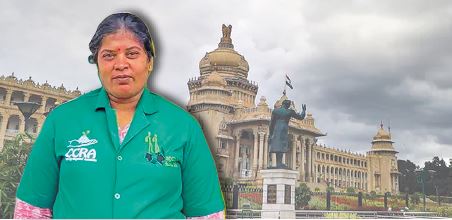
“Because I have lived the same struggles, I can ensure safer workplaces, healthcare access, and dignity for my employees,” said Indumati (in pic), a waste entrepreneur, at the Stakeholder Forum held in Bengaluru on Tuesday. Indumati, a speaker at the panel discussion on ‘Strengthening the Role of Waste Pickers Beyond Formalization’, spent 21 years working as a waste picker before learning how scrap shops operate.
That transformation changed her life. She now successfully runs two registered dry waste collection centres that not only provide employment to many from the community but also ensure essential facilities and improved working conditions. The event was organised under the Circular Economy Innovation Clusters (CEIC) initiative, led by Climate KIC, ANDE, Second Muse, and Saamuhika Shakti, with support from Sattva Consulting.
“It is important that we hear and highlight their stories,” said Eva Ros, Project Lead at Climate KIC. The forum sought to spotlight the lived experiences, challenges, and innovations of waste pickers in building inclusive waste management systems. It brought together waste pickers, entrepreneurs, ecosystem enablers, and civil society representatives to co-develop approaches that integrate waste pickers as equal partners in Bengaluru’s circular economy.
A panel discussion featured Indumati, waste entrepreneur; Anish Malpani, CEO of WITHOUT; and Smruti Jukur of SPARC. The speakers emphasised that waste pickers, despite being among the most vulnerable, possess resilience, knowledge, and unique expertise essential for circular systems. “Waste pickers might be the most vulnerable in the strata, but they work the hardest. Their patience and perseverance are their strengths,” said Malpani.
Indumati added that it is important to be understanding towards the workers’ families and backgrounds as much as towards the workers themselves. Smruti highlighted the technical knowledge of waste pickers: “They understand materials, usability, and recycling potential from hands-on experience. They are capable of engaging with large industries as collaborators, not just workers.”
“Over the past two years, we have learned that formalisation is not always the highest priority across the ecosystem. Complementary approaches that support waste workers beyond formalisation are equally critical,” added Vineetha Venugopal, Program Associate at ANDE South Asia. Shruti Venkatesan, Associate Director, Saamuhika Shakti at Sattva Consulting, noted, “Thousands of informal waste pickers in Bengaluru face unsafe conditions, irregular incomes, and lack of recognition.
When their voices shape waste management, systems become both fairer and more resilient.” Discussions centred on strategies for social inclusion, safer working conditions, economic empowerment, healthcare access, and their integration into innovation ecosystems, enabling them to take bigger steps in life and access better opportunities.




.jpg)
