.jpg)


.jpg)

 English daily published in Bengaluru & Doha

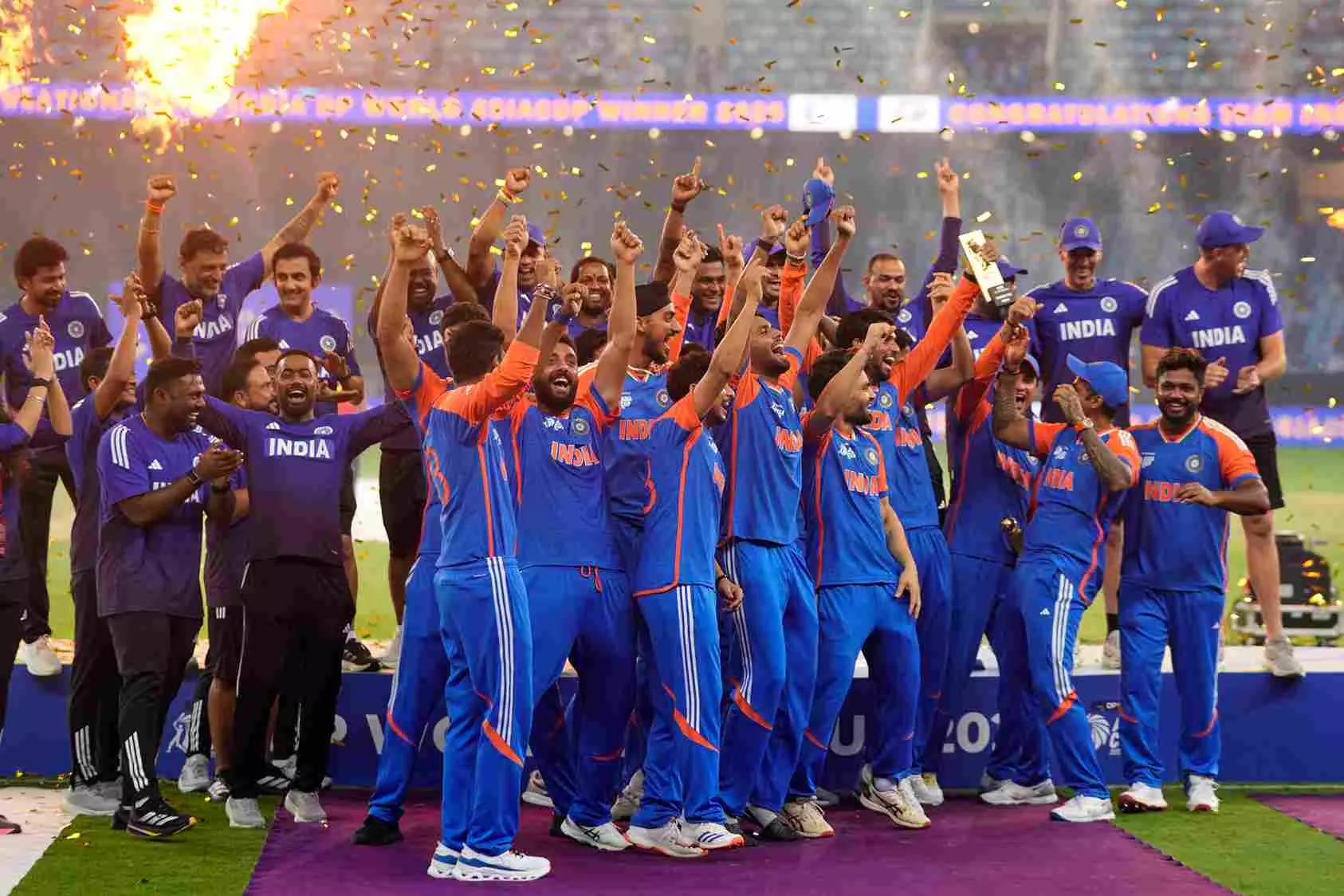
Asian Cup win shows India moving past era of stalwarts
The significance of India’s victory in the 2025 Asian Cup extends well beyond the silverware it has added to the country’s already crowded trophy cabinet. It is not merely a regional triumph but a statement about the evolving character of Indian cricket, and the resilience of its institutional structures in a period that many had feared would bring instability. For years, speculation abounded over how Indian cricket would cope with the eventual departure of stalwarts such as MS Dhoni, Virat Kohli, Rohit Sharma and R Ashwin.
Their sustained brilliance had created an aura of indispensability. Yet the Asian Cup win demonstrates that the succession anxieties were overstated, and that India has entered a phase of collective strength rather than individual dependence. The most striking feature of the campaign was not dominance by a single player, but the breadth of contributions across the squad. Young openers showed the ability to anchor innings with composure, the middle order displayed adaptability under pressure, and an energetic bowling unit balanced pace with guile.
Emerging names that had once been confined to the margins of the squad now embraced central roles with maturity, suggesting that India’s domestic pathways – the Ranji Trophy, India A tours, and the Indian Premier League – are functioning as effective nurseries of international calibre. This structural resilience is particularly noteworthy when compared to other cricketing nations that struggled to manage transitions after the departure of great players. Australia, for instance, experienced a sharp dip following the retirement of its golden generation in the mid-2000s.
The West Indies never quite recovered after the decline of their formidable pace battery in the 1980s. India’s present trajectory, however, suggests that the Board of Control for Cricket in India (BCCI) has learnt from such examples and invested in an infrastructure that ensures a constant replenishment of talent. The victory also underscores a psychological maturation. Where earlier generations sometimes faltered under the weight of expectation, the current crop seemed unburdened, playing with an assurance that speaks of cultural confidence.
The capacity to deliver in pressure moments – whether defending a modest total or chasing in front of passionate crowds – points to a squad habituated to both scrutiny and responsibility. This is particularly important for a nation where cricket is not simply a sport but a theatre of national sentiment. That said, the triumph should not be read as the final word on India’s cricketing evolution.
Success in continental tournaments must be translated into consistency in bilateral series abroad and, crucially, in global tournaments such as the World Cup and the World Test Championship. The challenge is not only to identify talent but to manage player workloads in an era of congested schedules, ensuring that careers are sustained rather than sacrificed to short-term glory.
India must consolidate the gains of this moment. The BCCI would do well to invest further in fitness regimes, sports psychology and exposure tours for the next generation. Building leadership depth – so that captaincy transitions are seamless – is another urgent task. If these steps are taken, the Asian Cup of 2025 may come to be remembered not just as another victory, but as the emblem of a new era in Indian cricket: one where the collective surpasses the individual and resilience outlasts nostalgia.

.jpg)
.jpg)
.jpg)
.jpg)
.jpg)