.jpg)


.jpg)

 English daily published in Bengaluru & Doha

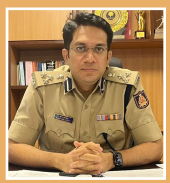
'Citizens will see difference in 2-3 months': Traffic chief’s roadmap for smoother ride
In a city where traffic jams have become a daily ordeal, Bengaluru’s new Traffic Chief, IPS Karthik Reddy, is on a mission to bring visible change to the city’s roads. The Deputy Inspector General and Joint Commissioner of Police (Traffic), Bengaluru City, believes that through technology, coordinated planning, and active citizen participation, Bengaluru’s traffic can become safer, smoother, and more efficient.
“Managing Bengaluru’s notorious traffic congestion is a challenge,” he says, “but with planning, enforcement, awareness and technology, we can make the city’s roads efficient, safe and citizen-friendly.” In a candid conversation with News Trail, Reddy shared his strategies, priorities, and what commuters can expect in the next few months. Here are the excerpts:
Managing traffic isn’t easy. How would you tackle this?
Bengaluru’s rapid growth has brought enormous challenges, particularly in managing traffic congestion. With a population of 1.4 crore and around 1.2 crore vehicles, our city faces unique hurdles. The eastern part of Bengaluru, especially the Outer Ring Road (ORR) stretch, experiences the worst congestion.
We are focusing on addressing this by improving road design, traffic flow, and coordination with civic agencies. Old Bengaluru suffers from unplanned growth and lack of grid roads, making diversions difficult when traffic builds up. The Comprehensive Development Plan (CDP) aims to fix this by creating proper grid roads.
For example, Jayanagar has 25 km of roads per square kilometre, while Whitefield has just 8 km, even though its population density is three times higher. The CDP’s implementation will ease congestion and improve mobility, particularly in East Bengaluru.
What immediate changes can citizens expect?
I am confident that within two to three months, citizens will notice significant improvement. We are prioritizing specific projects that will show quick and measurable results. We are improving 18 entry and exit points along the ORR to prevent bottlenecks, which should reduce congestion by 20–30 percent.
Under the “Suraksha 75” initiative, 75 major junctions are being upgraded in coordination with BBMP to streamline flow. We are also constructing 78 skywalks across the city to reduce pedestrian crossing time, which will save around 30 seconds per crossing and prevent halfkilometre-long jams.
In addition, 35 alternative routes have been identified to ease traffic on high-density corridors. BBMP will undertake road widening and asphalting on key stretches to improve diversion options. We have declared 1,194 noparking areas on major roads, and strict enforcement is in place.
On average, about 90 vehicles including buses, lorries and private cars break down daily, often leading to long jams. Quick response teams have been deployed to clear breakdowns promptly and prevent pile-ups.
What are the main causes of traffic congestion and what steps are being taken...
Firstly, uncontrolled vehicle growth is the primary reason for congestion. The Outer Ring Road stretch alone handles over 12 lakh vehicles daily, which puts enormous pressure on infrastructure. To manage this, we are promoting greater use of public transport.
Secondly, BMTC already operates a large fleet, including AC buses, on the ORR. Encouraging commuters to use these services can significantly reduce private vehicle dependence.
Thirdly, companies can also help by adopting staggered work timings. By broadening the peak hour horizon, the number of vehicles on the road during peak hours (9-10 am) can be reduced, easing congestion. Additionally, we have identified 18 major choke points on the ORR where poor entry and exit design contributes to jams.
The Greater Bengaluru Authority has been requested to redesign these stretches with at least 100–150 metres between entry and exit points to ensure smoother movement. Partnerships with aggregators like Ola, Uber, Rapido, and Yulu help us monitor and enforce noparking zones.
Drivers who violate these areas receive immediate notifications, and repeated offenders face penalties or legal action. We currently have 169 AI-powered signals out of 501. The government has approved Rs 56 crore to install 110 more AI signals, which will optimise traffic flow by adjusting signal timings based on real-time density.
These signals will be synchronised to create a sequence of green lights for smoother travel across multiple junctions.
How different is Bengaluru from other cities when it comes to road network and traffic management?
Bengaluru’s traffic management has received recognition both nationally and internationally. The Bengaluru Traffic Police received the FICCI Award for Smart Policing (ASTraM) under Road Safety and Traffic Management, the Golden Peacock Award from Dubai, and an award from SKOCH for innovation in traffic regulation.
These awards highlight the city’s commitment to technology and collaborative problem-solving. Our success depends on close coordination between the police, civic agencies, and the public. Despite challenges like heavy rains and waterlogging, this cooperation helps us move forward effectively.
Some AI traffic signals cut directly from green to red without amber. How will this issue be fixed?
Our Adaptive Traffic Control System (ATCS) signals already feature a fivesecond countdown timer to help drivers prepare for green. However, we are aware of certain intersections where amber lights are missing. Amber lights are being added at all such junctions to give drivers proper warning time before the signal turns red.
You have a demanding job. How do you unwind and recharge?
Spending time with my family, especially with my wife and twin children, helps me unwind. It keeps me balanced and reminds me that there’s life beyond signals and congestion.
.jpg)




.jpg)