.jpg)


.jpg)

 English daily published in Bengaluru & Doha

Ladakh unrest exposes flaws in Modi govt’s post-370 strategy
Bengaluru: Whether it is Manipur or Jammu and Kashmir, the BJP-led Centre is facing failures in several states due to its policies, though, as usual, it remains in denial mode. It was even forced to impose President’s Rule in Manipur, a state where it was in power.
The ambitious Jammu and Kashmir experiment, in which the BJP sought to alter the demographics of India’s only Muslim-majority region by abrogating Article 370, has not yielded the results it had envisioned. While J&K has since been stripped of statehood and Ladakh carved out as a separate Union Territory, the BJP’s tall claims of curbing militancy post-abrogation fell flat after the Pahalgam attack.
Politically, too, the party has failed to win the trust of the Muslim-majority population. To make matters worse, unemployment, lack of economic opportunities, and an uncertain future continue to haunt both J&K and Ladakh. In Ladakh, the saffron party has not been able to strike a chord with the locals, more than 97% of whom belong to Scheduled Tribes.
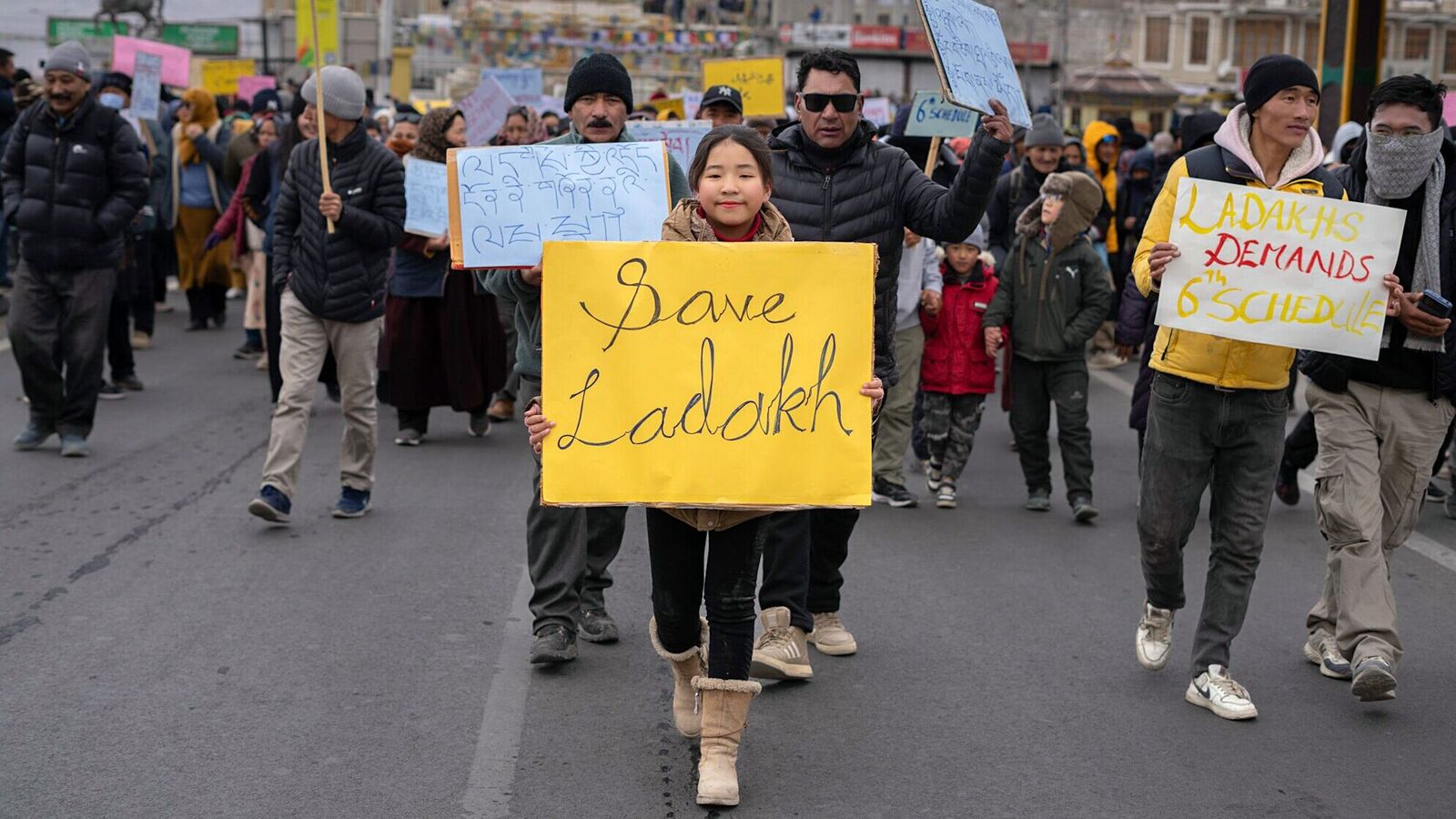
After multiple rounds of talks with Ladakh’s leaders, the Centre recently announced a new domicile and job reservation policy for the Union Territory. The anxiety among locals over losing control of land, resources, and employment opportunities has driven sustained protests in Ladakh over the last five years.
By reserving most government jobs for local residents and introducing elaborate criteria for domicile status, the Modi government has sought to address these long-standing concerns. However, Ladakhi leaders have termed the move only a “first step.”
The two main demands, statehood for Ladakh and inclusion under the Sixth Schedule, remain unresolved. More crucially, the new rules do not restrict outsiders from buying land in Ladakh, local leaders pointed out.
In August 2021, both Kargil and Lehhad rejected Union Territory status and demanded full statehood instead. By 2022, growing anxiety over non-locals being eligible to own land and take up jobs had crystallised into four key demands from Ladakh’s leadership:
Statehood for Ladakh
Constitutional safe guards under the Sixth Schedule
Separate Lok Sabha seats for Leh and Kargil districts &
A dedicated recruit ment process and separate Public Service Commission for the UT. The Centre’s latest de cision only partially ad dresses these demands. As of now, no law pre vents outsiders from pur chasing land in Ladakh, a persistent source of anxi ety for residents. The Kar gil Democratic Alliance (KDA), which represents the district in negotia tions with the Centre, has expressed dissatisfaction with the new domicile policy. Widespread violent protests broke out on September 24 during a shutdown called by the Leh Apex Body (LAB) to push for talks with the Centre on Ladakh’s state hood and Sixth Schedule status. Four people were killed and dozens in jured in clashes between protesters and security personnel, while over 50 were taken into custody for alleged rioting. Activist Sonam Wang chuk, the main face of the agitation, was also detained under the strin gent National Security Act (NSA).
.jpg)




.jpg)