.jpg)


.jpg)

 English daily published in Bengaluru & Doha

Honnavar port project report reveals rights violated
Bengaluru
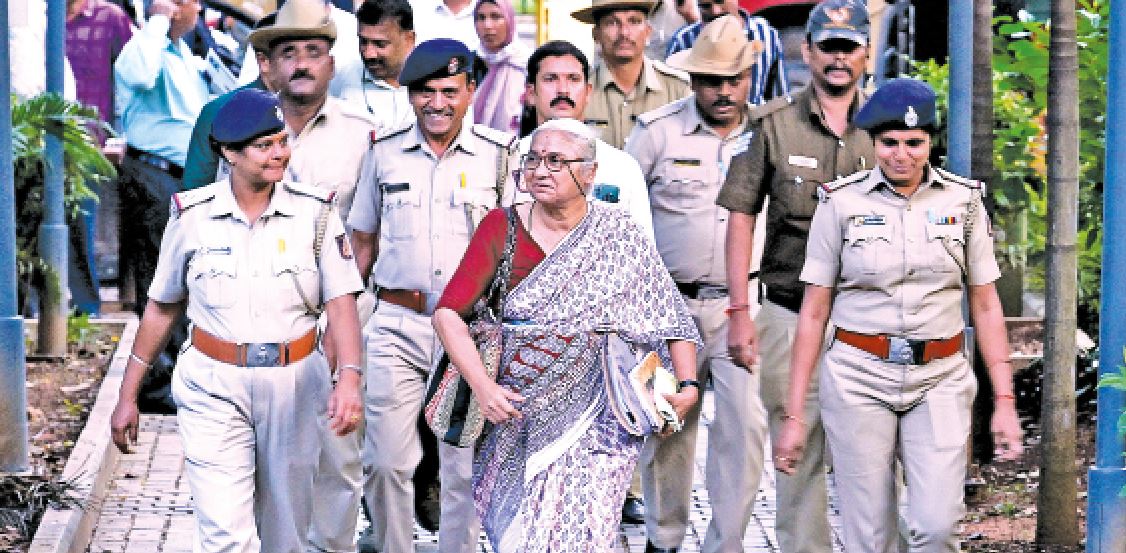
“Our understanding of what constitutes development has become a very critical question today, when the impacts of so-called progress are being felt across the country and the world,” said social activist and Narmada Bachao Andolan leader Medha Patkar, speaking in Bengaluru on Tuesday. “We may celebrate Water Day or Earth Day, but are we truly heeding the warnings scientists have been giving about the state of nature? If we continue on the current path of development, humanity itself faces the threat of extinction,” she warned.
Patkar was speaking at the release of a fact-finding report on human rights violations in Honnavar, prepared jointly by the All India Central Council of Trade Unions (AICCTU), Fridays For Future Karnataka (FFF-K), and the People’s Union for Civil Liberties–Karnataka (PUCL-K). The report, launched at the Press Club, examines the impact of the Honnavar Port Project, approved in 2010 for development by the HPPL.
Spanning 44 hectares across five fishing villages — Tonka 1, Tonka 2, Pavinkurva, Mallukurva, and Honnavar Rural — the project has drawn growing local opposition. It alleges violations of constitutional safeguards for environmental and human rights protection, including the absence of informed consent from affected communities. “They are telling us to vacate our homes, saying this is not our land. But this is where we have lived for generations. The sea and the fish are our livelihood — how can we leave? Where will we go?” said Rashida, a member of the Honnavar fishing community, expressing anguish over the threat of displacement and loss of livelihood.
She alleged that villagers faced police violence for resisting the project, disrupting the communal harmony that once defined their coastal village.
Coastal Karnataka activist Vidya Dinker, who supports the fisherfolk, urged the government to withdraw the project and promote eco-tourism and sustainable fishing instead. “The project has already destroyed the livelihoods of women who dried and sold fish. Dust frwwom construction has polluted the area, and the erosion-prone coast is ecologically unfit for a port,” she said.
Vidya added that the site overlaps with nesting grounds of olive ridley turtles that return annually to lay eggs. “The company has completed only 3–5% of the work so far, and even that was done under Section 144, with villagers jailed and police used to suppress resistance. Now, under the new BNSS, Section 163 is being invoked against the people.” The report concludes that the Honnavar Port Project illustrates how unchecked industrial development threatens both livelihoods and ecosystems, urging the state to redefine its idea of progress.




.jpg)
