.jpg)


.jpg)

 English daily published in Bengaluru & Doha

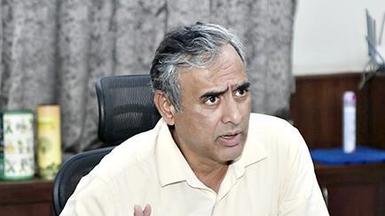
GBA Chief on city's overhaul: 'Livability only real metric that matters'
Bengaluru: As Bengaluru races toward becoming a global metropolis, the city’s governance challenges from mobility to infrastructure deficits, have become more complex and pressing. The newly constituted Greater Bengaluru Authority (GBA) is positioned as a structural reset, tasked with long term planning, integrated decision-making, and bridging long-standing coordination gaps across civic bodies.
In this exclusive interview with News Trail, GBA Chief Commissioner M. Maheshwar Rao explains why Bengaluru needed the GBA now, how autonomy is being preserved, and what changes citizens can expect in the coming years. He discusses decentralisation, funding gaps, the role of technology, localised planning, and why walkability is being treated as a top priority. Here are edited excerpts:
Q. What governance gaps made the GBA necessary at this moment?
We wanted to decentralise decision-making by creating five city corporations, enabling local level focus on compact areas. This structure allows dedicated teams to address coordination issues more effectively. A three-member committee reviewing Bengaluru’s governance had recommended this approach, emphasising ward committees, multiple corporations, and the GBA for broader coordination.
The Chief Minister’s vision behind the GBA is to create a single authority to address Bengaluru’s unique challenges. We studied models from cities like Delhi and recognised the need to correct unequal development across zones.
Our revised model focuses on faster decisions, nimbleness, and localized attention. The GBA will coordinate, while the state government will support corporations especially those with lower tax revenues. Specialised entities such as B-SMILE and BSWML will continue handling cross-cutting infrastructure projects.
Q. What single success indicator will determine whether the GBA earns public legitimacy?
Livability will ultimately be the measure of our success. It reflects safety, mobility, public spaces, and how effectively grievances are resolved. The larger goal is to make Bengaluru a city where people can walk, relax, and enjoy outdoor spaces with out worrying about safety or failing infrastructure.
Strengthening public transport, creating more public areas, and improving safety are essential steps toward this. When citizens begin choosing public spaces over malls, it truly reflects a thriving city. Over the next 3–7 years, the focus is on fixing immediate issues, securing investments, and grounding major projects.
The long term vision – over 20–25 years – is to transform Bengaluru into a futuristic city with a consistently high quality of life.
Q. Citizen grievances of ten go unresolved. Will this improve under the GBA model?
Addressing grievances is a top priority. With five corporation commissioners, we expect faster redressal. Core mandates, roads, cleanliness, lighting, must be monitored and delivered efficiently. More manpower and better systems will help us ensure that every zone receives the attention it needs.
Q. The GBA’s creation has raised concerns about centralisation. Does it undermine local autonomy?
Not at all. We have ensured full compliance with the 74th Constitutional Amendment. The corporations retain autonomy over local governance. The GBA’s role is primarily in planning and coordination, medium- and long-term visioning, not day-to-day operations.
The idea is to ensure planned growth, facilitate large infrastructure projects, integrate expert inputs, and help each level of authority take ownership. Bengaluru needs a unified vision, and the GBA enables that without compromising civic participation.
Q. What major governance failures does the GBA still inherit?
It’s too early to judge outcomes, but we are hopeful about improved decision-making and better citizen services. We now have 150 engineering subdivisions, 50 executive engineers, five corporation commissioners and ten zones ready to work in a coordinated manner. The GBA will work closely with agencies like BMLTA to drive planned development and mobility, ensuring transparency and efficiency.
Q. Which zones or pockets of the city are expected to benefit the earliest from an integrated model?
Bengaluru’s growth is uneven, residential density is largely in the southwest and west, while commercial activities are concentrated in the central and eastern regions. This naturally raises questions about revenue and infrastructure distribution.
The plan is to use revenues generated within each corporation to meet local needs. The five corporations will prioritize bridging infrastructure gaps in high-growth pockets, residential zones in the southwest and commercial hubs in the centre and east. We currently have 369 wards, and this may increase as the population grows.
Q. At the BTS, you said walkability and last-mile connectivity are top priorities. What does that mean on the ground?
Bengaluru’s infrastructure needs are massive, ?1–1.5 lakh crore over the medium term. The Metro alone accounts for ?50,000 crore, with another ?65,000 crore already being invested. We are focusing on improving road density, creating elevated corridors (120 km), building tunnels, and developing roads along canals.
Other priorities include solid waste management, multi-modal hubs, transit-oriented development and water supply. The GBA’s role is to facilitate and coordinate these efforts, ensuring resources are used efficiently and development follows a planned, sustainable path.
Q. What role will technology and innovation play in improving service delivery?
A significant one. We pioneered E-Khata; most survey work now happens through it. We’re deploying AI-powered dash cams in our vehicles to detect potholes, debris, and garbage dumping. We’re also collaborating with the police through their ASTraM application to model traffic routes, optimize flow, and enhance safety.
Our goal is to become a fully data-driven organization. We are building robust databases for tax assessments, household identification and infrastructure planning. The transport department is evolving its technological stack, and we’re exploring how to integrate that into our own systems.
Digitizing records and creating a centralised database will help us respond faster to challenges related to land, roads, and mobility.
Q. Will corporations need additional grants, or can they be financially independent?
The GBA’s financial powers are currently limited. Our revenue sources, apart from plan approvals, are modest. Property tax goes directly to the corporations. Our focus is on structuring projects well, optimizing fund usage, and exploring innovative ways to mobilize resources especially for corporations with limited revenue. The aim is equitable and efficient use of local funds.
.jpg)




.jpg)