.jpg)


.jpg)

 English daily published in Bengaluru & Doha

HC allows Shanth Kumar's candidacy for KSCA president's post
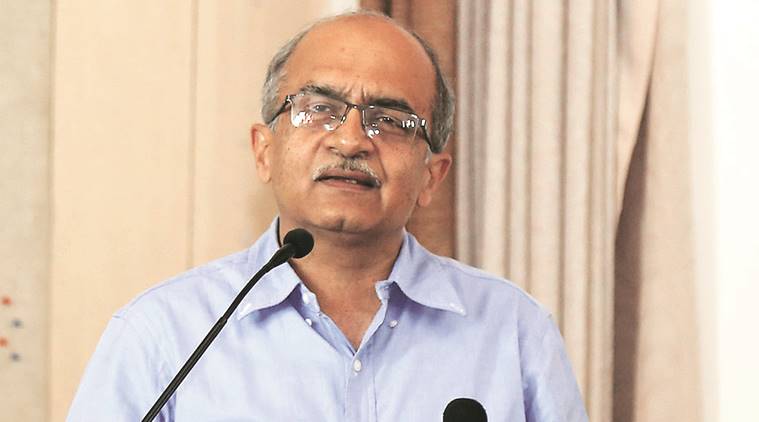
Bengaluru: Supreme Court advocate Prashant Bhushan on Friday delivered a scathing critique of India’s constitutional institutions, accusing them of failing the country’s minorities and functioning in service of a majoritarian political project.
Addressing the AIMC Foundation Day at the Bengaluru gathering, Bhushan alleged that state bodies meant to safeguard democracy, equality, and accountability have been systematically reshaped to suit the interests of BJP while sidelining minorities — especially Muslims.
Bhushan began by targeting the selection process of the Election Commissioner, saying that an earlier intervention by the Supreme Court of India, which ruled that the appointment must remain outside direct government control to protect democracy, was overturned through new legislation.
He said the current law places the selection in the hands of the Prime Minister, a Union Minister, and the Leader of the Opposition — whose repeated dissent notes have, according to him, made little difference. “The government installs stooges as Election Commissioners, ignoring the spirit of neutrality,” Bhushan said.
He then moved to electoral conduct, citing developments during the Bihar Assembly elections. He alleged that a hurried Special Intensive Revision of voter rolls was carried out and that ?10,000 was distributed to nearly 1.5 crore women, while almost 1,000 special trains were arranged to ferry voters, with money allegedly handed out as incentives.
“When the ruling party violates the Model Code of Conduct, the Election Commission shuts its eyes. But when the Opposition slips, action is instant,” he asserted. Bhushan also slammed the Comptroller and Auditor General of India, accusing it of selectively auditing Opposition-ruled states while sparing governments in BJP-ruled states. He said such asymmetrical scrutiny has weakened the institution’s watchdog role.
Turning to ideology, Bhushan said Hindutva is rooted in a vision of social hierarchy where Hindus occupy privileged positions and others are pushed into a second-class status. He recalled the National Register of Citizens exercise in Assam, pointing out that 80% of those excluded turned out to be Hindus — an outcome he said disrupted the government’s original intent.
He argued this was followed by the introduction of the Citizenship Amendment Act, 2019, which he alleged was designed to grant fasttrack citizenship to non-Muslims claiming persecution from neighbouring countries, while Muslims were left outside its protective ambit.
From the elections, Bhushan shifted to the judiciary, asserting that its independence has been eroded using post-retirement appointments as leverage. He named former Chief Justice Ranjan Gogoi — who delivered the Ayodhya verdict — for later being nominated to the Rajya Sabha.
He also cited Justice Arun Mishra, who he said delivered multiple rulings favourable to the Adani Group before being appointed Chairperson of the National Human Rights Commission. He pointed to other judges who decided Ayodhya matters and later received constitutional roles including Rajya Sabha nominations or gubernatorial postings, citing such trajectories as evidence of inducement.
“These appointments were used ruthlessly to influence the system,” he alleged. Bhushan also offered ideas for reform, suggesting that once the collegium reiterates a name for judicial appointment, a fixed timeline should trigger automatic clearance to end political or bureaucratic delays — a step he said could restore fairness to judicial selections.
Even as he attacked mainstream power structures, Bhushan praised the rise of India’s alternative digital media ecosystem, saying it has kept hard truths alive at a time when much of the mainstream press has failed. He called for a mass citizens’ movement to demand institutional reform, transparency, and equality.
“Real change will only come when people rise and demand institutions work for the many, not the powerful few,” he said.




.jpg)
