.jpg)


.jpg)

 English daily published in Bengaluru & Doha

Great Nicobar faces big loss
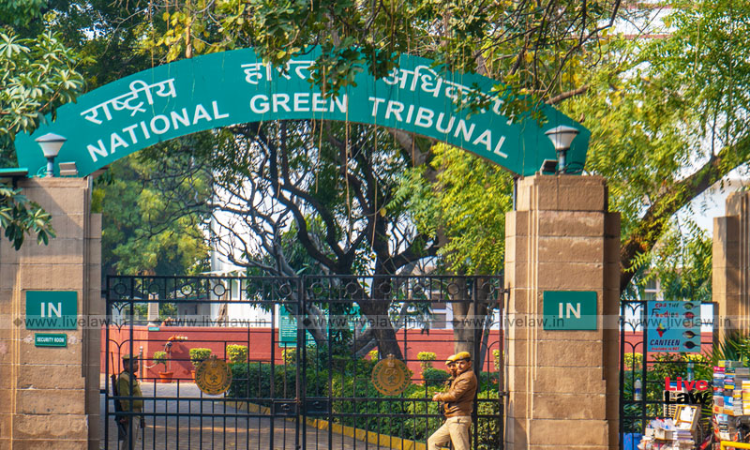
It comes as no surprise that the National Green Tribunal has given a green signal for the Rs. 81,000 crore Great Nicobar Project that envisages building an international transhipment port, a gas and solar power plant, an airport for civil and military use and a sprawling township over 166 square kilometre area that entails cutting down over a million trees.
The decision came from a six-member special bench of the National Green Tribunal’s Kolkata branch on Tuesday (Feb. 16) which dismissed the challenge to the Nicobar Project filed by the Conservation Action Trust and environmentalist Ashish Kothari in 2022. The Tribunal ruled that “by and large the project is compliant and the environmental clearance (EC) does not call for interference.” The lack of surprise owes itself to previous such rulings which have gone in favour of the government.
The environmental activists and bodies had contended that the Project violated the 2019 Island Coastal Regulation Zone (ICRZ) Notification which prohibited development in ecologically sensitive coastal areas. The decree even discounts any damage to the Galathea beach which serves as the hatchery of leather-back turtles, and as nesting ground for the Nicobar Megapode birds. The challenging petitions had even flagged the potential and irreversible risks faced by the coral ecosystem due to extensive dredging.
But the NGT has gone by Zoological Survey of India’s assurance of these being “scattered in nature” and “amenable to translocation”. The ruling has mostly dittoed the official assurances of balancing the environmental concerns and has relied on reports by official agencies allied with the Ministry of Environment and Forests such as Wildlife Institute of India, Salim Ali Centre for Ornithology and Natural History, Zoological Survey of India and National Centre for Sustainable Coastal Management.
It has been mainly guided by the ‘critical national and strategic interest’ owing to the island’s situation at the mouth of Straits of Malacca, the entry point to the Indian Ocean. The NGT which had been approached for merit review—rather than the legality—of the Project satisfies itself that adequate safeguards have been provided in the EC conditions and there was no good ground to interfere.
Curiously, the lack of concern for the potential damage accruing to the biodiversity of the islands and the destruction to be caused by the project remain conspicuously absent in the judgement. The government’s claim of undertaking compensatory afforestation in Haryana is utterly laughable. Planting trees in a different eological zone does not and cannot offset loss of unique, endangered tropical island ecosystems.

.jpg)
.jpg)
.jpg)
.jpg)
.jpg)