.jpg)


.jpg)

 English daily published in Bengaluru & Doha

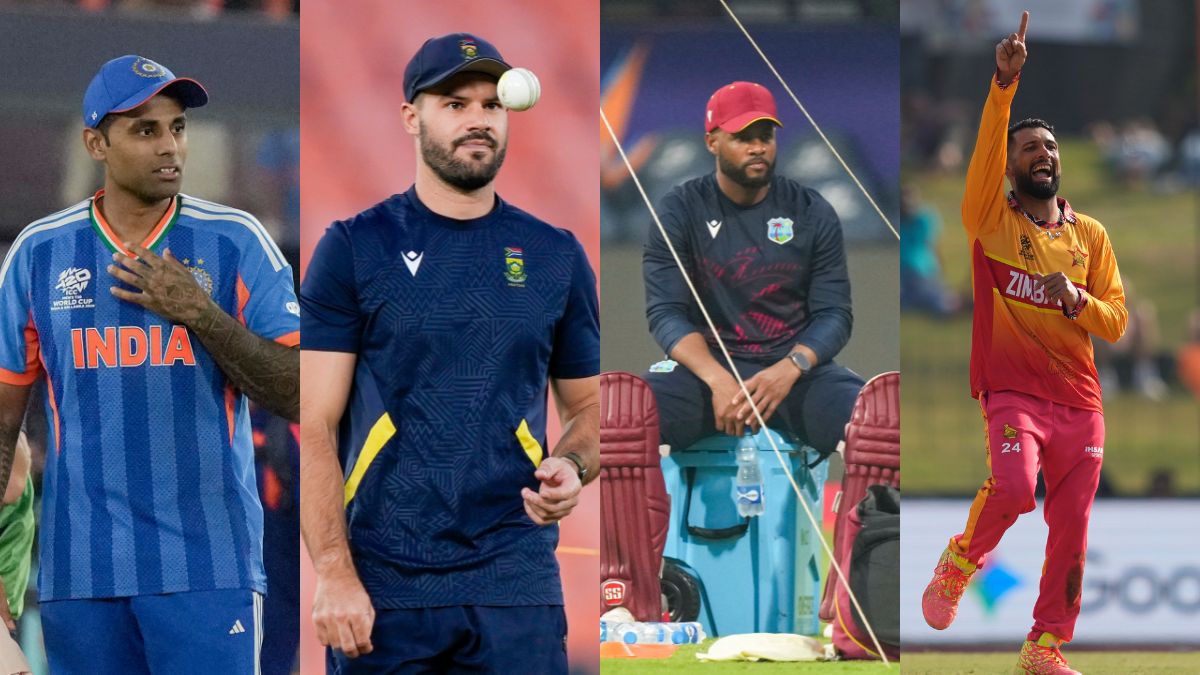
India’s T20 tightrope: Talent, pressure and the Super-8 reality
India’s T20 World Cup campaign has arrived at an uncomfortable juncture. Entering the Super-8 stage with the confidence of a dominant group phase, the side suddenly finds itself grappling with permutations, net run rate anxieties and the unforgiving arithmetic of tournament cricket. The clash against Zimbabwe is no longer a routine fixture; it is a test of temperament, urgency and clarity.
Tournament structures are designed to expose even the strongest teams, and India’s predicament illustrates precisely why. A heavy defeat earlier in the Super 8s did more than dent morale – it inflicted severe damage on net run rate, that silent yet decisive metric that often dictates fate when points are scarce. In a competition where margins matter as much as victories, India’s path to the semi-finals has become precariously narrow. A mere win may not suffice; the scale and authority of that win now carry disproportionate importance.
Yet the larger question persists: how does a team of India’s depth and pedigree find itself under such pressure? Part of the answer lies in the evolving nature of T20 cricket. The format is ruthlessly volatile, compressing contests into brief, high-intensity windows where a single poor session can outweigh several strong ones. Established reputations offer little protection. Opponents arrive armed with meticulous data, specialised roles and tactical boldness, narrowing the gulf that once separated elite sides from the rest.
India’s struggles in the Super-8 stage also hint at subtler challenges. The burden of expectation, amplified by global scrutiny and an immense fan base, can transform pressure into paralysis. Players conditioned to dominate bilateral series must recalibrate rapidly in knockout-like scenarios, where caution and overcorrection often replace instinctive aggression. Tactical rigidity, particularly in batting tempo or bowling rotations, can further magnify vulnerabilities against adaptable opponents.
There is also the psychological dimension of momentum. A setback in a condensed tournament tends to linger, influencing decision-making and risk appetite. Teams that thrive at this stage are those capable of immediate emotional reset – a quality easier prescribed than executed.
None of this diminishes India’s prospects. Indeed, their predicament serves as a reminder that modern T20 cricket is less about sustained superiority and more about situational excellence.
Zimbabwe, frequently underestimated, embodies the format’s democratic unpredictability. For India, the imperative is not merely victory, but conviction – to play with the assertiveness befitting their talent. The Super-8 stage is proving a stern examiner. Whether India advances may ultimately depend on how decisively it responds to this moment of discomfort – a familiar challenge for champions, yet never an easy one.

.jpg)
.jpg)
.jpg)
.jpg)
.jpg)