.jpg)


.jpg)

 English daily published in Bengaluru & Doha

India’s NE states remain vulnerable to militancy
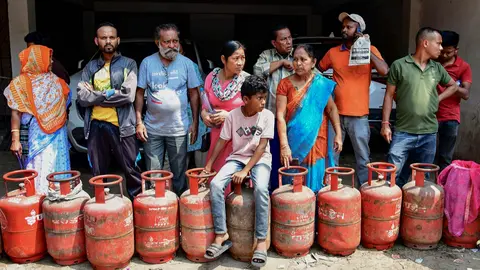
The ongoing Iran war and the ensuing fuel and LPG crisis has kept mainland India busy. Amid this West Asia chaos, a very significant incident took place in north -east India. An American national, Matthew Aaron Van Dyke and six Ukrainian citizens were arrested from two airports in east and north-east India, by the National Investigation Agency (NIA).
The startling arrests exposed a sophisticated grey-zone network operating along the Indo-Myanmar border. Charged under Section 18 of the Unlawful Activities (Prevention) Act (UAPA), the group is accused of training Myanmar-based Ethnic Armed Groups (EAGs) and coordinating the illegal import of drone technology-activities that the NIA claims directly threaten India’s internal security and sovereignty.
The arrival of Chin refugees in Mizoram has reinvigorated discourse around the idea of unifying Mizo, Chin, and Kuki communities, rooted in shared Tibeto-Burman ancestry and a common Christian identity. Over 64,000 people have crossed the India-Myanmar border into India seeking refuge since the February 2021 military coup. The Government of India views this greater Mizoram aspirations with caution, as they could challenge the territorial integrity of Manipur, Tripura, and Assam.
India shares the border with Myanmar across four north-eastern states: Arunachal Pradesh, Nagaland, Manipur, and Mizoram. The Indo-Myanmar border is 1,643 km long. These risks have increased significantly since the 2021 military coup. The involvement of Ukrainian nationals also suggests the transfer of advanced drone warfare, the potential migration of such skills to Myanmar is a significant concern for Indian agencies.
For India, tightening border management remains a priority.
The Government has decided to stall the Free Movement Regime (FMR), started fencing the Indo-Myanmar border and strictly enforcing PAP and Restricted Area Permit (RAP). The NIA’s ongoing probe into the masterminds and funding sources behind this network will be crucial in determining whether this was an isolated operation or part of a coordinated effort to reshape the geopolitics of the Bay of Bengal region.
Insurgency in India’s Northeast has been one of the most complex internal security challenges since Independence. Rooted in issues of identity, autonomy, and ethnic assertion the region witnessed multiple armed movements across states such as Nagaland, Assam, Manipur, Tripura, and Mizoram.
Over the past two decades, a combination of sustained security operations, peace talks, economic development initiatives, and improved connectivity has led to a marked decline in violence. However, India cannot afford complacency. Not yet. The arrest of Dyke, and others have thrown open a new challenge for India’s national security and stability of the north-eastern region.

.jpg)
.jpg)
.jpg)
.jpg)
.jpg)