.jpg)


.jpg)

 English daily published in Bengaluru & Doha

Will Israel bring lasting peace in Mideast?
As the world waited with bated breath amid Donald Trump’s civilisation-annihilation threats to Iran, the Pakistan-brokered two-week ceasefire and end of hostilities came as a whiff of fresh air. Given Trump’s unpredictability, and the fact that the details of the ceasefire plan remain unclear, one can only hope that it leads to lasting peace in the Middle East.
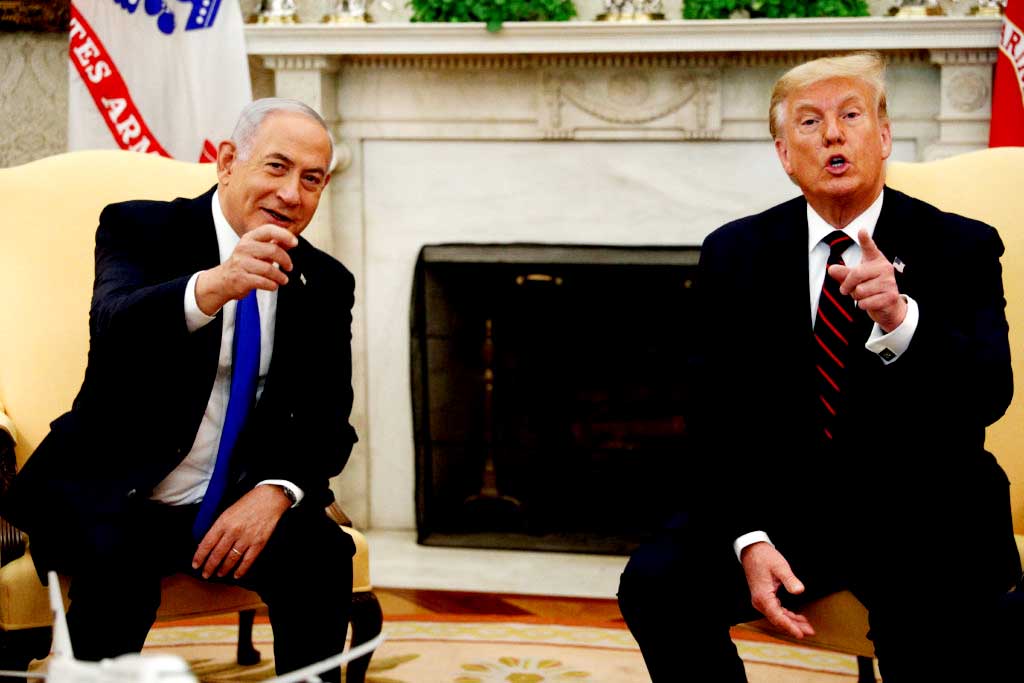
There is, however, a nagging doubt over the Pakistan-brokered plan, Israel. Even after Trump’s threats, and until Shehbaz Sharif announced the possible ceasefire plan, later confirmed by Trump, Israel’s Prime Minister Benjamin Netanyahu remained silent.
The reason appeared clear: he did not want to end Israel’s war in Lebanon.
Though, with visible reluctance, Netanyahu seemed to fall in line with Trump’s ceasefire push on Iran.
As seen earlier in Gaza Strip and the occupied West Bank, where Israel cited the presence of Hamas among civilians to justify its military actions, a similar pattern appears to be unfolding in Lebanon, with Hezbollah, backed by Iran, replacing Hamas as the central factor.This appears to contradict the Pakistan-brokered and Trump-supported ceasefire framework, which ostensibly included Lebanon and the wider Gulf region.
Hezbollah, while backed by Iran, has signalled openness to mediation efforts for a ceasefire in Lebanon, but has refused to return to the pre-March 2 status quo. This follows continued Israeli strikes in Lebanon, despite a ceasefire being nominally in place since the last full-scale Israel-Hezbollah war ended in November 2024.
Meanwhile, ceasefire notwithstanding, Israeli strikes reportedly hit several areas in central Beirut on Wednesday without warning.
In Lebanon, where Israel is fighting Iran-backed Hezbollah militants, more than 1,500 people have been killed and around one million displaced, while eleven Israeli soldiers have died.Iran’s strategic leverage over the Strait of Hormuz during the conflict has emerged as a significant factor. The ceasefire may formalise that control and potentially create a new revenue stream.
The plan allows both Iran and Oman to levy fees on ships transiting through the strait, with Iran expected to use the funds for reconstruction. “Big money will be made. Iran can start the reconstruction process,” Trump said on social media.More than 1,900 people had been killed in Iran as of late March, though official figures have not been updated in recent days. Across Gulf Arab states and the West Bank, more than two dozen people have died. In Israel, 23 deaths have been reported, along with 13 U.S. service personnel killed in the conflict.

.jpg)
.jpg)
.jpg)
.jpg)
.jpg)