.jpg)


.jpg)

 English daily published in Bengaluru & Doha

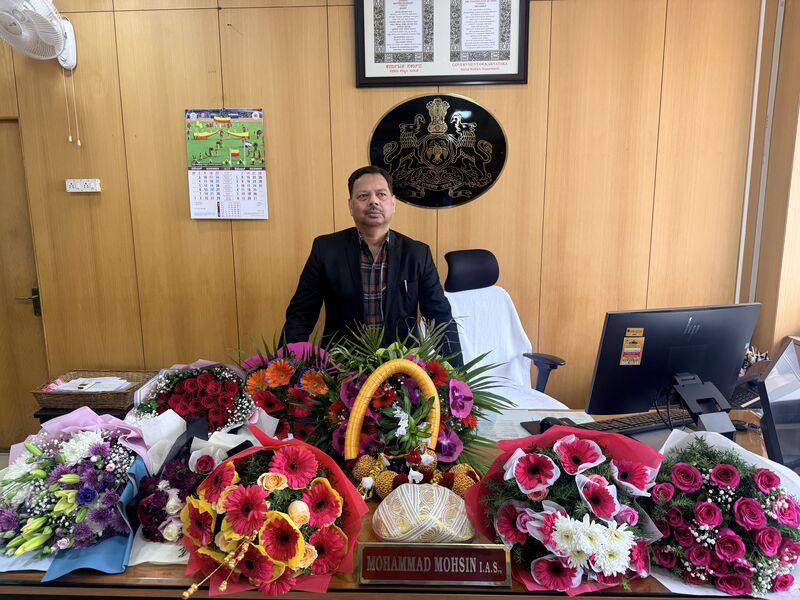
Karnataka building a decentralised healthcare model: Addl CS, Medical Edu Dept Mohammad Mohsin
Bengaluru
As Bengaluru remains a leader in the medical education ecosystem, the future draws attention to a powerful transformation happening beyond the capital city. In an exclusive interview with Mohammad Mohsin, Additional Chief Secretary, Medical Education Department, Government of Karnataka, he shared his perspectives on the medical education boom “Beyond Bengaluru”, as the future of healthcare in Karnataka will be built not in one city but across many. “It is not only expanding access to medical education but also strengthening healthcare delivery in underserved districts”, he said.
Q: Karnataka is a pioneer in medical education with many medical colleges and hospitals. Can we expect more?
A: The GOK has placed public health an d accessibility at the centre of its medical education expansion strategy with a clear goal -- every district should have a medical college and advanced healthcare facilities. The expansion of the renowned Sri Jayadeva Institute of Cardiovascular Sciences and Research into Kalaburgi, with a 371-bed cardiac facility has reduced the need for patients to travel to Bengaluru. It caters to patients from Telangana and Andhra Pradesh too.
The government is also building a comprehensive healthcare ecosystem in Kalaburgi. In Karwar, a new 450-bed speciality hospital has replaced the outdated infrastructure of the Karwar Medical College. Similarly, districts like Haveri will have new superspeciality hospitals. Jayadeva hospital at Hubballi, and the hospital expansion at the Mysuru facility will be taken up.
Q: Are medical colleges evenly distributed across the state?
A: Despite having over 20 government and 50 private medical colleges, the state continues to push for expansion. The idea is not just numbers. Government medical colleges ensure that students are admitted on merit. They provide opportunities for rural and economically weaker students.This expansion is also aimed at addressing regional imbalances and ensuring that students and patients do not have to migrate to large cities for education or treatment. By integrating medical education with healthcare infrastructure through district colleges, speciality hospitals, and regional centres, Karnataka is building a decentralised model that prioritises both access and equity.
Q: What is the roadmap to fill faculty vacancies in government medical colleges?
A: We are now appointing doctors and technicians on contract. These are 11-month to one-year contracts. Doctors from the Health and Family Welfare department are also being deputed to medical colleges.
Q: Can Karnataka adopt a “Single Unified Medical Education” governance model?
A: Under this framework, the Medical Education Department is responsible not just for training but also for tertiary care and super-speciality services, while the Health and Family Welfare Department focuses on primary and basic secondary care.When it comes to advanced treatments – neurology, cardiology, gastroenterology, and complex surgeries – the availability of specialists is limited within that setup. This is where medical colleges play a critical role.
Q: What prompted the shift to online verification of medical and nursing certificates?
A: With this digital system, students from states like Assam, Kerala, Mumbai, Meghalaya, Rajasthan can now complete the verification process online. The system was introduced six months ago.
Q: Is there a plan to have an AIIMS in Karnataka?
A: Yes, we are going to have an AIIMS soon.
Q: With new eligibility rules how will you balance regulation with accessibility?
A: This is to ensure better career outcomes for students. Earlier, students could enroll in certain allied health courses after class 10. Now, their eligibility is being revised to pre-university level to improve the quality of intake and training.
Q: How aligned is medical education with public health challenges?
A: Complicated cases from PHCs and CHCs frequently reach tertiary hospitals. So, medical colleges are now being encouraged to adopt taluka hospitals and rural health centres, providing specialist support and strengthening local services.
Q: What is your vision to make Karnataka a national leader in medical education?
A: In some of our major hospitals like Jayadeva, nearly 50 to 60% of patients have health insurance. Karnataka is also positioning itself as a destination for health tourism. We are seeing patients from Nepal, Middle East, Sri Lanka, South East Asia and so on. We want to develop facilities in district hospitals as well, so that international patients access quality care outside Bengaluru too.
.jpg)
.jpg)