.jpg)


.jpg)

 English daily published in Bengaluru & Doha


PUC: 11% jump in pass rate, but Dharwad is 23rd
Hubballi
For decades, the twin cities of Hubballi-Dharwad have been regarded as the academic nerve centre of North Karnataka, a destination where thousands of students arrive every year chasing quality education, competitive success, and brighter futures. Yet, a troubling contradiction is now emerging. Despite recording a significant 11% increase in pass percentage, Dharwad district has slipped from 17th to 23rd rank in the II PU results this year raising serious questions about the region’s academic consistency and long-held reputation as “Vidya Kashi.” The district’s pass percentage improved from 72.32% in 2025 to 83.13% in 2026, a notable academic gain.
However, the improvement was not enough to keep pace with the statewide surge in results, pushing Dharwad further down the ranking ladder. This is not an isolated dip but part of a worrying trend in 2022 the district achieved 15th rank (60.05%), in 2023 it was 27th rank (73.54%), in 2024 a slight improvement with 23rd rank (80.79%), in 2025, the rank further improved and broke into top 20 by securing 17th rank (72.32%), this year the rank plummeted to 23rd rank (83.13%) The data reveals fluctuations, but one constant remains, Dharwad has consistently failed to break into the top 10.
What makes the decline more striking is the district’s unmatched educational ecosystem. Home to prestigious institutions, including IIT and IIIT, and over 200 coaching centres, Dharwad attracts students not just from across Karnataka but also from neighbouring states. Coaching ranges from school-level entrance exams to elite civil services preparation. Yet, despite this ecosystem, board exam outcomes remain underwhelming. Residents, parents, and educators are now asking a difficult question: Why is a district with such strong academic infrastructure unable to translate it into top-tier results?
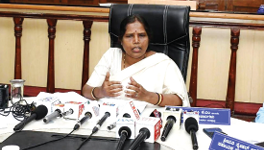
Deputy Director for PU Education, Tejaswini Narayankar, attributed the slip in ranking to overall improvement across districts, driven largely by the introduction of a two-exam system by the government. “We made every effort to break into the top 10, but results improved across the state,” she said, adding that while the growth in pass percentage is encouraging, the ranking drop needs serious ground-level analysis.
Experts point to foundational gaps
Umesh Purohit, Principal of Excellent NEET Academy, stressed that weak foundational learning is a key concern. “The base education at primary and high school levels must improve. Strong SSLC outcomes will directly influence PU performance. While the department has improved pass percentages, long-term quality needs attention.” Echoing this concern, retired principal and Kannada Sahitya Parishat president Lingaraj Angadi highlighted a cultural shift in learning habits.
“Students are increasingly distracted by mobile phones and are losing focus on deep learning. Instead of exploring textbooks, many depend on tuition centres and exam-oriented shortcuts like old question papers.” While these coaching centres have produced candidates who cleared competitive exams like KAS, IAS, and IPS, critics argue that exam-oriented coaching may be overshadowing conceptual learning, especially at the school level. There is also concern that high pass percentages mask a decline in top-tier scorers, pointing to a gradual erosion in academic excellence.
‘Mission Vidya Kashi’ yet to deliver
In response to falling standards, the district administration launched “Mission Vidya Kashi”, introducing several measures like practice examinations, daily assessments, and special workshops for teachers. However, despite these interventions, the district’s rank has slipped again, highlighting a gap between policy efforts and actual outcomes.

.jpg)

.jpg)