.jpg)


.jpg)

 English daily published in Bengaluru & Doha

Kabadi Man brings structure to India’s unorganised scrap sector
Hubballi
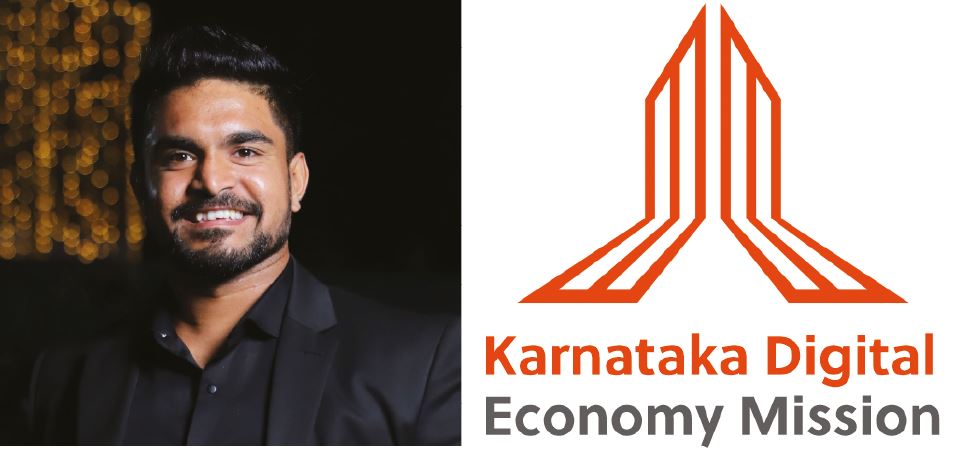
Millions of informal scrap collectors in India walk long distances daily, earning minimal income while playing a crucial role in urban sanitation. Recognising their contribution and challenges, entrepreneur Siddharth Mutkekar, along with co-founder Chinmay Maddinmath, launched Kabadi Man—an asset-light tech platform connecting scrap dealers, similar to Uber. Drawing from his experience as a daily wage labourer and lessons from his first startup, Siddharth aims to bring dignity to the sector and expand operations to cities like Hubballi-Dharwad.
You started out in 2021 with ScrapEasy, but you admittedly knew very little about the waste management industry at the time. How did you bridge that knowledge gap?
Siddharth: The venture idea emerged during the COVID-19 lockdown when I struggled to get fair value from a scrap dealer while clearing household waste. Realising scrap holds monetary value and seeing its widespread presence, I identified a large market opportunity. However, lacking industry knowledge, I approached 15 scrap dealers in Belagavi for guidance but was rejected. The 16th, Ibrahim Marfani, agreed after I offered two months of free labor in exchange for learning the trade. I worked hands-on for over a month, gaining practical insights into recycling, grading, and pricing, before confidently launching his venture, ScrapEasy.
ScrapEasy scaled to an annual turnover of almost Rs 2 crores. Why did you make the difficult decision to shut it down?
Siddharth: Our vision was to build a pan-India company, but we were stuck in one city. The business model was extremely operationally intensive. To expand, we needed our own warehouses, our own EV collection vehicles, and a massive payroll for sorting and collection staff. The capital requirements were too high. When my co-founders had to step down due to personal reasons, I had to rethink everything. I took the hard decision to shut it down.
That pivot led to the creation of Kabadi Man with your new co-founder, Chinmay Maddinmath. What makes this model different?
Siddharth: We took inspiration from companies like Namma Yatri. Instead of owning the fleet and the warehouses, we decided to empower the existing workforce. There are 40 lakh kabadiwalas in India. Without them, our entire recycling economy would collapse. Yet, they live in extreme poverty, traveling 15 to 20 kilometers a day on foot, screaming at the top of their lungs, just to secure three to five customers. We interviewed over 150 scrap dealers across Belagavi and Bangalore and realized we could solve their problem by giving them direct leads. Now, we act as the tech bridge. We don't own vehicles or warehouses; we simply connect households to the nearest verified kabadiwala within a 3-kilometer radius.
How has this platform impacted the daily lives of these kabadiwalas?
Siddharth: The impact has been phenomenal. Through the platform, scrap collectors’ incomes have tripled from Rs 400–500 to around Rs 1,500 daily by serving more customers. Many have upgraded from handcarts to vehicles, gaining stable, dignified livelihoods without roaming aimlessly.
Walk us through the customer experience. If I book a pickup, what happens next?
Siddharth: Customers can schedule scrap pickup via website or WhatsApp. A CRM assigns the nearest trained partner, who arrives in uniform with ID and digital scale. They professionally sort 40+ waste types, weigh items, generate a digital bill, and pay instantly via UPI or cash, with added rewards like discount coupons.
How significant is the environmental impact of what you are doing, especially in tier-2 and tier-3 cities?
Siddharth: The average household generates about 2 kg of waste daily, and 50% of it is recyclable. Unfortunately, most tier-2 and tier-3 cities completely lack Material Recovery Facilities (MRFs). Waste is just dumped into landfills. Every single order we cater to is waste directly saved from the landfill. We track the entire journey of the scrap from the collector to the scrap dealer, and finally to the authorized recycler ensuring an end-to-end green solution.
You’ve launched in Bangalore, Belagavi, and Kolhapur, generating Rs 1.15 crores in revenue since January. What are the expansion plans, specifically for Hubballi-Dharwad?
Siddharth: We are officially entering the Hubballi-Dharwad market within the next two months! We are currently identifying and doing background verifications for our local partners here. Our broader vision is to expand to 10 new cities every year, aiming for a presence in India's top 50 to 60 cities within the next five years.
Finally, how has the local startup ecosystem, specifically initiatives like 'Beyond Bengaluru' and KDEM, supported your journey?Siddharth: It’s been an absolute blessing. KDEM (Karnataka Digital Economy Mission) and the Beyond Bengaluru initiative have provided us with the infrastructure, mentorship, and exposure that tier-2 startups usually struggle to find. We received free stalls at the Bengaluru Tech Summit (BTS) and TiEcon, which connected us with policymakers and VC investors. Programs like HDB Blue have highlighted us as one of the top investable startups in the cluster. We are currently bootstrapped, backed by a Rs 7 lakh MeitY grant.
.jpg)
.jpg)