.jpg)


.jpg)

 English daily published in Bengaluru & Doha

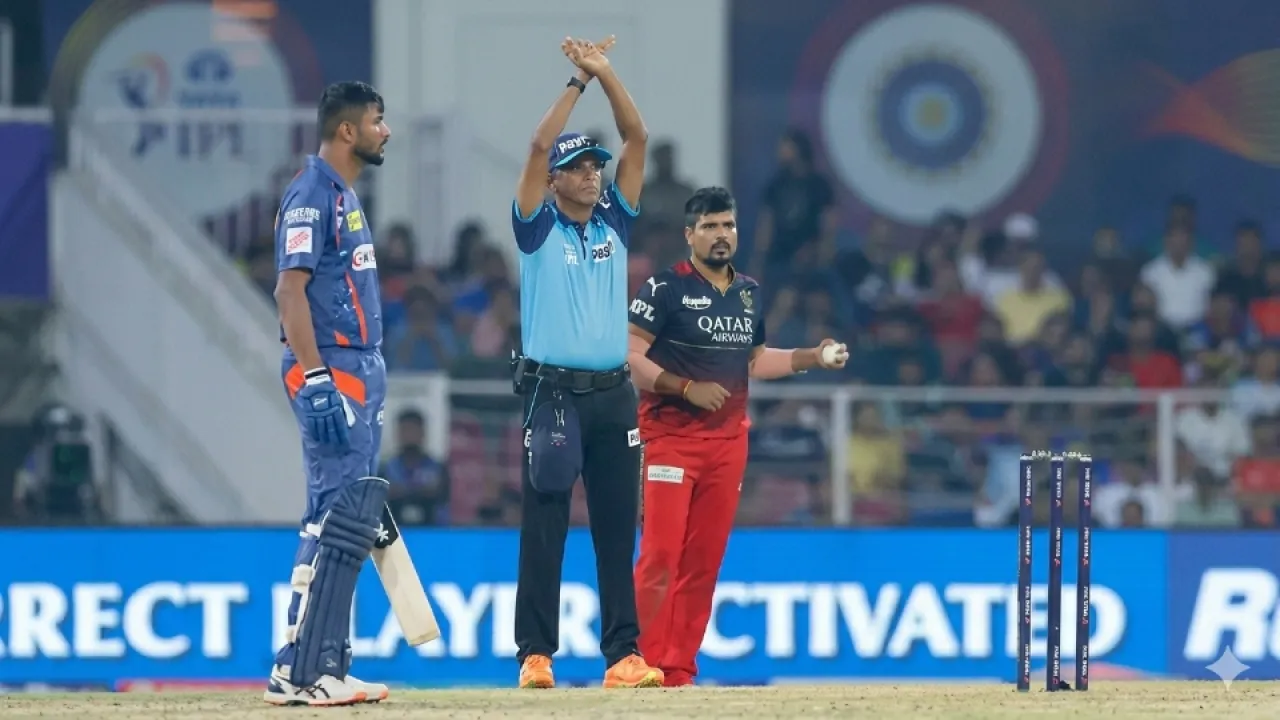
Has IPL gone too far with the impact player rule?
For a format that prides itself on innovation, the Indian Premier League may have strayed into uneasy territory. The Impact Player rule, conceived as a tactical flourish, is beginning to look less like evolution and more like distortion. The recent use of players of the stature of Virat Kohli and Suryakumar Yadav as Impact Players is telling. That teams are willing to deploy even their most bankable names as situational inserts underscores a fundamental shift: cricket is no longer rewarding completeness as much as it once did.
Instead, it is leaning towards extreme specialisation, where roles are narrowly defined and ruthlessly optimised. To be fair, T20 cricket has never pretended to be orthodox. It thrives on compression, improvisation and spectacle, often bending traditional conventions in pursuit of entertainment. But even within this elasticity, a recognisable cricketing core has endured. Traditionally, the game’s beauty lay in its balance. A batter’s contribution extended beyond the crease; a bowler’s value was not divorced from fielding; and the all-rounder stood as the ideal embodiment of cricketing virtue. The Impact Player rule disrupts this equilibrium.
Why invest in multi-skilled cricketers when the format allows teams to toggle between specialists depending on match conditions? There is also subtler erosion at play. Leadership, for one, risks becoming fragmented. If a captain can be rotated in and out of the XI depending on the innings, it challenges the continuity that leadership demands. Decision-making in cricket is rarely linear; it is shaped by rhythm, presence and an intuitive reading of the game. These are not qualities that lend themselves to substitution.
Defenders of the rule argue that it enhances tactical depth, and they are not entirely wrong. It has introduced new layers of strategy, forcing teams to think dynamically. Yet, this very dynamism edges the format closer to a contest of match-ups rather than a test of well-rounded teams. In effect, sides are fielding 12 players, even if only 11 are on the park at any given time. There is, too, a question of perception. When players like Kohli are reduced to highly specific roles, the audience’s understanding of greatness subtly shifts.
The complete cricketer gives way to the efficient operator, valued for a narrow window of impact rather than sustained excellence. The IPL has never shied away from pushing boundaries. But in doing so, it must guard against unravelling the essence of the sport it seeks to showcase. The Impact Player rule may have added intrigue, but if it continues to privilege convenience over craft, the game risks becoming something altogether less than itself.

.jpg)
.jpg)
.jpg)
.jpg)
.jpg)