.jpg)


.jpg)

 English daily published in Bengaluru & Doha

Netravathi bridge to Bolar sea face: A transformative urban space takes shape
Mangaluru
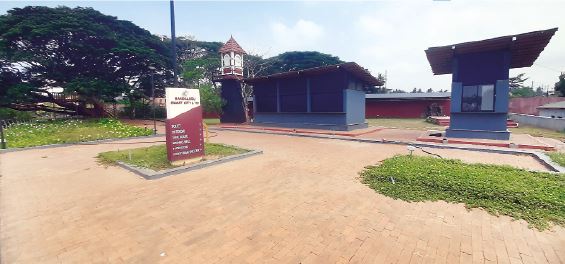
The long envisioned waterfront development along the Netravathi river is steadily taking shape, with the first major stretch of the promenade nearing the opening. Even as visible progress brings optimism, the larger vision remains incomplete. The project, undertaken by Mangaluru Smart City Limited (MSCL) under the Smart City Mission, aims to develop a 2.1 km riverfront corridor from the Netravathi bridge to the Bolar sea face. Conceived as a transformative urban space, the initiative seeks to combine recreation, environmental sensitivity and public accessibility.
A 450 metre stretch of the promenade is now ready and is expected to be opened to the public shortly, marking a key milestone in a project that has been in the works for nearly five years. Based on a detailed project report prepared in 2020, construction has progressed across multiple sections, though completion of the full corridor is still some distance away. The developed stretch offers a range of features designed to create an engaging public space.
These include landscaped walkways, a birdwatching zone along the riverside, an open air theatre, a laterite and brick promenade, a children’s play area, an open air gym, designated art spaces and a tree house. Plans are also in place to introduce boating and water sports through a private operator. Officials say the focus has been on retaining the natural character of the riverbank while enhancing usability. “We have preserved the environment and added greenery to improve the overall experience.
We will try to finish the remaining portion of the project very soon,” said Arun Prabha, MD, MSCL, noting that around 300 metres of hardscaping work remains pending. The section between the Netravathi railway bridge and Morgan’s Gate has largely been completed with softscaping elements such as pathways and landscaped zones, offering a continuous, accessible stretch for visitors. Interestingly, even before its formal opening, the site has been witnessing steady footfall.
According to local residents, until recently, nearly 200 to 300 people were visiting the area every evening, prompting the contractor to restrict access due to safety concerns. A significant number of visitors were youth, drawn to the open riverfront and the novelty of the space, highlighting the growing demand for well planned public areas in the city. This early response reflects a larger urban gap. Despite its rivers and coastline, Mangaluru has long lacked accessible waterfront spaces for public use, with most riverbanks either restricted or underutilised.
However, the absence of formal access has also brought attention to safety concerns. Residents have pointed to limited lighting in certain areas, lack of protective barriers along parts of the river edge and the absence of security or monitoring systems as issues that need to be addressed before full public access is permitted. The waterfront project has also undergone cost revisions. Initially estimated at around Rs 70 crore, the revised cost has been brought down to approximately Rs 32 crore, with about Rs 16 crore spent so far.
Urban planners note that while the completed stretch is a significant step forward, the success of the waterfront will depend on continuity. The broader vision of a seamless riverfront featuring cycling tracks, cultural zones and extended public spaces can only be realised once the entire stretch is completed. As of now, the project stands at a crucial midpoint, partially realised, increasingly popular and closely watched. The steady crowds, even before opening, signal a clear shift in public expectations. What remains is for the waterfront to evolve from a promising fragment into a complete urban experience, one that fully reconnects Mangaluru with its river.
.jpg)
.jpg)