.jpg)


.jpg)

 English daily published in Bengaluru & Doha

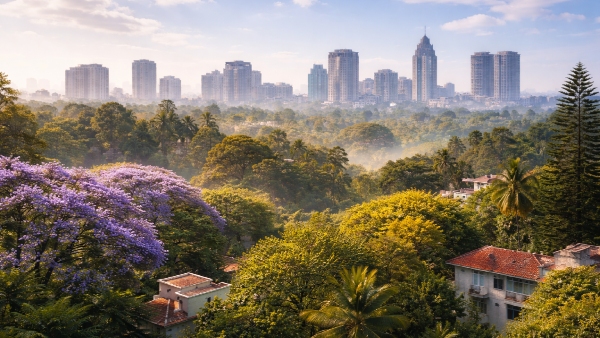
How Bengaluru's iconic weather losing its charm
Bengaluru
Once celebrated for its pleasant climate, Bengaluru is now facing growing concern and criticism from residents over steadily rising temperatures. Despite receiving a few showers in April, the rainfall has done little to ease the persistent heat. Citizens and environmental experts attribute this shift largely to rapid and often unregulated urbanisation. They argue that Bengaluru’s continued push for infrastructural growth, frequently positioned under the banner of sustainable development, has led to ecological strain.
They note that the resulting environmental imbalance has contributed to a perceptible decline in the city’s historically moderate weather patterns. “Bengaluru’s green cover has plummeted from 78% in the 1970s to just 6% today, with soaring summer temperatures directly linked to rampant infrastructure development and concretisation”, said Vinod Jacob, Urban Strategist, adding that, amid widespread greenwashing, traditional setback norms are increasingly being overlooked to maximise construction footprints.
He stressed that authorities must strictly enforce construction regulations, including mandatory 33% setbacks for large commercial establishments, IT parks, malls, and residential complexes. Vinod also pointed out that the current practice of allowing a 5 - 15% relaxation for building plan violations after construction should be discontinued. “No approvals after the construction must be entertained, to uphold the purpose of urban planning and environmental degradation”, he stated. Vijay Nishanth, Tree Doctor and urban conservationist, said that temperature variations in Bengaluru are largely evident during the summer months, while other seasons remain relatively consistent.
He added that, instead of merely voicing concern, the focus should shift towards implementing measures to address the issue from the root. “They're only looking at Bangalore as a money-making machine. Beyond that, they are least bothered”, he stated, criticising those in positions of power as well as key stakeholders in the city’s business sector. He underscored that meaningful change hinges on their intervention, urging them to prioritise the environmental impact of construction and development alongside economic interests.
Vijay Nishanth underscored the need for the government to prioritise initiatives such as green planning, tree censuses, and biodiversity studies, stating that development anchored in ecological considerations would enhance the city’s sustainability and help preserve its green cover. The city is currently grappling with deteriorating air quality and multiple forms of pollution, contributing to an overall decline in its climate. Predictions by environmentalists and conservation experts that Bengaluru could evolve into a heat island are now increasingly becoming a grim reality, as the city not only loses its tree-lined spaces but also incurs environmental damage that may take years to reverse.




.jpg)
