.jpg)


.jpg)

 English daily published in Bengaluru & Doha

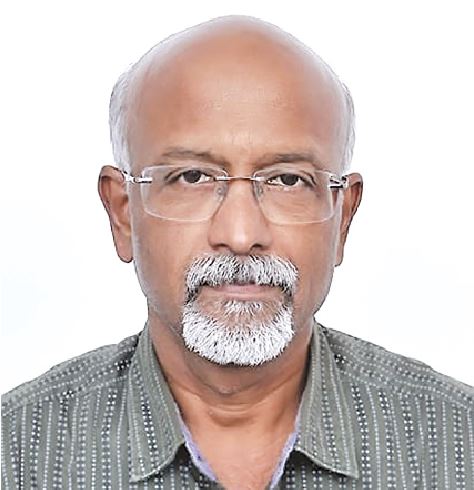
Dr. Rajashekhar Patil shares his perspective on vision, redefines comprehensive eye care
Hubballi
As digital screens dominate our daily routines and lifestyle diseases become increasingly common, comprehensive eye care is more critical than ever. We sat down with Dr. Rajashekhar Patil, Medical Director at Eye Buddy in Hubballi, to discuss the rising tide of vision issues, the dangers of skipping routine clinical checkups, and his mission to bring empathy back into healthcare.
Dr. Patil, Eye Buddy opened its doors in Hubballi in 2024. With so many eye hospitals in the region, what sets your facility apart?
Dr. Patil: The fundamental difference is our approach to the patient-doctor relationship. Previously, I ran an individual hospital called "Eye World." When I transitioned to Eye Buddy, my core intention was to bring a friendly, genuine, and highly transparent service to healthcare. We don't view the people who walk through our doors simply as patients; we see them as our guests. We want to see ourselves as partners in their healthcare journey. At the end of the day, we are all humans first. Healthcare requires a genuine human connection and empathy. No technology can replace the human touch. While running a hospital undeniably involves costs and commerce, that shouldn't introduce bias into patient care.
We want to remove perception biases in making healthcare decisions and shift focus to "Informed Decisions." We explain all available treatment options, the associated costs, and the pros and cons transparently, empowering the patient to make an informed choice. The name "Buddy" reflects this exactly: Across different situations in life we need a friend or mentor to guide us and show the way. We want to be friends and an honest guide to people who come to us with their healthcare issues.
We are seeing a significant rise in eye problems, particularly among the youth. What is driving this trend? Dr. Patil: It all traces back to severe lifestyle changes. Screen time has skyrocketed across all age groups, leading to a massive increase in "dry eye" syndrome. Furthermore, children are spending far less time outdoors, causing Vitamin D deficiencies and heavily contributing to the rise of myopia (short-sightedness). The statistics are alarming.
The World Health Organization predicts that by 2030, 30% to 40% of children will require prescription glasses. Beyond the youth, sedentary lifestyles are driving up rates of diabetes and hypertension in adults, which directly leads to severe eye complications like diabetic retinopathy and glaucoma. n Digital screens are practically unavoidable today, even for children's schoolwork. How do we mitigate this damage? Dr. Patil: It requires a conscious behavioral shift.
Today, school homework is sent over WhatsApp, forcing parents to hand over smartphones to their kids. However, WHO guidelines strongly suggest that a child's screen time should not exceed half an hour per day. Adults are equally guilty. Many of us spend hours scrolling on our phones right before bed, which severely disrupts sleep and metabolic health. We need to actively restrict our screen time and revert to analog habits where possible—like using physical books for homework.
We are sacrificing our long-term health for short-term digital convenience. n When it comes to preventable blindness, where is the public falling short?
Dr. Patil: The biggest misconception today is that changing your glasses at an optical shop constitutes an "eye checkup." It absolutely does not. Optical shops only check for refractive errors (your glasses number). They do not screen for deeper medical issues. Glaucoma, for instance, is known as the "silent thief of vision" and affects roughly 1 to 2 percent of people over 40. It shows no early symptoms.
A teenager with high myopia developed retinal detachment after relying only on optical shops, missing early detection that could have been treated with simple laser care. Similar cases occur with glaucoma. Many mistake spectacle checks for full eye exams, but they are only partial. A comprehensive eye checkup by a qualified eye doctor is essential to prevent avoidable vision loss. Buying glasses anywhere is a personal choice, but optical store tests are not complete eye exams. A proper checkup assesses dryness, cataracts, glaucoma, and retina health. Annual clinical exams—especially for those over 40 and children with high prescriptions—are essential. Get tested by an eye doctor, then choose where to buy glasses freely.
What are the facilities available at Eye Buddy?
Dr. Patil: We are a very well-equipped hospital. We have Perimetry to test for glaucoma, OCT for glaucoma and retina scanning, retina lasers, and advanced cataract surgery machines. We do provide services for squint eyes, removing thick glasses with phakic IOL's and oculoplasty services. Some conditions where we can't provide service, we guide them to the best possible alternative whether it's another hospital in Hubli or elsewhere.
The goal is that people should get a solution to their problems in the best possible way. Our OT (Operation Theatre) is very unique—we have a Modular OT. There are only a few hospitals in Hubballi that have a sophisticated modular OT. In eye surgery, infection control is extremely critical. If an infection occurs, it's a huge problem. We take maximum precautions, and a Modular OT is an important step in preventing that. We keep investing in the safety of the people who come to us.

.jpg)

.jpg)