.jpg)


.jpg)

 English daily published in Bengaluru & Doha

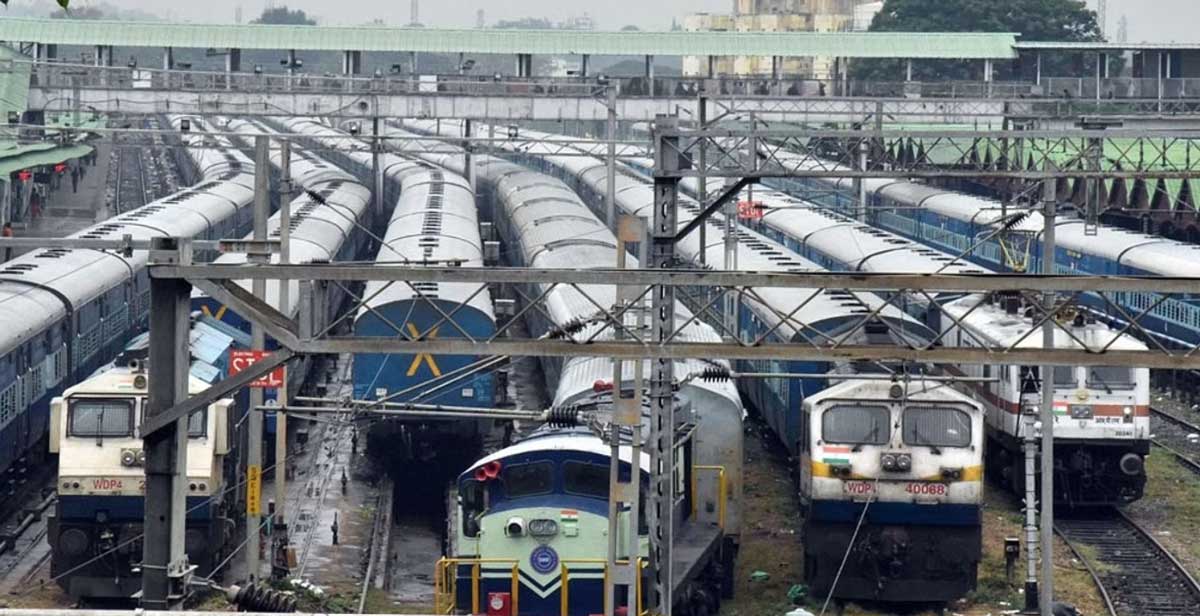
Fast train talk returns, but Mangaluru still stuck on slow track
Mangaluru
Talk of a Vande Bharat service linking Bengaluru to Mangaluru and further to Madgaon has returned to the spotlight after Union Railway Minister Ashwini Vaishnaw recently referred to the possibility. But beyond the renewed attention, the realities of the route suggest that expectations need to be measured.
No official announcement or timeline yet
The alignment being discussed runs via Hassan, Sakleshpur, Subrahmanya Road and Padil, the same Western Ghats stretch that has historically dictated train speeds on this corridor. Between Sakleshpur and Subrahmanya, trains are restricted to around 30 kmph due to steep gradients and sharp curves. This is a structural constraint, not one that can be addressed quickly. As a result, even if a Vande Bharat service is introduced, the overall travel time is unlikely to see a major reduction. Estimates indicate a journey of 13 to 15 hours, which brings into question the extent of advantage a semi-high-speed train can offer on this route.
For Mangaluru, this is a familiar issue
Despite being a major port city and a key hub for education, healthcare and commerce, rail connectivity to Bengaluru remains slow. Passenger demand has consistently grown, but infrastructure has not kept pace with the need for faster movement. Railway officials maintain that the route is shaped by terrain and network requirements.
The corridor is designed to serve multiple towns across the ghats and coastal belt, making it a connectivity-driven route rather than a speed-focused one. At the same time, readiness on the ground remains uneven. Not all stations along the route have the facilities required for premium train operations, and safety clearances are yet to be completed. This indicates that any rollout, if approved is not imminent.
There is also a degree of scepticism among regular passengers
G. Hanumanth Kamath, president of the Pashchima Karavali Railway Yatri Abhivridhi Samithi, said the service, in its current form, may not deliver meaningful benefits. “The timing, speed and cost are not worth it. There are already better options available,” he said. He also raised concerns about the impact on existing services. “If this affects the timing of current trains that people depend on, it will create more problems. New services should help passengers, not just satisfy demands,” he added.
His remarks reflect a broader concern among frequent travellers who rely on existing trains and are unsure what practical advantage a premium service would bring on a constrained route. The discussion has also brought back the demand for improved connectivity to Mumbai, given the steady passenger movement between coastal Karnataka and Maharashtra. However, no concrete proposal has been confirmed on that front.
As of now, key details, including final route, stoppages and scheduling, remain unclear. While Mangaluru is expected to be included, there is no official confirmation.
What the current discussion underlines is a larger issue
Introducing faster trains alone does not guarantee faster travel. On the Bengaluru–Mangaluru corridor, the limitation is not the train, but the track.
Until that changes, Mangaluru is likely to remain on a slow track, regardless of the label on the train.
.jpg)

.jpg)