.jpg)


.jpg)

 English daily published in Bengaluru & Doha

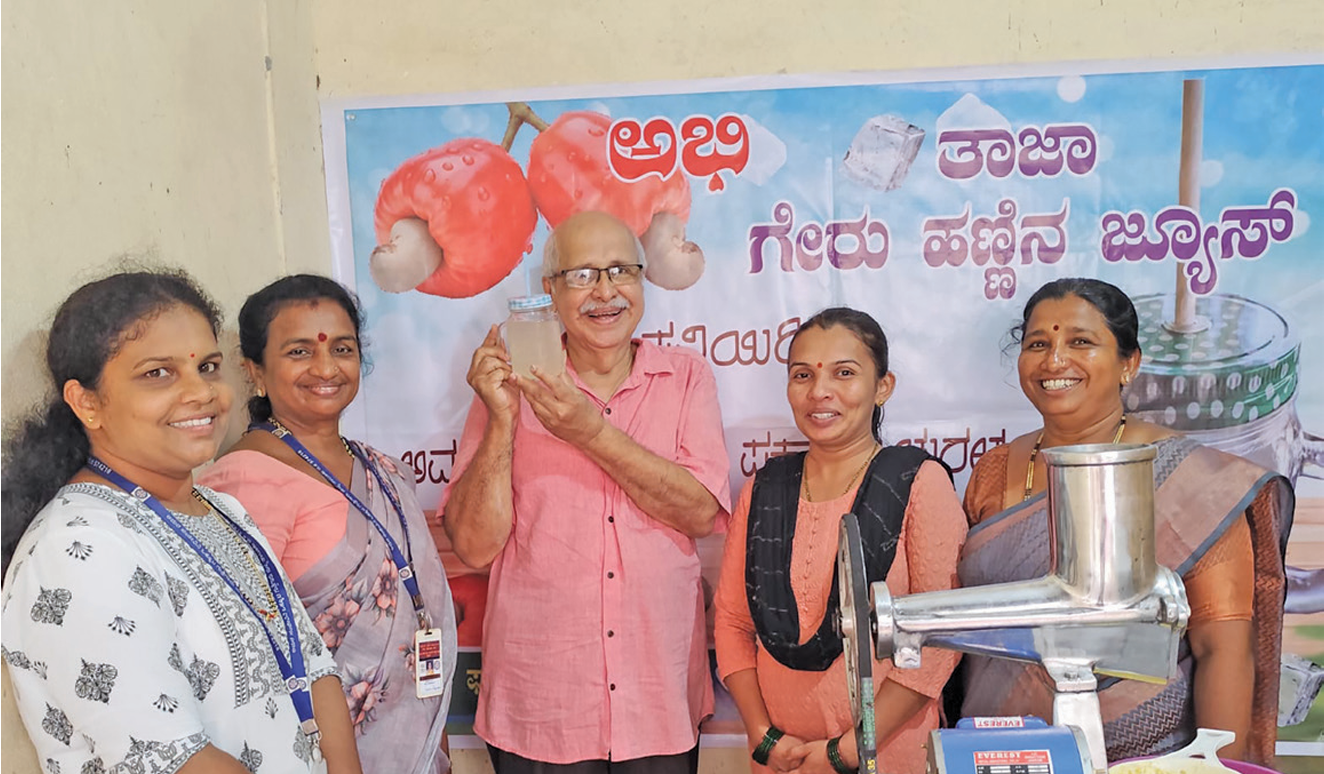
Guthigar’s cashew apple juice unit shows even waste can be useful
Mangaluru
In a quiet corner of Guthigar near Sullia, a simple idea is slowly taking shape into a meaningful rural enterprise. What began as an experiment is now being seen as a model for value addition, local entrepreneurship and better utilisation of seasonal produce. Led by Latha Ajjadka, a small cashew apple juice unit at Muttappa Nagar is drawing attention for all the right reasons.
Operating along side her Pragathi Fancy Store, the “Abhi Cashew Apple Juice Centre” is not just a business, it reflects a shift in thinking at the grassroots. The idea was born out of observation. Every year, during the cashew season, large quantities of cashew apples go to waste despite being rich in nutrients. Around the same time, Latha participated in a value addition training programme at the Cashew Research Directorate (CPCRI) in Puttur.
That exposure became the turning point. “I came to know about this during my visit to CPCRI. I wanted to start something unique, something not commonly seen here,” Latha says. “That is how this began.” With an investment of around Rs 15,000 in basic machinery, she started small.
On an average day, about 10 kilograms of cashew ap ples are processed, yielding fresh juice that is sold at Rs 20 for a 200 ml serving. The response, she says, has been encouraging, strong enough to signal potential beyond a pilot effort. Yet, the journey is not without its constraints. This year, production has already slowed down as the cashew season draws to a close.
“Right now, availability of fruit is low, so we have had to pause production. There is no stock left. Even otherwise, we are unable to meet the demand fully,” she explains. The seasonal nature of the fruit is one of the biggest challenges. While cashew apples can be preserved for longer durations through freezing, consistent storage is difficult in areas facing frequent power disruptions.
Shelf life of the juice is also limited, making it necessary to maintain small, fresh batches. Still, the intent is clear, this is not meant to remain a small experiment. “Next year, we are planning in advance. We want to collect and store fruits early and scale up production. The idea is to develop this into a proper in come model,” Latha says. The initiative is also creating a ripple effect within the local economy.
Cashew apples are sourced directly from nearby farmers, providing them with an additional stream of income from what was earlier considered waste. Plans are also underway to introduce a more organised procurement sys tem with fixed pricing in the coming season. From a technical standpoint, the numbers are promising.
About 100 kilograms of cashew apples can yield between 60 to 70 litres of juice. With a market price ranging from Rs 80 to Rs 150 per litre depending on packaging and scale, the economics indicate strong potential for a viable micro enterprise. Beyond numbers, however, the larger significance lies in the approach.
This is value addition at its most basic and effective level, taking what is locally available, applying simple processing and creating both nutrition and income. In a region where agriculture is abundant but often underutilised, such initiatives offer a practical path way forward.
Support from institutions like CP CRI has played a role in sparking this shift, but the real momentum is coming from individuals like Latha who are willing to experiment, take risks and build from the ground up. With plans to streamline production, improve storage and strengthen market linkages, the Guthigar cashew apple juice unit is now looking ahead.
If scaled effectively from the next season, it could well become a replicable model for rural entrepreneurship. In Guthigar, a fruit once ignored is now finding value and in that transformation lies a quiet but powerful story of change

.jpg)

.jpg)

