.jpg)


.jpg)

 English daily published in Bengaluru & Doha

Afternoon outdoors becoming unbearable as UV Index spikes in twin cities
Hubballi
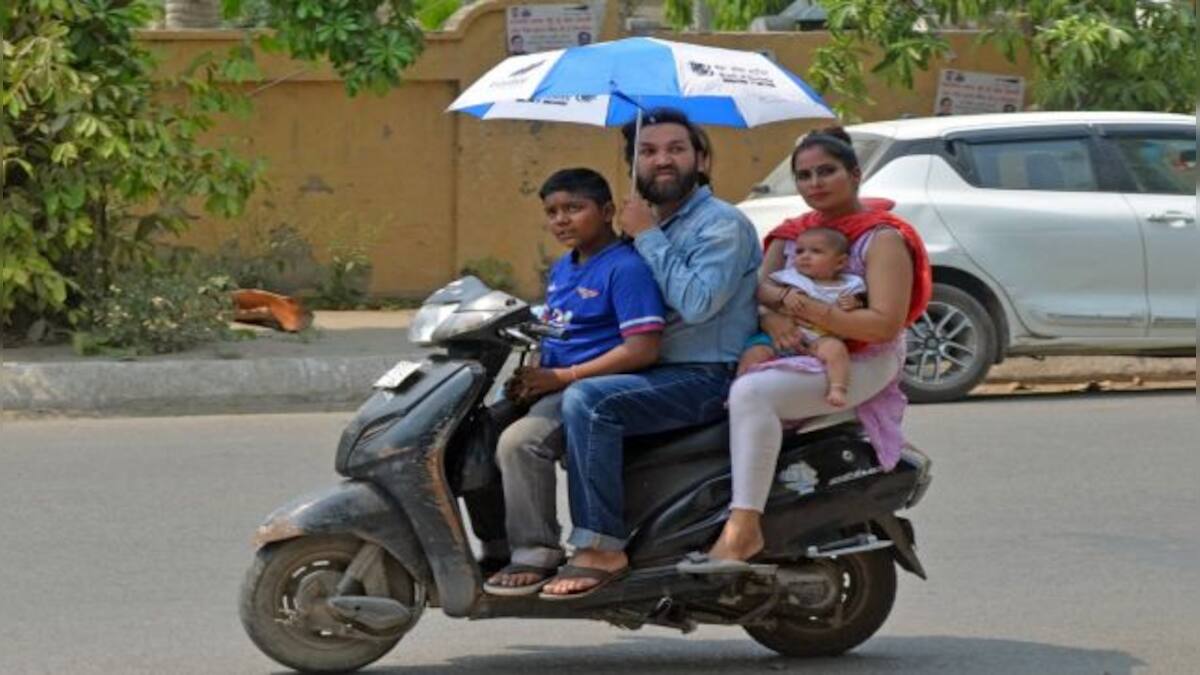
By noon, the roads of Hubballi-Dharwad begin to empty. Two-wheeler riders pull scarves tightly across their faces, pedestrians rush from one patch of shade to another, and roadside vendors shield themselves under makeshift covers as the harsh summer sun beats down relentlessly. For residents already exhausted by weeks of rising temperatures, stepping outdoors in the afternoon has become not merely uncomfortable, but physically draining. Yet, experts say the real danger this summer may not just be the heat people can feel.
Even as temperatures hovered around 36 degrees Celsius this week, ultraviolet (UV) radiation levels over the twin cities surged into the “Extreme” category, exposing citizens to an invisible environmental threat that often goes unnoticed until the damage is already done. Unlike temperature, UV radiation does not announce itself through immediate discomfort. Skin damage often begins before the body registers severe heat stress. Doctors warn that prolonged exposure during peak afternoon hours can lead not only to sunburn and dehydration, but also to eye irritation, accelerated skin ageing and long-term health risks.
“People often underestimate ultraviolet exposure because it is invisible. Even when temperatures appear manageable, UV radiation can still be extremely intense,” said dermatologist Dr Mohan Shendre, explaining that UV Index values above 11 fall into the “Extreme” category requiring significant caution outdoors. The UV Index is an international standard used to measure the strength of ultraviolet radiation reaching the earth’s surface. While values between 0 and 2 are considered low risk, and 6 to 7 are categorised as high, anything above 11 is considered extreme exposure. At such levels, unprotected skin can begin sustaining damage within minutes during peak daylight hours, said weather scientist Dr Ravi Patil.
Meteorologists say temperature alone does not determine UV intensity. Solar angle, cloud conditions, atmospheric clarity, dry weather patterns and urban surface heating all influence ultraviolet exposure. As cities expand with more concrete surfaces and reduced green cover, the overall summer experience becomes harsher for residents. Thousands of outdoor workers across Hubballi-Dharwad remain directly exposed to intense sunlight every day, traffic police personnel, street vendors, delivery workers, sanitation staff, construction labourers and autorickshaw drivers among them. Many continue working through peak afternoon hours with little protective gear beyond scarves or caps.
For traffic personnel stationed at major junctions for long durations, the combination of reflected road heat and ultraviolet exposure can become physically exhausting. Similarly, delivery workers and roadside vendors spend several hours on open roads under direct sunlight, often without adequate hydration or shade. Doctors also point to another overlooked impact, eye health. Ophthalmologist Dr Rajashekhar Dyaberi warn that continuous exposure to strong UV radiation can contribute to eye irritation and long-term damage if protective measures are ignored.
Yet awareness around UV-protective eyewear remains limited outside major metropolitan areas. More importantly, ultraviolet radiation remains a largely ignored public health issue in India. Unlike heatwaves, UV alerts rarely receive sustained public attention despite their direct implications for skin and eye health. Dr Ravi Patil advice citizens to avoid prolonged outdoor exposure between 11 .m. and 3 p.m., use umbrellas or caps, wear full-sleeved cotton clothing, and remain hydrated.

.jpg)

.jpg)

