.jpg)


.jpg)

 English daily published in Bengaluru & Doha

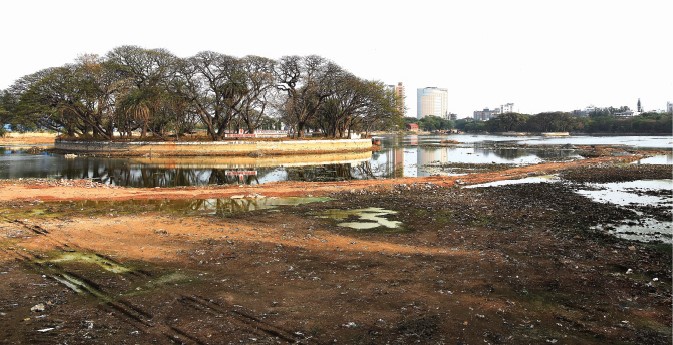
Ulsoor Lake rejuvenation sparks ecological concern
Bengaluru
Ulsoor Lake, one of Bengaluru’s most prominent urban water bodies spread across 108 acres, has been completely drained as part of a major desilting and rejuvenation exercise undertaken by the Bengaluru Central City Corporation (BCCC) after nearly 24 years. The ambitious project, estimated to cost ?107 crore and supported by ?4 crore from the National Disaster Mitigation Fund (NDMF), has triggered widespread debate among environmental experts, civic activists and lake conservationists over the ecological implications and scientific basis of the ongoing works. The lake bed now lies fully exposed as excavation and desilting operations continue at multiple locations.
Concerns over ecological balance
While experts acknowledged the need for long-pending restoration measures at the historic lake, several raised concerns that the project places excessive emphasis on concrete infrastructure rather than ecological rejuvenation and preservation of the lake’s natural character. “Desilting is welcome, but the current definition of rejuvenation is concretisation.
The effort should instead focus on maintaining and improving the lake’s natural condition. The project is therefore a sub-optimal solution,” said Dattatraya T Devare. Echoing similar concerns, environmentalist and urban strategist Vinod Jacob said, “The absence of proper geological studies and planning has undermined the desilting of this vital urban lake, one of Bengaluru’s largest living water bodies.
After years of neglect, the plan is to desilt only a mere 0.6 metres, while the budget prioritises vanity projects such as expanding walking tracks and adding concrete structures over true rejuvenation, natural stone bunds and biodiversity preservation.” He further added, “We urgently need an expert study by the Indian Institute of Science and lake specialists to safeguard this precious ecosystem at the heart of our city.”
Meanwhile, R. Rajagopalan, convenor of the Bengaluru Coalition, has submitted a representation to the Karnataka Chief Secretary and other senior government officials, expressing concern over the unscientific civil works and the alteration of the water body during the ongoing rejuvenation process at Ulsoor Lake. Following inspections at the site, he raised several issues regarding ecological balance, safety, and the long-term sustainability of the lake ecosystem.
“One of the key concerns is the lack of scientific desilting of the lake bed, undertaken supposedly to a depth of only 0.6 metres despite the multi-decadal delay since the last desilting exercise,” Rajagopalan stated in his representation. He further observed, “The lack of priority given to nature-based solutions to effectively prepare the water body before it receives rainfall and runoff from the upcoming monsoon is also a matter of concern.”
Concrete walkway draws criticism
Concerns have also been raised regarding the construction of a concrete walkway extending into the lake bed and water-retention area. “Alteration of existing multi-year-old natural earthen bunds under flimsy pretexts and the construction of a major concrete walkway for recreational purposes deep into the lake bed is another serious concern,” Rajagopalan emphasised. Environmentalist Alexander James also criticised the proposal, stating, “The most dangerous change being introduced is the walkway, which reflects poor planning and could ruin Ulsoor Lake. Military authorities should stop this from happening, as it could destroy one of Bengaluru’s historic lakes.”




.jpg)
