.jpg)


.jpg)

 English daily published in Bengaluru & Doha

Dharwad sets 2.82 lakh hectare Kharif target
Hubballi
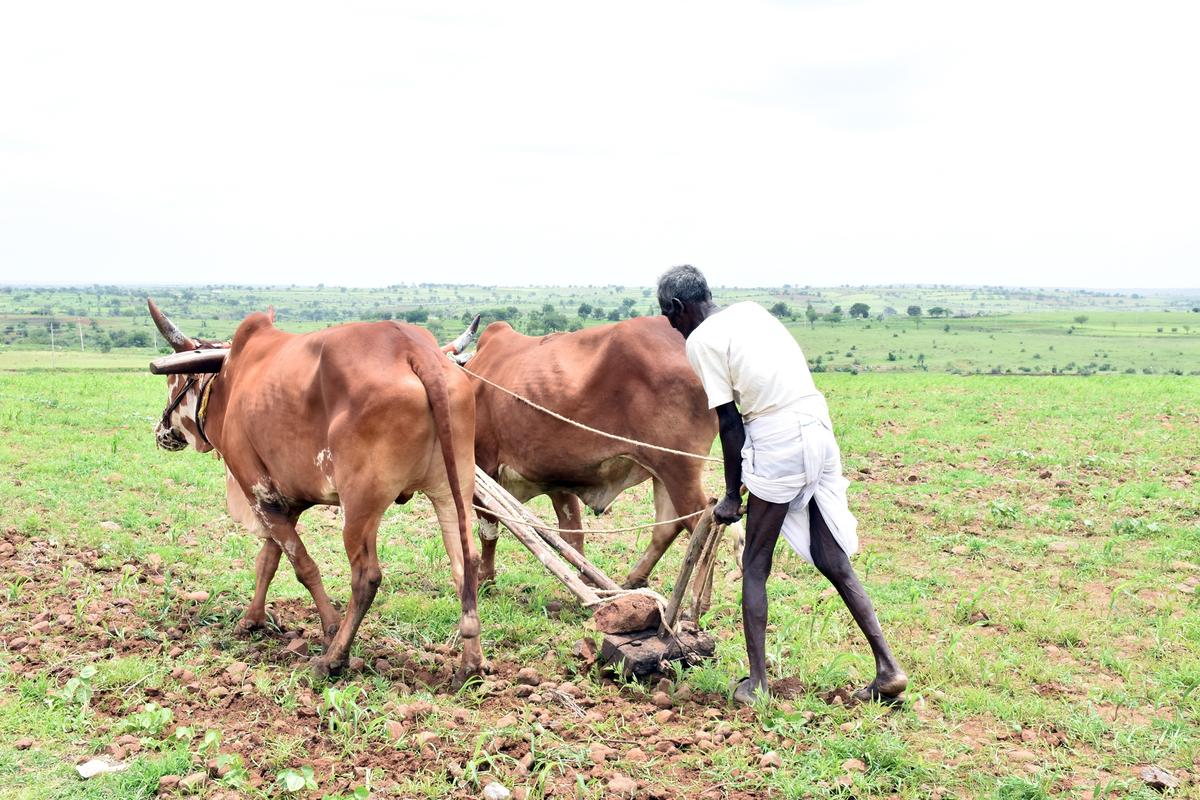
The Agriculture Department has set a sowing target of 2.82 lakh hectares for the 2026 Kharif season in Dharwad district, with farmers increasingly shifting towards green gram cultivation due to rising labour shortages and market uncertainty affecting traditional cash crops. According to officials from the Joint Director of Agriculture (JDA) office in Dharwad, land preparation activities across the district are complete, and farmers are now awaiting the onset of pre-monsoon showers expected in the coming days. Large-scale sowing operations are likely to begin by the third week of May.
A major change this season is the sharp decline in cotton cultivation, once a dominant crop in the district. Cotton acreage, which stood at around 86,500 hectares in 2020, has now dropped drastically to nearly 26,700 hectares. Cultivation of dry chilli has also seen a significant decline. Joint Director of Agriculture Manjunath Antarvalli attributed the shift to acute labour shortages, high harvesting costs and fluctuating market prices. “The major reason for the decline in cotton and chilli cultivation is the severe shortage of labour, coupled with increasing picking costs and unstable market rates,” he said.
In contrast, green gram cultivation is expected to expand substantially this season, covering nearly 93,750 hectares across the district. “Green gram has a shorter crop duration and requires comparatively less labour. Since harvesting can be completed by August, farmers see it as a safer, low-risk alternative to long-duration crops,” Antarvalli added. Data provided by Rajashekhar, an officer at the Joint Directorate of Agriculture indicates that green gram cultivation has witnessed a strong upward trend over the past several years, emerging as one of the most reliable crops for farmers in the region.
Green gram was cultivated on nearly 51,000 hectares in 2020, which increased to 75,500 hectares in 2021 before crossing the one-lakh-hectare mark at around 1.02 lakh hectares during the 2022-23 season. Although severe drought conditions caused acreage to decline sharply to nearly 64,000 hectares in 2023-24, the crop made a strong recovery in 2024-25, touching an estimated 1.30 lakh hectares — the highest in recent years. Officials said the consistent expansion of green gram cultivation has pushed the six-year average to nearly 88,000–89,000 hectares, showing a strategic shift by farmers towards low-risk crops amid increasing uncertainty in labour availability and cash crop markets.
Despite the growing preference for green gram, officials said the district would continue to maintain a diversified crop pattern. Maize cultivation has been targeted for 60,000 hectares, soybean for 37,000 hectares, groundnut for 13,000 hectares and black gram for 8,700 hectares. In the irrigated belts of Kalghatgi and Dharwad taluks, cultivation of water-intensive crops is expected to remain stable. Paddy cultivation has been targeted at 10,400 hectares, while sugarcane is likely to cover around 10,000 hectares. Agriculture officials expressed confidence in achieving this year’s sowing target, citing the strong performance during the previous Kharif season. Last year, against a target of 2.81 lakh hectares, actual sowing exceeded 2.91 lakh hectares due to favourable weather conditions.

.jpg)

.jpg)

